Table of Contents
ToggleWestern living room furniture brings the rugged character of the American frontier into a space where comfort meets craftsmanship. This style pulls from ranch heritage, lodge design, and Southwestern aesthetics, favoring natural materials, honest construction, and a palette grounded in earth tones. Unlike delicate or overly formal furniture, western pieces are built to last, often featuring heavy timber frames, full-grain leather, and hand-forged hardware. A homeowner doesn’t need a sprawling ranch house to make this style work. With the right pieces and thoughtful material choices, even a suburban living room can channel that wide-open, lived-in appeal without feeling like a theme park.
Key Takeaways
- Western living room furniture prioritizes durability and function through solid wood construction, full-grain leather, and hand-forged hardware that improve with age and use.
- Anchor your western space with quality pieces like eight-way hand-tied leather sofas paired with reclaimed wood coffee tables that feature substantial thickness (1.5–2 inches) for visual proportion.
- Authentic materials—natural hide rugs, wrought iron accents, real stone, and penetrating oil finishes—define credible western design; avoid synthetic substitutes that undermine the aesthetic.
- Western color schemes draw from desert and prairie landscapes with warm base neutrals (tans, creams, deep browns) and accent colors like burnt orange, turquoise, and sage green used sparingly.
- Balance heavy western furniture with streamlined modern elements like simple pendant lighting, flat roman shades, and minimal accessories to avoid an overwrought themed look.
What Defines Western Living Room Furniture?
Western furniture design prioritizes durability and function over ornament. The style draws heavily from frontier practicality, where furniture had to withstand hard use and dry climates. Key characteristics include exposed joinery (mortise-and-tenon, dovetails), solid wood construction, and minimal use of veneers or engineered composites.
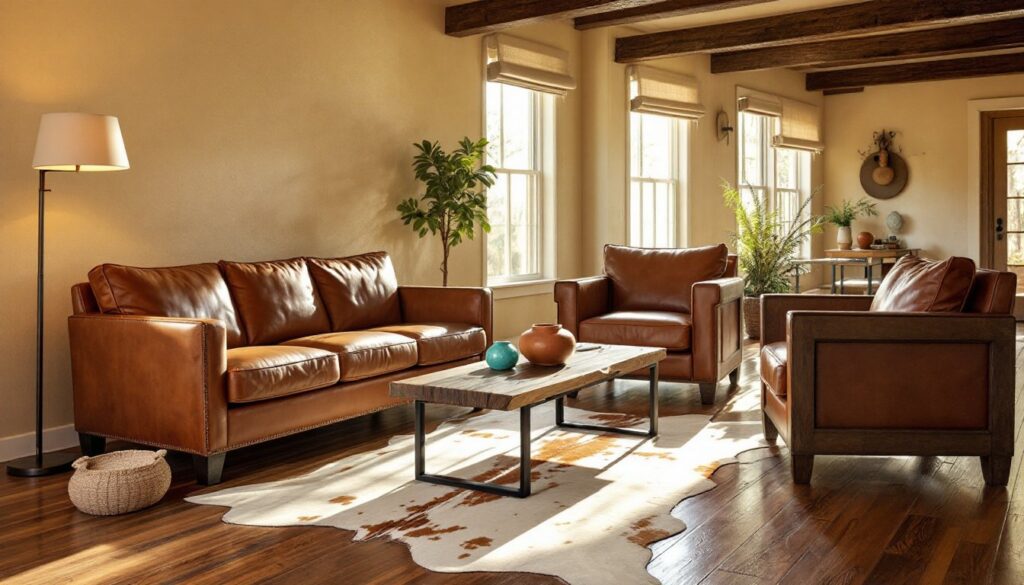
Leather upholstery is foundational, typically full-grain or top-grain hides in shades of tobacco, saddle brown, or distressed black. Stitching is often visible and reinforced, echoing saddle-making techniques. Metal accents lean toward wrought iron, hammered steel, or brass, with hand-forged details like clavos (decorative nail heads) or corner brackets.
Wood species matter. Pine, oak, mesquite, and reclaimed barnwood dominate, often left with natural grain visible through light stains or oil finishes. Hardware is understated but substantial, thick drawer pulls, strap hinges, and bolt heads that don’t try to hide.
Unlike rustic farmhouse styles that lean cozy and light, western furniture has a masculine, grounded presence. It’s less about distressed paint finishes and more about raw texture: saw marks left visible, live edges on table slabs, and patina that develops naturally over time. This isn’t furniture that needs to look perfect, it improves with age and use.
Essential Western Furniture Pieces for Your Living Room
A functional western living room starts with a few anchor pieces that set the tone. Homeowners should focus on quality over quantity, each piece carries visual weight.
Leather Sofas and Sectionals
Full-grain leather sofas are the cornerstone. Look for eight-way hand-tied spring systems in the seat deck, this construction method uses coil springs individually tied with twine in eight directions, creating better weight distribution and longer lifespan than sinuous (zigzag) springs. Frame construction should be kiln-dried hardwood, typically oak or maple, with corner blocks glued and screwed for racking resistance.
Leather thickness is measured in ounces per square foot. Upholstery-grade leather typically ranges from 3–5 oz, balancing durability and suppleness. Thicker isn’t always better, overly stiff hides won’t break in comfortably. Top-grain leather (the second-highest grade) offers a good middle ground for households with kids or pets, as the surface is lightly sanded and more uniform than full-grain.
For layout, a three-seat sofa (typically 84–96 inches) anchors most rooms. Sectionals work in larger spaces (120+ square feet) but can overwhelm smaller living rooms. Pair with a leather club chair or wingback rather than matching loveseats, variation in seating styles adds visual interest.
Reclaimed Wood Coffee Tables and Side Tables
Reclaimed wood tables bring age and texture. Barn beams, railroad ties, and old growth timbers offer dense grain patterns and natural weathering that new lumber can’t replicate. Thickness matters for visual heft, tabletops should be at least 1.5–2 inches thick for proper proportion with heavy leather seating.
Coffee table height should sit 16–18 inches from the floor, level with or slightly lower than sofa seat height (typically 18–20 inches). Length should be roughly two-thirds the sofa length to maintain balance.
Base construction varies. Wrought iron bases provide an industrial edge, while chunky turned-wood legs or trestle bases lean more traditional. Metal bases should use 1-inch square or round stock minimum, lighter gauges look flimsy under thick wood tops.
Side tables need 20–25 inches of height to work beside sofas and chairs. Nesting tables offer flexibility in smaller rooms. Finish options: penetrating oil finishes (tung oil, linseed oil) preserve raw texture better than polyurethane, though they require reapplication every 1–2 years depending on use.
Materials and Textures That Bring Western Style to Life
Material authenticity drives western style credibility. Cheap substitutions, bonded leather, laminate wood grain, plastic hardware, undermine the aesthetic immediately.
Natural hide rugs (cowhide, sheepskin) add layering underfoot. Cowhides typically measure 6×7 feet to 7×8 feet and work well over hardwood or layered on neutral area rugs. Choose hides with natural color variation rather than uniform dye jobs.
Woven textiles bring warmth without softening the look too much. Wool blends, jute, and Zapotec-style rugs (traditionally hand-woven in Oaxaca, Mexico) introduce geometric patterns in earth tones. Avoid synthetic microfiber or polyester, they photograph well but feel wrong in person.
Stone accents fit naturally, slate, river rock, or stacked stone on fireplace surrounds. If installing stone veneer (a DIY-friendly option), use mortar-applied natural thin veneer (roughly 1 inch thick) rather than manufactured faux stone panels. Real stone has irregular backs and requires a scratch coat of mortar: faux panels have molded backs and look plasticky up close.
Wrought iron and blackened steel show up in lighting fixtures, curtain rods (1–1.5-inch diameter works with heavy drapes), and shelf brackets. For a DIY bracket project, 1/2-inch round bar stock is workable with a basic propane torch and anvil for small bends, though complex scrollwork requires a forge.
Wood beam accents, real or faux, add architectural weight. If adding faux beams (hollow boxes made from 1×6 or 1×8 pine boards), stain and distress them before installation. Use construction adhesive and structural screws into ceiling joists: drywall anchors won’t support the cantilevered weight safely.
Color Palettes for an Authentic Western Living Room
Western color schemes pull directly from desert and prairie landscapes, no pastels, no jewel tones, minimal cool grays.
Base neutrals: Warm tans (think camel, khaki), creamy off-whites (avoid stark white), and deep browns (walnut, espresso). These cover walls, large upholstery, and flooring. For paint, look at warm beige with subtle yellow or red undertones, colors like Sherwin-Williams Kilim Beige or Benjamin Moore Muslin.
Accent colors: Burnt orange, terracotta red, turquoise, and sage green. These show up in throw pillows, blankets, pottery, and artwork. Turquoise (particularly in Southwestern-influenced western styles) comes from natural turquoise stone prevalent in Native American jewelry and art. Use it sparingly, a turquoise leather chair or inlaid cabinet detail, not entire walls.
Wood tones: Medium to dark stains. Honey-colored pine works, but darker walnut or tobacco-stained oak anchors a room better. If mixing wood tones (coffee table, side tables, shelving), keep undertones consistent, all warm (red/orange) or all neutral. Mixing warm oak with cool ash creates visual discord.
Metal finishes: Stick with oil-rubbed bronze, matte black, or unlacquered brass. Polished chrome and brushed nickel read too contemporary. If using brass, let it patina naturally rather than applying lacquer, real tarnish develops character.
Black can work as a grounding accent, wrought iron table bases, picture frames, or a blackened steel fireplace insert, but use it in small doses. Large expanses of black (like a black leather sofa) can feel too modern unless balanced with substantial wood and warm textiles.
Blending Western Furniture with Modern Design Elements
Strict adherence to any single style feels stagey. Most homeowners benefit from blending western pieces with cleaner, modern elements to keep the space livable rather than themed.
Balance proportion: Western furniture tends bulky, thick leather, heavy wood. Pair it with streamlined lighting (simple pendant fixtures, linear floor lamps) and minimal window treatments. Instead of heavy layered drapes, try flat roman shades in linen or canvas. If using curtains, mount rods close to the ceiling and choose solid earth-tone panels rather than busy patterns.
Edit accessories: A common mistake is over-cluttering with western kitsch, horseshoes, wagon wheels, branding irons. One or two authentic vintage pieces (a real bridle, a pair of antique spurs in a shadow box) carry more weight than a wall full of reproductions. Modern artwork, black-and-white landscape photography, abstract prints in rust and tan, bridges styles better than kitschy cowboy art.
Update metals thoughtfully: While oil-rubbed bronze suits western style, matte black metal offers a contemporary edge that still works. Black steel coffee table bases or matte black Picture frames feel modern but don’t clash with leather and wood.
Choose one focal point: Let either the sofa or a large wood piece (coffee table, media console) be the dominant western statement. Anchor the rest of the room with neutral, understated pieces. If the sofa is a massive distressed leather sectional, keep tables simpler, clean-lined wood or metal-frame designs.
Flooring matters: Wide-plank hardwood (5–7 inches wide) or luxury vinyl plank in medium-to-dark wood tones supports western furniture better than light oak or gray-toned flooring. If installing hardwood, hand-scraped or wire-brushed textures add the right amount of character without looking distressed. Keep the finish matte or satin, high-gloss polyurethane feels wrong.
This blend prevents the “dude ranch guest lodge” effect while keeping the warmth and craftsmanship that make western furniture appealing in the first place.