Table of Contents
ToggleQuality outdoor furniture represents a significant investment, often running into hundreds or thousands of dollars. Yet many homeowners watch their beloved patio sets deteriorate season after season, victims of UV rays, moisture, and debris. The solution isn’t moving everything indoors every fall, it’s choosing the right waterproof patio furniture covers. These protective barriers shield furniture from rain, snow, sun damage, mold, and tree sap, extending its lifespan by years. This guide walks through what makes a cover truly protective, how to select the right fit, and the maintenance habits that ensure covers deliver long-term value.
Key Takeaways
- Waterproof patio furniture covers protect against moisture, UV damage, and debris while extending furniture lifespan by years, making them a cost-effective investment at just 10-15% of replacement value.
- Quality waterproof patio furniture covers feature 300-600 denier polyester with PVC backing, breathable vents with baffles, and heat-sealed seams to prevent water penetration and condensation buildup.
- Proper fit is essential—measure your furniture and add 2-3 inches for drape, use adjustable drawstrings or buckle straps, and anchor covers with tie-down loops during high-wind conditions.
- Different furniture types require tailored approaches: individual covers for dining sets offer better ventilation, deep-seating pieces need generous height allowance, and fire pits demand flame-resistant materials.
- Maintain covers by cleaning 2-3 times per season with mild soap and a soft brush, removing standing water promptly, reapplying waterproofing treatments annually, and inspecting fastening systems before each season.
- Avoid covering wet furniture, blocking vents, over-tightening straps, leaving covers unsecured in wind, or ignoring snow load limits, as these mistakes undermine protection effectiveness.
Why Waterproof Covers Are Essential for Outdoor Furniture
Unprotected outdoor furniture faces relentless environmental assault. Moisture is the primary culprit, rain pools in cushion fibers, snow melts into frame joints, and morning dew penetrates wicker weaves. Without waterproof protection, this constant wetness leads to mold growth, rust on metal components, rot in wooden frames, and cushion breakdown.
UV radiation causes equally severe damage. Direct sunlight fades fabric colors within a single season and makes plastic components brittle. Resin wicker becomes prone to cracking, powder-coated finishes chalk and peel, and cushion fabrics lose tensile strength. Even “UV-resistant” furniture benefits from cover protection during extended periods of non-use.
Debris accumulation compounds these issues. Tree sap bonds chemically to surfaces and requires harsh solvents to remove. Bird droppings contain uric acid that etches finishes. Pollen creates abrasive grit that scratches protective coatings during wind events. Waterproof covers for patio furniture create a physical barrier against all these threats.
The cost-benefit calculation is straightforward: quality covers typically cost 10-15% of furniture replacement value but can double or triple the furniture’s serviceable life. A $200 cover protecting a $2,000 dining set that lasts 10 years instead of 4 represents substantial savings, not to mention avoiding the hassle of premature replacement.
Key Features to Look for in Quality Waterproof Patio Covers
Not all covers deliver the protection their labels promise. The difference between a cover that lasts one season and one that performs for years comes down to specific construction features and material choices.
Material Types and Durability
Polyester with PVC/polyurethane backing represents the current industry standard for waterproof patio furniture covers. The woven polyester provides tear resistance and structural integrity, while the backing creates the waterproof barrier. Look for fabric weights between 300-600 denier, lighter fabrics (under 300D) tend to tear at stress points, while excessively heavy materials (over 600D) don’t breathe adequately and can trap condensation.
Solution-dyed fabrics resist UV fading far better than piece-dyed materials. The pigment penetrates each fiber during manufacturing rather than being applied as a surface treatment. This matters for covers left in place year-round in high-UV climates.
Breathability prevents the greenhouse effect. Completely non-porous covers trap moisture that evaporates from furniture, creating condensation that promotes mold. Quality covers incorporate vents, typically mesh panels on opposite sides, that allow air circulation while blocking rain. Vents should have overlapping baffles or downward-facing orientations to prevent water intrusion during wind-driven rain.
Seam construction is where many budget covers fail. Heat-sealed or ultrasonic-welded seams outperform simple stitching, which creates hundreds of needle holes for water penetration. Double-stitched seams with taped backing offer acceptable durability at mid-price points.
Fit and Sizing Considerations
Proper fit determines both protection quality and cover longevity. Covers sized too small create tension at seams and fastening points, accelerating material failure. Oversized covers billow in wind, causing abrasion damage and creating pools where water collects.
Measure furniture carefully before purchasing. For tables, measure length, width, and height from ground to tabletop. For chairs, measure width at widest point (usually armrests), depth front-to-back, and height from ground to top of backrest. Add 2-3 inches to each dimension for proper drape, covers should extend below furniture bases to shed water away from legs and prevent splash-back.
Adjustable features accommodate variations. Drawstring hems allow cinching for secure fit in wind. Buckle straps on opposite sides pull covers taut to prevent billowing. Elastic hem cords work for lighter covers on smaller items but lack the adjustment range needed for larger furniture or windy locations.
Built-in tie-down loops or grommets at corners enable anchoring with bungee cords or rope during high-wind events. This matters especially in coastal or plains regions where sustained winds exceed 25-30 mph.
How to Choose the Right Covers for Different Furniture Types
Furniture geometry and materials dictate specific cover requirements. A one-size-fits-all approach leaves gaps in protection.
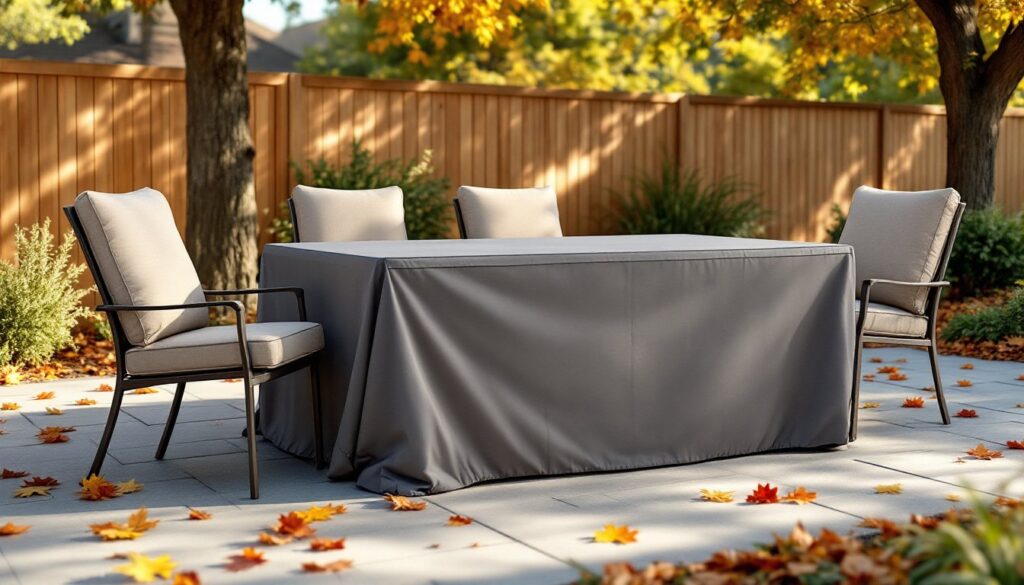
Dining sets (table plus chairs) present two options: individual covers for each piece, or a single large cover enclosing the entire set. Individual covers provide better ventilation and allow using portions of the set without uncovering everything. Full-set covers simplify storage and cost less but require removing the entire cover for any use. For sets left assembled, measure with chairs pushed in to determine full-set cover dimensions.
Deep-seating furniture (sofas, sectionals, lounge chairs) needs covers with generous height allowances. Thick cushions add 12-20 inches of vertical dimension. Covers should fully enclose cushions, leaving them exposed defeats the primary purpose. For modular sectionals, individual covers for each section allow reconfiguration without wrestling a massive cover.
Chaise lounges require covers designed for their angled geometry. Standard furniture covers bunch at the transition between seat and backrest. Chaise-specific covers account for the reclined profile and include extra length. Measure the chaise at maximum recline for accurate sizing.
Fire pits and outdoor heaters demand flame-resistant or flame-retardant cover materials, especially for units where residual heat persists after use. Standard polyester covers can melt if placed on warm surfaces. Allow fire features to cool completely (typically 2-3 hours after extinguishing) before covering, or select covers specifically rated for high-temperature applications.
Umbrellas present unique challenges. Covers for closed umbrellas need only accommodate the collapsed diameter and length. But, leaving umbrellas open with covers invites structural damage from wind catching the covered canopy. Always close umbrellas before covering, and remove umbrella covers during high wind warnings to prevent the pole becoming a lever that damages table bases.
Stacked furniture saves space but creates fit complications. Stacking height often exceeds what standard covers accommodate. Measure the actual stacked height and select oversized covers, or use heavy-duty tarps secured with bungee cords as a budget alternative, just ensure tarps include grommets for secure tie-down.
Maintenance Tips to Extend the Life of Your Covers
Even quality waterproof covers require basic maintenance to deliver their full service life, which should be 5-7 years for mid-grade products and 8-10+ years for premium options.
Clean covers 2-3 times per season, more frequently in high-pollen areas or under trees. Debris left on covers promotes mildew growth and accelerates UV damage to the fabric. Hose off loose dirt, then scrub with a soft-bristle brush using mild soap (dish detergent works) and lukewarm water. Avoid pressure washers, the high-pressure stream can delaminate backing materials and force water through seams. Rinse thoroughly and allow to air-dry completely before re-covering furniture.
Remove standing water immediately. Even waterproof materials will eventually leak through seams if water pools with sufficient weight and duration. After heavy rain or snow, sweep or squeegee water off covers. This also prevents the weight from stressing seams and anchor points.
Reapply waterproofing treatments annually for covers in year-round use. Spray-on water repellents designed for outdoor fabrics (available at camping supply and hardware stores) restore the beading effect that sheds water. Apply to clean, dry covers, following product directions for coverage rates and drying time before reuse.
Store covers properly during off-seasons if furniture moves indoors. Clean thoroughly, ensure complete dryness (even slight dampness causes mildew in storage), and fold loosely to avoid creasing stress points. Store in a dry location, garages work, but avoid cardboard boxes that wick moisture. Mesh storage bags allow airflow.
Inspect fastening systems before each season. Replace worn elastic cords, broken buckles, or damaged tie-down loops immediately. A cover that blows off during a storm provides zero protection, and the flapping can damage both the cover and nearby items.
Patch small tears promptly before they propagate. Waterproof repair tape or patches (often included with quality covers, or available as aftermarket products) can seal holes up to 2-3 inches. Clean the area thoroughly, apply the patch with at least 1-inch overlap beyond the damage, and press firmly to ensure adhesion.
Common Mistakes to Avoid When Using Patio Furniture Covers
Even with quality patio furniture covers waterproof and properly fitted, installation errors undermine protection.
Covering wet furniture traps moisture that would otherwise evaporate. This creates ideal conditions for mold and mildew. Always allow furniture to dry after cleaning or rain before covering. In humid climates, this may require waiting several hours for cushions to air out.
Skipping ventilation by blocking or taping over vents seems logical for maximum water protection but causes condensation buildup. Trust the vent design, properly positioned vents shed rain while allowing air circulation.
Over-tightening drawstrings and straps stresses fabric and seams. Covers need slight looseness to accommodate wind movement. Pull adjustments snug but not drum-tight. If drawstrings or straps create visible puckering or stretching of the fabric, they’re too tight.
Leaving covers unsecured in wind-prone areas leads to covers blowing off or whipping against furniture, causing abrasion damage to both. Use all provided tie-downs, and add supplemental bungee cords at corners for extra security in exposed locations.
Ignoring manufacturer weight limits for snow accumulation can collapse furniture frames. Most residential patio furniture isn’t engineered for heavy snow loads. In regions with significant snowfall, either brush snow off covers regularly, move furniture to sheltered locations, or bring it indoors for winter.
Using covers as long-term storage solutions without periodic inspection invites surprises. Check under covers monthly during storage periods to catch water intrusion, pest nesting, or developing mold before damage becomes severe. A 5-minute inspection prevents costly repairs.
By selecting appropriate waterproof covers for patio furniture, maintaining them properly, and avoiding common installation errors, homeowners protect their outdoor investments efficiently. The modest time and cost involved in proper cover use delivers returns measured in years of extended furniture life and preserved appearance.