Table of Contents
ToggleBuying used dining room furniture isn’t just about saving money, it’s about finding solid-built pieces that new particleboard alternatives can’t match. A well-made vintage table or a set of mid-century chairs often outlasts today’s flat-pack offerings by decades. The secondary market is flooded with quality hardwood furniture from estates, downsizes, and remodels, many priced at a fraction of retail. But finding those gems requires knowing where to look, what to inspect, and how to spot a deal worth hauling home. This guide walks through the process, from sourcing to negotiating to bringing tired pieces back to life.
Key Takeaways
- Used dining room furniture offers solid hardwood construction and distinct craftsmanship at 60–80% less than retail prices, with vintage pieces often outlasting modern particleboard alternatives by decades.
- Top sourcing platforms for used dining room furniture include Facebook Marketplace for local deals, estate sale websites for complete sets, and consignment shops for curated, move-ready pieces.
- Inspect structural integrity by checking for wobbling joints, tabletop warping, and active wood damage like powder post beetle holes, and measure carefully to ensure proper table height (28–30 inches) and chair seat height (17–19 inches).
- Negotiate effectively by researching comparable sales, pointing out specific defects, timing your offer when listings are two weeks old or longer, and offering 60–70% of asking price with cash for immediate pickup.
- Refinish used furniture by stripping old finishes, sanding through 80–220 grit, applying stain or paint with proper topcoats, and regluing loose joints before applying final protection.
Why Buy Used Dining Room Furniture?
Solid wood construction is the primary draw. Dining tables and chairs made before the 1980s were typically built with hardwoods like oak, maple, walnut, or cherry, materials that handle refinishing, regluing, and decades of use. Modern budget furniture often relies on veneered MDF or particle board, which doesn’t tolerate moisture, impacts, or repair attempts.
Cost savings run significant. A solid oak pedestal table that retails new for $1,200–$1,800 often sells used for $200–$400, depending on condition and local market. Chairs follow similar patterns: a set of six ladder-back chairs in good shape might run $150–$300 used versus $600+ new.
Unique style and character matter to buyers tired of cookie-cutter designs. Vintage pieces carry distinct joinery, turned legs, inlay work, or hand-carved details that aren’t replicated in mass production. An old gate-leg table or a set of Windsor chairs brings craftsmanship that stands out.
Environmental impact is lower. Reusing existing furniture keeps solid wood out of landfills and reduces demand for newly harvested timber and manufacturing resources. For those prioritizing sustainability, the secondhand market is the most direct option.
Where to Find the Best Used Dining Room Furniture
Online Marketplaces and Specialty Sites
Facebook Marketplace dominates the local resale scene in 2026, offering real-time listings with photos, seller ratings, and proximity filters. Buyers can message sellers directly, arrange viewings, and often pick up the same day. Search terms like “solid wood dining table” or “vintage chairs” yield better results than generic queries.
Craigslist still holds value, especially in metro areas. Listings skew older and less polished, but serious sellers, estates, downsizers, divorces, often post here first. Check daily: good pieces move within hours.
Chairish and 1stDibs cater to higher-end vintage and antique furniture. Expect better curation, detailed photos, and significantly higher prices. These platforms suit buyers hunting specific styles (e.g., Danish modern, French Provincial) and willing to pay for authenticated quality.
eBay works for smaller items, chairs, benches, side servers, but shipping costs on tables make local pickup the only practical option. Filter by “local pickup only” to avoid inflated freight quotes.
Estate sale websites like EstateSales.net aggregate upcoming sales by zip code. Estate sales typically feature complete dining sets and mid-to-high quality furniture from older homes. Arrive early on the first day for best selection, or wait until the final hours for steep discounts as sellers try to clear inventory.
Local Options and In-Person Shopping
Thrift stores (Goodwill, Salvation Army, Habitat for Humanity ReStores) stock donated furniture at rock-bottom prices. Selection is inconsistent, but patient hunters find solid wood tables and chairs for under $100. ReStores often carry contractor donations and overstock, including newer pieces in excellent condition.
Consignment shops offer better curation than thrift stores, with staff vetting quality and condition before accepting pieces. Prices run higher, expect 40–60% of original retail, but items are typically clean, stable, and ready to use.
Auctions (live and online) can yield bargains, especially on lots that include multiple pieces. Local auction houses often sell estate contents in bulk: a dining set might be part of a larger furniture lot. Research the auction format (absolute vs. reserve), preview days, and buyer’s premium (typically 10–20% added to the hammer price) before bidding.
Yard sales and moving sales are hit-or-miss but occasionally turn up underpriced furniture from sellers who prioritize speed over profit. Bring cash, a tape measure, and tie-down straps.
What to Look for When Inspecting Used Dining Furniture
Start with structural integrity. Flip chairs upside down and check corner blocks, glue joints, and stretchers (the horizontal supports between legs). Wobbles indicate loose joinery, which is repairable but adds work. On tables, examine the apron (the frame under the tabletop) for cracks or separation from the legs. Dowel joints should be tight: if you can twist a leg independently of the frame, expect to disassemble, reglue, and clamp.
Inspect the tabletop surface. Minor scratches, watermarks, and worn finishes are cosmetic and easily addressed with sanding and refinishing. Deep gouges, burns, or warping are harder to fix. Run your hand across the surface: solid wood will feel uniform, while veneer may show bubbles, edges lifting, or areas where the thin top layer has chipped away. Veneered furniture isn’t inherently bad, but damaged veneer requires skilled repair or replacement.
Check for active wood damage. Look for small exit holes (1/16″–1/8″ diameter) indicating powder post beetles or other wood-boring insects. Fresh sawdust near holes means active infestation: walk away unless you’re prepared for fumigation and repair. Surface mold wipes off, but a musty smell or black staining in the wood suggests deeper moisture issues.
Test all moving parts. Extension tables should slide smoothly, and leaves should sit flush with the main surface. Examine the extension mechanism, metal slides and gears hold up better than wood-on-wood tracks. Drop-leaf tables need functional hinges and support brackets: sagging leaves indicate hinge failure.
Measure carefully. Bring a tape measure and confirm dimensions fit your space, especially table height (standard is 28″–30″) and chair seat height (typically 17″–19″). A too-tall or too-short table creates ergonomic problems that no amount of refinishing will solve.
Wear safety gloves when handling dusty or rough furniture: splinters and sharp edges are common on older pieces.
How to Negotiate and Get the Best Price
Research comparable sales before making an offer. Check sold listings on Facebook Marketplace and eBay’s completed auctions to establish a realistic price range for similar items. A solid oak table in good condition might average $300–$500 locally: use that data to anchor your offer.
Point out specific defects and needed repairs during negotiation. A loose chair rung, scratched finish, or missing leaf reduces value. Quantify the cost: “This needs regluing and refinishing, which is about $100 in materials and a weekend of work.” Sellers often adjust when faced with honest assessments.
Timing improves leverage. Contact sellers who’ve had listings active for two weeks or longer, they’re more motivated. End-of-month and end-of-season (late fall, late winter) see higher inventory and lower prices as people clear space before holidays or moving deadlines.
Cash in hand strengthens negotiation. Mention you can pick up immediately with cash payment: many sellers prefer avoiding payment apps, holds, and no-shows. Offering 60–70% of asking price is reasonable for items with visible wear or needed repairs. Start lower than your target to leave room for counteroffers.
Buying in sets (table plus chairs, or multiple chairs) justifies asking for a bulk discount. Sellers often price sets high hoping to move everything together: offering to take the whole lot at a reduced per-piece rate benefits both parties.
Don’t negotiate via long message threads. Ask to see the item in person, then make your offer face-to-face. It’s harder to dismiss a polite, prepared buyer standing in the driveway with a truck and cash.
Refinishing and Updating Your Used Dining Room Pieces
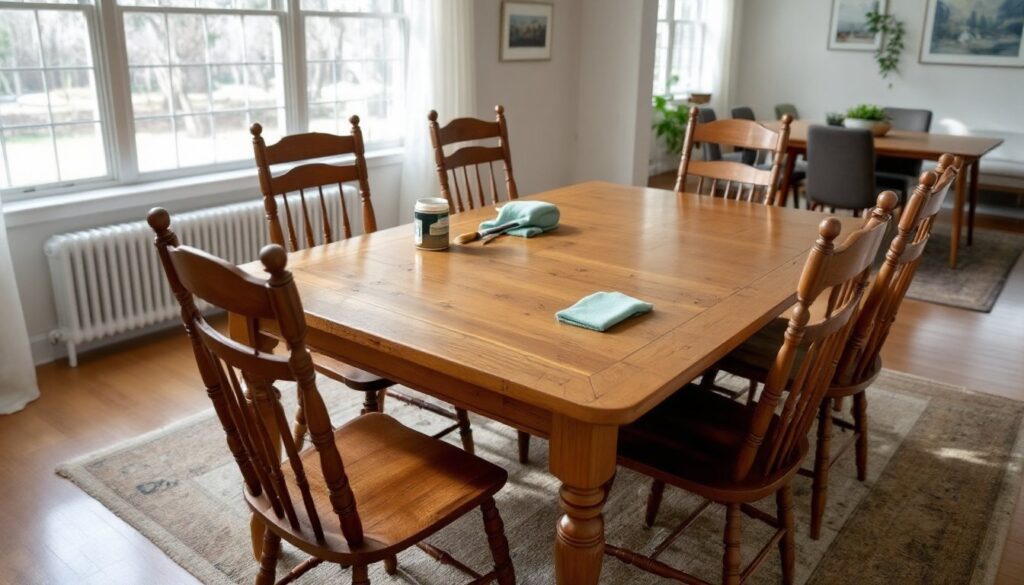
Surface prep determines refinishing success. Strip old finishes with a chemical paint stripper (citrus-based or methylene chloride formulas work: follow label safety instructions and use in a ventilated area with nitrile gloves and safety goggles). Alternatively, sand with 80-grit sandpaper using a random orbital sander, faster than hand sanding, less aggressive than a belt sander. Work through 120-grit and 220-grit to smooth the surface. Always sand with the grain to avoid cross-grain scratches.
For watermarks and light stains, try a 50/50 mix of white vinegar and olive oil, or a paste of baking soda and water. Rub gently with the grain using a soft cloth. Stubborn rings may require light sanding and spot-refinishing.
Staining enhances wood grain and color. Test stain on an inconspicuous area or scrap piece first, oak absorbs stain differently than maple or cherry. Apply with a foam brush or lint-free cloth, working in the direction of the grain. Wipe excess after 5–10 minutes to control darkness. Let dry 24 hours before topcoat.
Topcoats protect the surface. Polyurethane (oil-based or water-based) offers durability for high-use tables: apply 2–3 thin coats with light sanding (220-grit) between coats. Tung oil or Danish oil penetrate the wood for a natural, low-sheen finish but require more frequent reapplication. Water-based poly dries faster and has lower odor, but oil-based versions provide richer color depth.
Reglue loose joints before refinishing. Disassemble wobbly chairs or tables, scrape old glue from joints, apply wood glue (Titebond or similar), and clamp for 24 hours. Corner clamps and band clamps simplify chair repair.
Updating hardware, drawer pulls, table levelers, costs under $20 and modernizes older pieces. Replace worn felt pads on chair feet to protect floors.
If painting instead of staining, prime bare wood with a bonding primer to prevent tannin bleed and ensure paint adhesion. Use satin or semi-gloss latex paint for easy cleanup and durability. Two coats usually suffice. Light sanding between coats (220-grit) improves smoothness.
Always work in a well-ventilated area or outdoors when using strippers, stains, or oil-based finishes. Wear a respirator mask rated for organic vapors during chemical stripping and finishing.