Table of Contents
ToggleA well-furnished deck transforms unused square footage into a functional outdoor room. Whether someone’s working with a sprawling composite deck or a compact 8×10 platform, the right furniture arrangement, materials, and accessories turn raw boards into a space worth using. These deck furniture ideas cover everything from durable material choices to smart layouts for small footprints, helping homeowners maximize their backyard investment. From patio furniture ideas that suit modern minimalists to backyard furniture ideas built for entertaining, the following sections break down practical options that hold up to weather, foot traffic, and real-world use.
Key Takeaways
- Teak, powder-coated aluminum, and all-weather wicker are the most durable deck furniture materials, with teak offering the best long-term rot resistance and aluminum providing lightweight, rust-resistant alternatives.
- Deck furniture ideas for small spaces should prioritize multifunctional pieces like storage benches, nesting tables, and stackable chairs that fold away when not in use to maximize limited square footage.
- Arrange seating for entertaining in rough circles or U-shapes with 6–8 feet between seats and a focal point like a fire table to create comfortable conversation areas that encourage guests to linger.
- Solution-dyed acrylic cushions like Sunbrella outperform standard polyester fabrics by resisting fading and mold, making them the best investment for year-round deck furniture that maintains its appearance.
- Modern minimalist deck layouts use neutral color schemes (three colors or fewer), low-profile sectionals, and intentional negative space to create visually calm, functional outdoor rooms.
- Weatherproof storage benches and deck boxes serve dual purposes as seating or side tables while protecting cushions and outdoor decor from moisture, rain, and seasonal weather changes.
Choosing the Right Materials for Deck Furniture That Lasts
Deck furniture lives outdoors year-round or spends months in storage, so material choice directly impacts longevity and maintenance hours.
Teak remains the gold standard for wooden outdoor furniture. Its natural oils resist rot, insects, and UV damage. Left untreated, teak weathers to a silver-gray patina: apply teak oil annually to maintain the honey-brown color. Expect to pay premium prices, a teak dining set runs $800–$2,500 depending on size and joinery quality.
Powder-coated aluminum offers rust resistance and lightweight portability. Look for welded frames rather than screw-assembled joints, which loosen over time. Aluminum handles temperature extremes well but can feel hot to the touch in direct sun. A quality aluminum sectional starts around $600–$1,200.
All-weather wicker (synthetic resin woven over aluminum or steel frames) mimics natural rattan without the rot. UV-resistant HDPE wicker won’t crack or fade as quickly as cheaper PVC versions. Check the weave density, tighter weaves hold shape better. Budget $500–$1,800 for a four-piece conversation set.
Recycled plastic lumber (often HDPE branded as Polywood or similar) resists moisture, splintering, and fading. It’s heavier than wood but requires zero staining or sealing. Hardware should be stainless steel to prevent rust stains. Adirondack chairs in recycled plastic run $150–$400 each.
Steel and wrought iron provide classic looks and serious weight, which helps in windy areas. Powder coating protects against rust, but any chips in the finish invite corrosion, inspect annually and touch up with rust-inhibiting paint. A wrought iron bistro set costs $200–$600.
Avoid untreated pine or particle board composite furniture for decks. Both absorb moisture, warp, and deteriorate within a few seasons even with covers. If budget is tight, Acacia wood offers a mid-range alternative to teak, though it requires annual sealing with exterior wood stain or sealant to prevent splitting.
Modern Minimalist Deck Furniture Arrangements
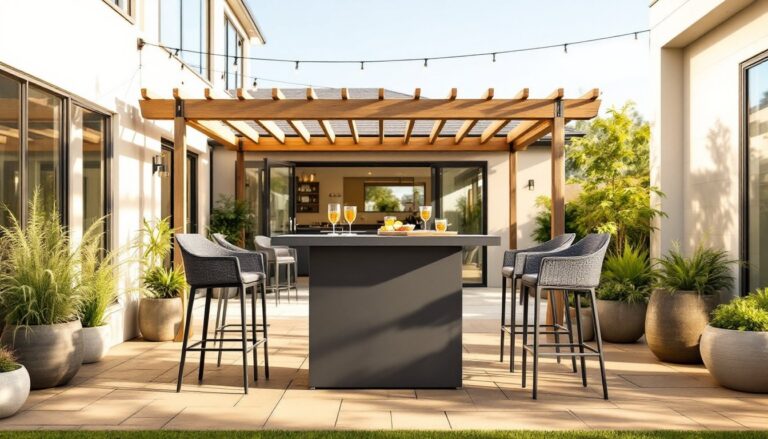
Minimalist backyard patio furniture ideas emphasize clean lines, neutral palettes, and intentional negative space. The goal: create visual calm without sacrificing function.
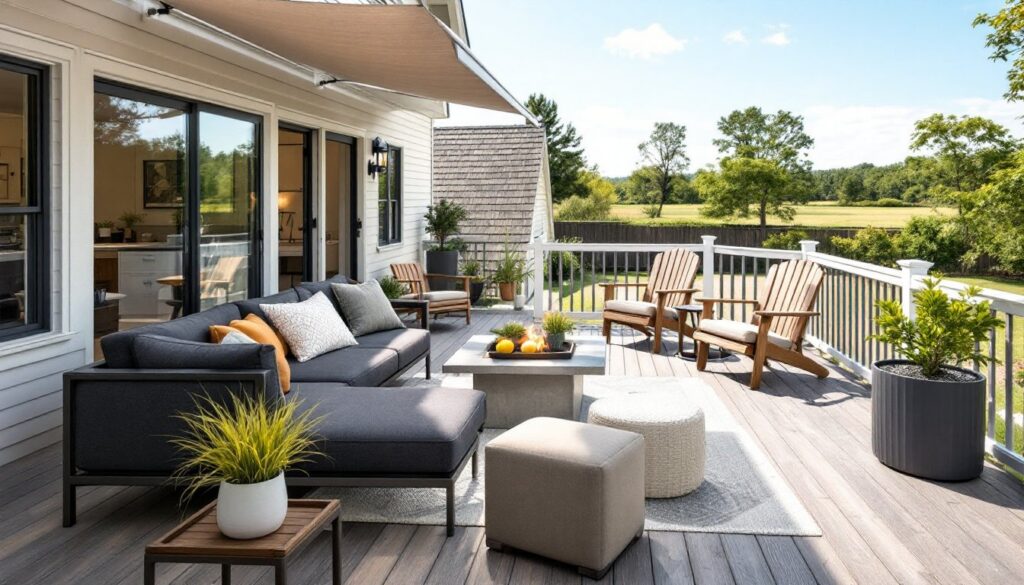
Start with a low-profile sectional in charcoal, taupe, or white. Modular pieces with square arms and slim cushions (4–5 inches thick) maintain the streamlined look. Arrange the sectional along one or two deck edges to preserve open floor space in the center.
Pair the seating with a simple coffee table, powder-coated steel frame with a tempered glass or concrete top. Avoid ornate bases or multiple tiers. A single-tier table at 16–18 inches high works for most seating heights.
Limit accent pieces. One large planter with a single specimen plant (Japanese maple, ornamental grass, or a sculptural succulent) makes more impact than a cluster of small pots. If the deck adjoins the house, mount a single shade structure: a retractable awning or a minimalist pergola with clean 4×4 posts and no decorative brackets.
For dining setups, choose a rectangular table with hairpin legs or a pedestal base and match it with benches instead of individual chairs. Benches tuck fully under the table when not in use, preserving sight lines.
Keep the color count to three or fewer: deck surface, furniture frame, and cushion fabric. Monochromatic schemes (varying shades of gray or beige) reinforce the minimalist aesthetic. Skip patterned pillows, string lights, and tchotchkes, every item should earn its place through function or singular visual impact.
Cozy Conversation Areas for Entertaining Guests
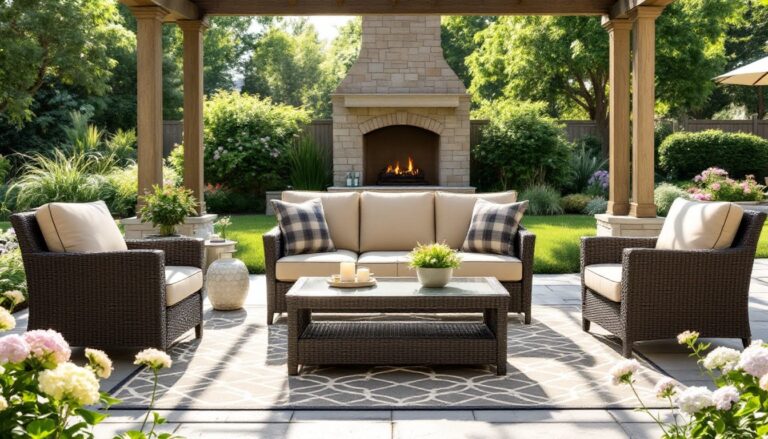
Conversation zones prioritize face-to-face seating and comfortable dwell time. The classic setup: four to six seats arranged in a rough circle or square, with a central focal point.
Deep-seating furniture with 6–7 inch cushions encourages guests to settle in. Look for seats at least 24 inches deep (measured from the back cushion to the front edge). Pair a loveseat with two club chairs, or arrange a U-shaped sectional around a fire pit or low coffee table.
Maintain conversational distance, seats should be 6–8 feet apart, close enough to talk without shouting but far enough that personal space isn’t cramped. Position the coffee table within arm’s reach of all seats (roughly 14–18 inches from the seating edge).
Add a fire feature to anchor the group. Propane or natural gas fire tables provide ambiance without the smoke and ash of wood-burning pits. If installing a permanent gas line for a built-in fire pit, check local codes, many jurisdictions require permits and minimum clearances from structures (often 10 feet from the house). Portable propane fire tables start around $300: built-in gas fire pits with stone surrounds run $1,500–$4,000 installed.
Side tables next to each seat give guests a spot for drinks and phones. Nesting tables work well, tuck them away when not entertaining, pull them out for gatherings. Metal or teak side tables hold up better than wood composites, which can swell from drink condensation.
Consider an outdoor rug (polypropylene or recycled PET fiber) to define the conversation zone and add warmth underfoot. Size it so all front furniture legs rest on the rug, an 8×10 rug suits most four-piece groupings. Secure the rug with outdoor rug tape or a non-slip pad to prevent tripping hazards.
Small Deck Furniture Solutions That Maximize Space
Decks under 100 square feet need furniture that earns its footprint. Every piece should serve multiple roles or fold away when not in use.
Bistro sets (two chairs and a 24–30 inch round table) fit snugly in corners and provide dining for two without dominating the deck. Folding bistro sets store flat against a wall or hang on heavy-duty hooks. Aluminum or steel frames weigh less and fold more compactly than wood.
Built-in benches along the deck perimeter save space and add storage. Frame them with 2×4 or 2×6 lumber, attach to the deck joists or rim board, and hinge the seat tops for access to weatherproof storage bins below. Finish with outdoor cushions that match the deck’s color scheme. A 6-foot built-in bench with storage costs $150–$400 in materials for a DIY build.
Stackable or nesting chairs disappear when guests leave. Look for designs that stack at least four high without tipping. Resin and molded plastic stack most efficiently: metal cafe chairs offer more style but often stack only two or three high.
Swap a traditional coffee table for ottomans with trays. Ottomans provide extra seating during gatherings, footrests during solo time, and flat surfaces when topped with a removable tray. Choose cube ottomans around 18 inches square, they tuck under console tables or side tables.
For patio furniture ideas on narrow decks (less than 8 feet wide), arrange seating in a single line against the house or railing rather than trying to float furniture in the center. A small loveseat or a pair of lounge chairs against the rail leaves a clear walkway and still offers comfortable seating.
Wall-mounted drop-leaf tables provide dining or work surfaces that fold flat when not needed. Secure them to the house wall or deck railing posts with heavy-duty brackets rated for the table’s weight plus dinnerware and food.
Multi-Functional Furniture for Year-Round Deck Use
Year-round deck furniture must handle seasonal shifts, summer sun, fall rain, winter snow (in many climates), and spring pollen.
Storage benches and deck boxes do double duty. A 120-gallon deck box holds cushions, throws, and outdoor toys while serving as extra seating or a side table. Look for resin boxes with reinforced lids rated to support at least 250 pounds if using as seating. Ventilated designs prevent mildew on stored fabrics. Expect to spend $80–$250 depending on capacity and material.
Convertible daybeds with adjustable backrests shift from upright seating to flat lounging. Many models include pull-out trundles or storage drawers underneath. Ensure the frame material is rust-proof (aluminum or stainless steel hardware) and that cushions have removable, washable covers.
Fire pit tables with covers transition from warm-weather coffee tables to cool-weather gathering spots. Models with removable burner inserts and fitted lids convert to standard dining or serving tables. Propane versions offer portability: natural gas models require a licensed plumber to run the line and may need a permit.
Adjustable-height tables work for dining, drinks, or desk use. Crank-style or hydraulic mechanisms hold up better outdoors than spring-loaded types, which corrode. Pair with stools that tuck fully underneath at both heights.
Invest in weatherproof storage for cushions and pillows. Even “all-weather” fabrics last longer when stored dry during extended rain or snow. A lean-to storage shed (4×6 feet minimum) against the house or garage keeps cushions, covers, and off-season decor accessible but protected. Check local zoning, sheds often don’t require permits under a certain size (commonly 120 square feet), but setback rules from property lines still apply.
Color Schemes and Cushion Ideas to Match Your Style
Cushion fabric and color tie the deck’s look together and reflect how much maintenance someone’s willing to tackle.
Solution-dyed acrylic (Sunbrella is the best-known brand) resists fading, mold, and stains better than polyester or cotton blends. The color is embedded in the fiber during manufacturing, not printed on afterward, so it won’t wash out. Sunbrella cushions run $40–$150 each depending on size and thickness. Cheaper polyester “outdoor” cushions fade within one or two seasons of full sun.
For coastal or nautical themes, stick to navy, white, and sand tones with striped or solid patterns. Pair with teak or white-painted furniture frames.
Modern or industrial decks benefit from charcoal, black, or concrete gray cushions on powder-coated metal or dark wood frames. Add one accent color (rust orange, deep olive, or mustard yellow) in throw pillows, two to four pillows maximum to avoid clutter.
Bohemian or eclectic styles mix patterns and colors, but keep a unifying element: repeat one color across all pieces, or choose patterns in the same scale (all large florals or all geometric prints, not a mix).
Cushion thickness matters for comfort and look. Four-inch cushions suit dining chairs and modern low-profile seating. Six to seven-inch cushions work better for deep-seating loungers and conversation sets where people sit for extended periods.
Tie or zipper closures: ties let cushions dry faster after rain but can fade and fray. Zippers keep covers snug and look cleaner but trap moisture if not fully dried before storage. Choose based on climate, arid regions can use zippers: humid or rainy areas benefit from ties and quick-dry foam cores.
Refresh faded or stained cushions with outdoor fabric spray paint formulated for textiles. It won’t last as long as solution-dyed fabric, but it’s a budget fix that adds another season or two. Clean cushions thoroughly, let them dry completely, then apply light coats in a well-ventilated area. Wear gloves and a respirator rated for VOCs.
Conclusion
The right deck furniture setup balances material durability, spatial layout, and style, whether arranging backyard furniture ideas for a sprawling composite deck or fitting patio furniture ideas onto a compact platform. Prioritize weather-resistant materials, plan furniture placement around how the space will actually be used, and invest in quality cushions that won’t fade by mid-summer. With these strategies, a deck becomes a true extension of indoor living space, not just an afterthought with a couple of plastic chairs.