Table of Contents
ToggleLiving in a studio apartment doesn’t mean sacrificing comfort or style, it means choosing furniture that earns its place. Every piece needs to justify the floor space it occupies, which rules out bulky sectionals, oversized dressers, and single-purpose items that sit idle most of the day. The smartest studio dwellers treat furniture selection like a puzzle: each piece should either serve multiple functions, tuck away when not needed, or help define separate zones within one open room. This guide covers practical furniture strategies that maximize square footage without requiring a contractor or a complete remodel.
Key Takeaways
- Studio apartment furniture ideas should prioritize multi-functional pieces like storage ottomans, sleeper sofas, and lift-top coffee tables that serve two or more purposes.
- Space-saving beds such as Murphy beds, loft beds, and platform beds with built-in storage are essential for maximizing floor space and creating zones.
- Vertical storage solutions like floor-to-ceiling shelving, wardrobes, and wall-mounted floating desks help absorb clutter without consuming valuable floor area.
- Drop-leaf tables, bar-height seating, and nesting tables adapt seamlessly between dining and workspace functions, eliminating the need for separate furniture pieces.
- Open shelving units, ceiling-mounted curtain tracks, and plants serve as flexible zone dividers that maintain light flow and create distinct living areas within one open room.
- Always measure doorways, weight ratings, and clearance requirements before purchasing studio apartment furniture to ensure pieces fit and function safely.
Multi-Functional Furniture That Works Double Duty
The cornerstone of smart studio living is furniture that performs two or more jobs. A storage ottoman with a hinged lid provides both seating and a place to stash blankets, magazines, or off-season clothes. Look for models with a solid top surface, some can double as a coffee table when paired with a tray.
Sleeper sofas have evolved beyond the old bar-in-the-back models. Modern mechanisms like pull-out platforms or tri-fold memory foam mattresses deliver actual sleep comfort. Measure the clearance needed when fully extended: many require 6–8 feet of floor space front-to-back. If the studio has an alcove or bay window area, that’s often the best spot to avoid blocking walkways.
Lift-top coffee tables raise to dining or laptop height, transforming a living area into a workspace in seconds. The mechanism typically reveals hidden storage underneath, ideal for remotes, chargers, and paperwork. Check the weight rating: cheaper units wobble under the weight of a laptop and coffee mug.
Murphy desks or fold-down wall-mounted tables work well in tight corners. When closed, they read as a slim cabinet or mirror. When open, they provide 18–24 inches of work depth, enough for a laptop and notebook, but not enough for sprawling craft projects. Anchor them into studs with lag bolts rated for at least 50 pounds to handle the cantilevered load.
Space-Saving Beds and Sleep Solutions
The bed is the single largest piece of furniture in most studios, so choosing the right sleep solution makes or breaks the layout. Murphy beds (wall beds) remain the gold standard for reclaiming floor space. Modern kits include piston lifts or spring mechanisms that make raising and lowering manageable for one person. Horizontal (sideways) Murphy beds fit rooms where ceiling height is limited but wall width isn’t an issue. Installation requires blocking between studs to distribute the load: this isn’t a drywall-anchor project.
Loft beds elevate the sleep surface 5–6 feet off the floor, freeing up space underneath for a desk, dresser, or seating area. They work best in studios with ceilings at least 9 feet tall, any lower and the sleeper will feel like they’re in a bunk. Adult loft beds should have guardrails at least 5 inches above the mattress top and a ladder or stairs rated for 250+ pounds. Check local building codes: some jurisdictions classify lofts as structural modifications requiring a permit if they’re permanently anchored.
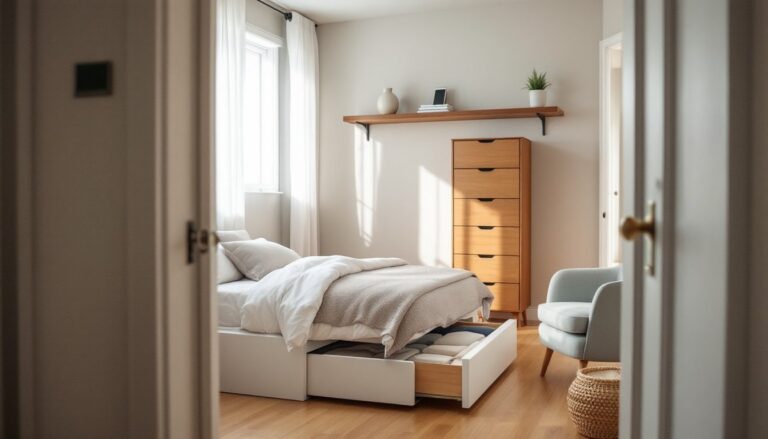
Platform beds with built-in storage offer drawer banks or lift-up platforms that reveal cavernous storage underneath. Hydraulic-lift platforms are easier on the back than manual ones. Measure the clearance needed, most require 12–16 inches of vertical space under the mattress, which limits mattress thickness to around 10 inches if you want to keep the overall bed height reasonable.
For ultra-minimal setups, a Japanese-style futon (the real kind, not a futon frame) rolls up daily and stores in a closet. It requires discipline but frees the entire floor for daytime use.
Storage Furniture That Hides Clutter in Plain Sight
Studios lack the closet space of traditional one-bedrooms, so furniture needs to absorb the overflow. Wardrobes and armoires bring closet capacity where none exists. Look for models at least 18 inches deep to accommodate hangers without clothes brushing the doors. Knockdown (flat-pack) units are easier to maneuver through narrow doorways and up stairs, but solid-wood vintage pieces often cost less on the secondhand market and last longer.
Bed risers lift the bed frame 3–6 inches higher, creating under-bed clearance for rolling storage bins. This works on any frame with exposed legs. Use risers rated for the combined weight of the bed, mattress, and sleeper, cheap plastic ones crack under load. Pair them with low-profile bins (6–8 inches tall) to keep stored items dust-free.
Vertical shelving units maximize wall height. A bookshelf that runs floor-to-ceiling holds more than three short bookcases but uses the same footprint. Anchor tall units to the wall with L-brackets and screws into studs, anything over 6 feet tall poses a tip-over risk, especially when loaded with books or dishware.
Entryway benches with cubbies or hooks serve as a drop zone for shoes, bags, and coats. Choose a bench height (16–18 inches) that doubles as extra seating when guests visit. Open cubbies keep daily-use items accessible: closed cabinets hide the mess.
Dining and Workspace Furniture for Small Studios
Studios rarely have room for both a dedicated dining table and a separate desk. Drop-leaf or gateleg tables expand from a slim console (10–12 inches deep) to a full dining surface (30–36 inches) when both leaves are up. The leaves fold down independently, so the table can serve as a narrow desk most days and expand for dinner parties. Gateleg designs use swing-out supports that lock into place: cheaper versions wobble unless the supports are fully extended.
Bar-height tables (40–42 inches tall) paired with stools take up less visual space than standard dining sets and can tuck against a wall or kitchen peninsula. Stools without backs slide completely under the table, clearing the floor. Look for stools with footrests, dangling feet get uncomfortable fast.
Floating desks mount to the wall with heavy-duty brackets, providing a work surface without legs that clutter the floor. A 24-inch depth handles most tasks: 30 inches is better for dual monitors or drafting work. Route cables through a hole drilled near the back edge to keep cords tidy. Pair the desk with a wall-mounted task light to avoid using desk real estate for a lamp base.
Nesting tables or C-shaped side tables slide under the sofa or bed when not in use and pull out as needed for dining, laptop work, or holding a drink. The C-shape design slides the base under furniture, bringing the tabletop over the seat, handy for eating on the couch without a coffee table in the way.
Seating Options That Won’t Overwhelm Your Space
A full-size sofa can dominate a studio, leaving little room for anything else. Apartment-scale sofas (72–76 inches long vs. the standard 84–90 inches) provide two-person seating without hogging the room. Measure doorways and stairwells before buying, many sofas don’t fit through a standard 32-inch door without removing legs or going in at an angle.
Armless loveseats or settees save 6–8 inches on each side compared to models with padded arms. They feel less bulky visually and physically. Pair one with a pouf or floor cushion for flexible extra seating that stashes in a closet when not needed.
Folding chairs stored in a coat closet or mounted on wall hooks stay out of the way until guests arrive. Wooden folding chairs look less institutional than metal ones and can hang on pegboard or hooks by the seat edge. Keep at least two on hand, one isn’t enough, and four starts to crowd storage.
Benches are underrated in studios. A simple wooden or upholstered bench (14–16 inches deep, 36–48 inches long) fits at the foot of a bed, along a wall, or under a window. It seats two in a pinch, holds folded laundry, or acts as a landing spot for bags and groceries. Benches without arms tuck under tables when not in use.
Room Dividers and Furniture for Creating Zones
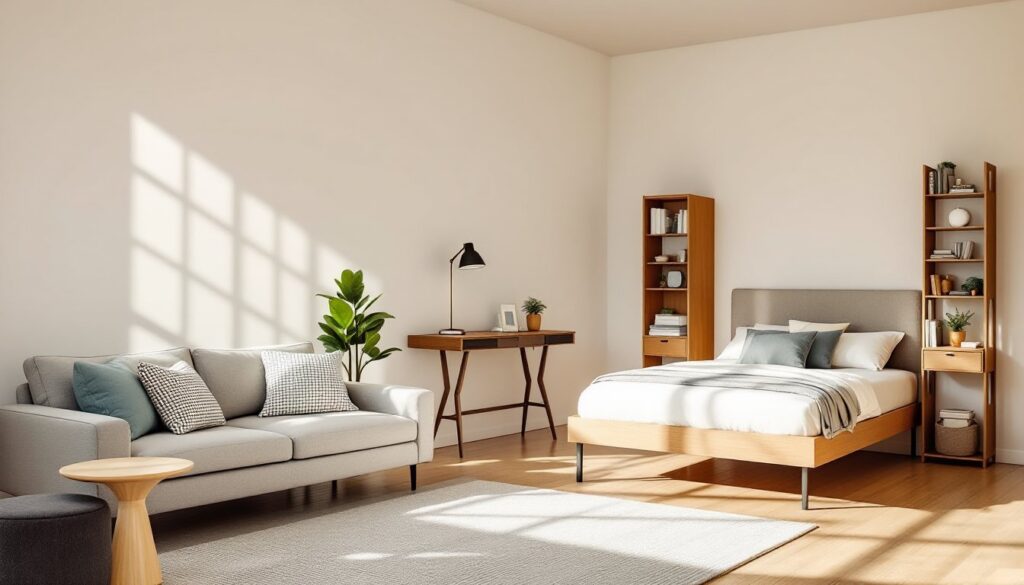
Dividing a studio into zones, sleeping, working, lounging, makes it feel more like a home and less like a dorm room. Open shelving units serve as see-through dividers that don’t block light. A bookshelf placed perpendicular to the wall separates the bed from the living area while providing storage on both sides. Choose units at least 12 inches deep and anchor them to the wall or floor to prevent tipping.
Folding screens or curtain tracks offer flexible boundaries. A ceiling-mounted curtain track with blackout or linen panels creates a temporary bedroom when privacy is needed and slides open to restore the open floor plan. Hospital cubicle tracks work well and cost less than custom systems. Track-mounted curtains don’t require floor space or permanent installation, making them renter-friendly.
Tall plants or plant stands define zones softly without hard walls. A fiddle-leaf fig or snake plant in a 14–16 inch planter adds verticality and suggests separation between areas. Just ensure the spot gets adequate light, most studios have windows on one wall, leaving the interior dim.
Low credenzas or console tables placed behind a sofa establish a boundary without obstructing sightlines. The surface holds lamps, books, or plants, and the cabinet space below hides less attractive items like router equipment or cleaning supplies. A console 30–36 inches tall works behind most standard sofas (32–34 inches tall).
Conclusion
Furnishing a studio well isn’t about cramming in as much as possible, it’s about selecting versatile pieces that adapt to different needs throughout the day. Measure twice, prioritize multi-function designs, and don’t be afraid to leave some floor space open. An uncluttered studio feels larger and more livable than one packed with furniture that only does one job.