Table of Contents
ToggleBluffton’s year-round outdoor living culture puts serious demands on patio furniture. Between salt air off the Calibogue Sound, relentless summer humidity, and occasional tropical storms, not every piece of furniture survives the Lowcountry. Homeowners need gear that can handle the climate while still looking good for evening gatherings on the lanai or lazy Saturday mornings by the pool. This guide covers where to shop, what materials hold up best, and how to pick furniture that won’t turn into a rust-covered eyesore by next season. Whether furnishing a screened porch in Old Town or a poolside deck in Palmetto Bluff, choosing the right pieces upfront saves headaches and cash down the line.
Key Takeaways
- Bluffton’s salt air, high humidity, and UV exposure require patio furniture materials like powder-coated aluminum, marine-grade polymers, or quality teak to prevent rust, mold, and premature degradation.
- Local retailers like Palmetto Patio and Bluffton Ace Hardware offer coastal-grade furniture options, with prices ranging from $800–1,500 for budget sets to $3,500+ for investment-grade pieces that last 10–20 years.
- Avoid regular steel, untreated pine, and cheap resin wicker; instead choose UV-stabilized synthetic wicker, welded aluminum frames with 1.2mm+ gauge tubing, and Sunbrella fabrics for cushions.
- Monthly cleaning, proper cushion storage during rain, and annual inspections of powder-coated finishes protect patio furniture and significantly extend its lifespan in Bluffton’s challenging climate.
- Best sales on patio furniture in Bluffton occur Memorial Day through Fourth of July and in late September when stores clear inventory.
Why Bluffton’s Climate Demands the Right Patio Furniture
Bluffton sits in USDA Zone 8b, with average humidity hovering around 75% year-round and summer temps regularly pushing into the low 90s. That’s a recipe for mildew, rust, and UV degradation if furniture materials aren’t chosen carefully.
Salt air is the silent killer. Even properties a few miles inland get exposure from prevailing winds off the coast. Salt accelerates corrosion on metal frames, degrades certain plastics, and can weaken wood finishes. Furniture that works fine in Charlotte or Atlanta might not last two seasons here.
Rainfall averages about 49 inches annually, concentrated in summer thunderstorms that roll in fast. Cushions and upholstery need to dry quickly, or they’ll develop mold and that musty smell that never quite goes away. Look for furniture with drainage holes in seats and quick-dry foam cores, standard polyurethane foam is a mildew magnet.
UV exposure is intense from April through October. Plastics fade and become brittle, cheaper paints chalk and peel, and untreated fabrics bleach out. Solution-dyed acrylics like Sunbrella hold color better than printed fabrics, and powder-coated aluminum outlasts spray-painted steel.
Ignoring these factors isn’t just cosmetic. Coastal conditions shorten furniture lifespan dramatically. A budget set that might give five years in a dry climate could look trashed in eighteen months here.
Top Patio Furniture Stores in Bluffton, SC
Bluffton has a solid mix of local retailers and regional chains that understand Lowcountry conditions.
Palmetto Patio on Fording Island Road specializes in coastal-grade furniture. They stock brands like Tropitone and Kingsley Bate, both built for salt air and high humidity. Staff can talk through material pros and cons without the hard sell. Expect mid-to-premium pricing, but pieces are genuinely built to last.
Bluffton Ace Hardware on Buckwalter Parkway carries seasonal patio furniture from spring through early fall. Selection leans budget-friendly, resin wicker sets, basic aluminum dining groups. Quality varies, but it’s a decent option for renters or starter setups. Check frame welds and cushion zippers before buying.
The Patio Place in nearby Hilton Head (about 15 minutes south) offers custom cushions and replacement slings. Useful when a favorite chair’s fabric gives out but the frame is still solid. They also carry commercial-grade pieces that hold up to resort use, overkill for some homeowners, but worth it for high-traffic areas.
Big-box options include Lowe’s on Buckwalter and Home Depot off 278. Both carry national brands like Hampton Bay and offer assembly services. Quality is hit-or-miss: stick with powder-coated aluminum frames and avoid anything with exposed steel hardware that’ll rust out.
For premium shoppers, Summer Classics and Brown Jordan showrooms in Savannah (about 30 minutes west) offer high-end collections. These are investment pieces, think $500+ per dining chair, but they’re designed for coastal estates and come with real warranties.
Best Materials for Coastal Patio Furniture
Material choice matters more than brand or style in this climate.
Powder-coated aluminum is the workhorse. Lightweight, rust-proof, and holds finish well under UV. Welded joints outlast bolted connections. Look for thicker gauge tubing (1.2mm minimum) on frames, cheaper sets use thin-wall tubing that dents easily. Brands like Tropitone and Woodard use commercial-grade aluminum that handles salt spray without pitting.
Marine-grade polymer (MGP) and high-density polyethylene (HDPE) furniture mimics wood but won’t rot, splinter, or need refinishing. Polywood and similar brands make Adirondack chairs and dining sets from recycled plastic lumber. Heavy, stable, and virtually maintenance-free. Downside: limited style range and higher upfront cost.
Teak is classic for good reason, natural oils resist moisture and insects. Untreated teak weathers to a silver-gray patina: some love it, others hate it. Maintaining the honey color requires annual oiling with teak sealer. Grade A teak (heartwood) lasts decades: lower grades with more sapwood are prone to cracking. Expect to pay $300–600 per chair for solid teak construction.
Avoid regular steel (even painted), untreated pine, and cheap resin wicker. Steel rusts fast here, pine rots within a few seasons, and low-grade wicker gets brittle and cracks under UV. If a set uses steel, make sure it’s stainless (304 or 316 grade) or hot-dip galvanized under the powder coat.
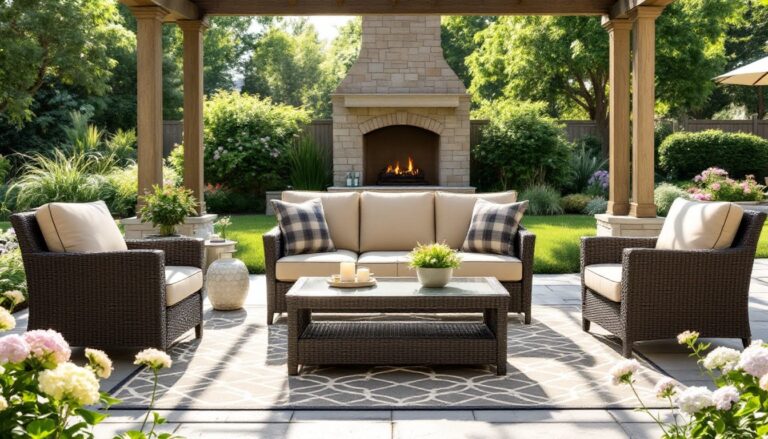
All-weather wicker over aluminum frames is popular and holds up well if it’s quality synthetic. PE (polyethylene) or PVC wicker weathers better than natural rattan. Check that the weave is UV-stabilized and the frame underneath is aluminum, not steel.
Popular Patio Furniture Styles for Lowcountry Homes
Bluffton’s architectural vibe runs traditional Southern coastal, think board-and-batten, wide porches, and oyster shell driveways. Furniture styles tend to follow suit.
Classic casual dominates: deep-seat sectionals with neutral cushions, teak dining tables, and Adirondack chairs. This style pairs with both Old Town bungalows and newer Palmetto Bluff builds. Stick to whites, grays, navy, and natural wood tones. Bright colors fade fast and look dated within a couple years.
Farmhouse/cottage is trending, distressed finishes, slatted backs, and X-base tables. Works well on screened porches and under covered patios where furniture gets some weather protection. Just make sure “distressed” is a finish choice, not actual wear from poor material quality.
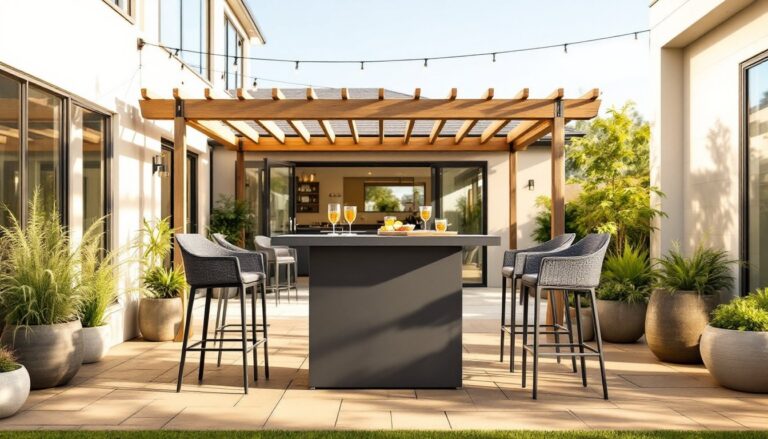
Modern minimalist shows up in newer developments: clean lines, low profiles, modular sectionals. Aluminum and powder-coated steel frames with slim cushions. Looks sharp but requires more frequent cushion storage during storms, less forgiving than bulkier traditional styles.
Avoid overly ornate cast aluminum or wrought iron with lots of scrollwork. It traps moisture, collects pollen and dirt, and is a pain to clean. Simple, open designs shed water and dry faster.
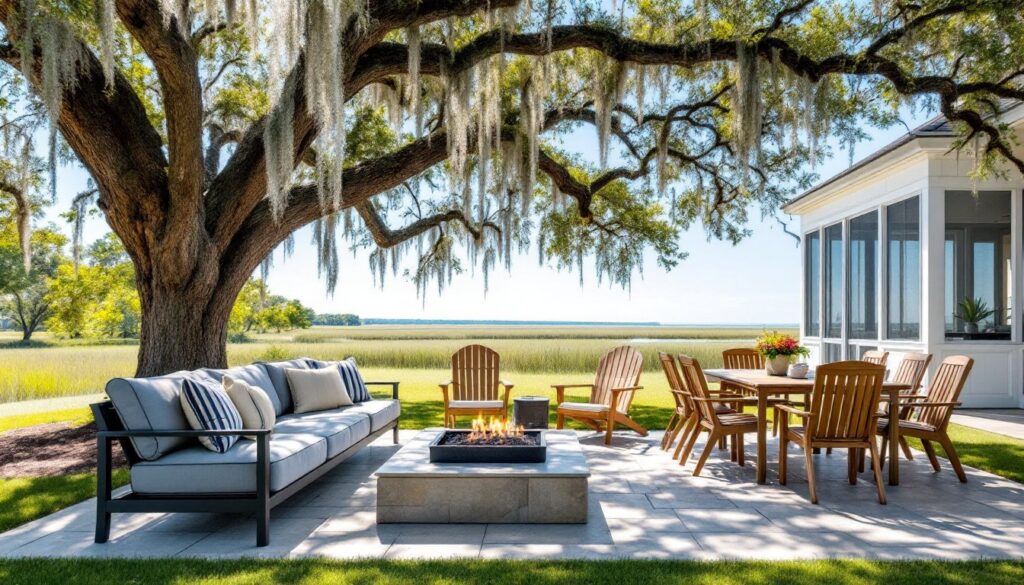
Most Bluffton homeowners mix styles: a teak dining set on the main patio, Adirondack chairs around a fire pit, and a wicker conversation set on a screened porch. The Lowcountry aesthetic is more “comfortable and functional” than rigidly coordinated.
Budget-Friendly vs. Premium Options in Bluffton
Expect to spend $800–1,500 for a basic four-piece conversation set (two chairs, loveseat, coffee table) in weather-resistant materials. Budget options in that range include aluminum-frame wicker sets from Lowe’s or seasonal sales at Ace Hardware. They’ll last 3–5 years with care but may need cushion replacements and touch-up paint.
Mid-range ($1,500–3,500) brings better construction: thicker frames, Sunbrella fabrics, modular designs. Brands like Tropitone, Lloyd Flanders, and Telescope Casual fall here. Worth it for main living areas that see daily use. Warranties typically cover 3–5 years on frames, 1–2 years on fabric.
Premium ($3,500+) is investment-grade: solid teak dining sets, custom-welded aluminum sectionals, or marine-polymer pieces built like dock furniture. Brands like Kingsley Bate, Barlow Tyrie, and Brown Jordan. These last 10–20 years in coastal conditions, and many components are replaceable. Makes sense for waterfront homes or if furniture is a major part of outdoor living space.
Don’t cheap out on cushions. Budget $50–150 per seat cushion for quality Sunbrella or similar solution-dyed acrylic with quick-dry cores. Cheap cushions ($20–30) use printed polyester that fades in one season and foam that holds water.
Sales timing: Best deals run Memorial Day through Fourth of July and again in late September when stores clear inventory. Floor models offer 20–40% discounts but inspect carefully for frame damage or faded fabric.
Maintenance Tips for Long-Lasting Outdoor Furniture
Even coastal-grade furniture needs regular care to hit its expected lifespan.
Cleaning: Hose down frames and cushions monthly during heavy-use months. Mix mild dish soap with water for deeper cleaning, skip harsh degreasers that can strip finishes. A soft nylon brush works for textured surfaces and wicker weave without scratching.
Cushion care: Store cushions in a deck box or shed during extended rain or when not in use for a week or more. If mildew appears, scrub with a 1:4 bleach-to-water solution, rinse thoroughly, and let dry completely in sun. Quick-dry foam helps, but nothing beats keeping cushions out of prolonged wet conditions.
Metal frames: Inspect powder coating annually for chips or scratches. Touch up with matching spray paint immediately, bare aluminum oxidizes (harmless but ugly), and any exposed steel will rust. Pay attention to joints and underneath arm caps where water collects.
Teak maintenance: Left untreated, teak turns gray, structurally fine but not everyone’s taste. To preserve color, clean with teak cleaner annually and apply teak oil or sealer (brands like Semco or Star brite). Two coats, let each dry 24 hours. Expect to reapply yearly.
Wicker and slings: Check for fraying, cracking, or loose weave. Sling fabric (the stretched mesh on some chairs) typically needs replacement every 5–7 years. Most manufacturers sell replacement slings: local upholstery shops can also fabricate custom if the frame is still good.
Off-season prep: Even in Bluffton’s mild winters, cover or store high-value pieces November through February. Furniture covers should be breathable (not plastic tarps, which trap moisture). Storing cushions indoors is non-negotiable, even Sunbrella will mildew if left wet under a cover.
Safety note: Use stainless steel or coated fasteners for any repairs. Regular hardware-store bolts will rust out in months.
Conclusion
Bluffton’s salt air and humidity make patio furniture selection more critical than in drier climates. Powder-coated aluminum, marine-grade polymers, and quality teak handle Lowcountry conditions best, while proper maintenance and seasonal care extend lifespan significantly. Local retailers understand these demands and stock accordingly. Investing in the right materials upfront and staying on top of simple cleaning beats replacing cheap furniture every couple of years, both for the wallet and for actually enjoying the outdoor space.