Table of Contents
ToggleMoroccan living room furniture brings a centuries-old design tradition rooted in North African craftsmanship, Islamic artistry, and Berber culture into contemporary homes. Unlike mass-produced pieces, authentic Moroccan furniture features hand-carved details, vibrant textiles, and metal inlays that create focal points in any space. Homeowners drawn to layered textures, jewel tones, and architectural silhouettes find these pieces work surprisingly well in both traditional and modern interiors. This guide covers the defining characteristics, essential furniture types, styling strategies, material choices, and color palettes needed to successfully integrate Moroccan furniture into a living room without turning the space into a theme park.
Key Takeaways
- Moroccan living room furniture features hand-carved geometric patterns, bone inlays, and low-slung seating rooted in centuries of North African craftsmanship and Islamic artistry.
- Authentic pieces use traditional materials like cedar wood, vegetable-tanned leather, and solid brass accents with hand-tool marks, making them distinguishable from mass-produced knock-offs that deteriorate quickly.
- Layer Moroccan furniture as accent pieces in modern spaces by pairing one or two statement items with neutral elements, avoiding visual chaos while showcasing the elegance of carved tables and metal-embellished poufs.
- Incorporate pierced metal lanterns and overhead lighting strategically to cast patterned shadows that emphasize Moroccan furniture’s texture and carved details.
- Choose warm earth tones like terracotta and ochre or jewel-toned textiles paired with neutral walls to let Moroccan furniture be the primary color source without overwhelming open-plan living spaces.
- Measure seating height carefully—authentic Moroccan sofas sit 12–16 inches off the floor compared to standard Western sofas at 17–19 inches—and verify joint construction uses traditional mortise-and-tenon joinery rather than screws.
What Defines Moroccan Living Room Furniture?
Moroccan furniture stands apart due to specific construction methods, decorative techniques, and cultural influences that have remained consistent for generations. The style blends Arab, Berber, Moorish, and French colonial elements, creating a distinct aesthetic recognizable by several key features.
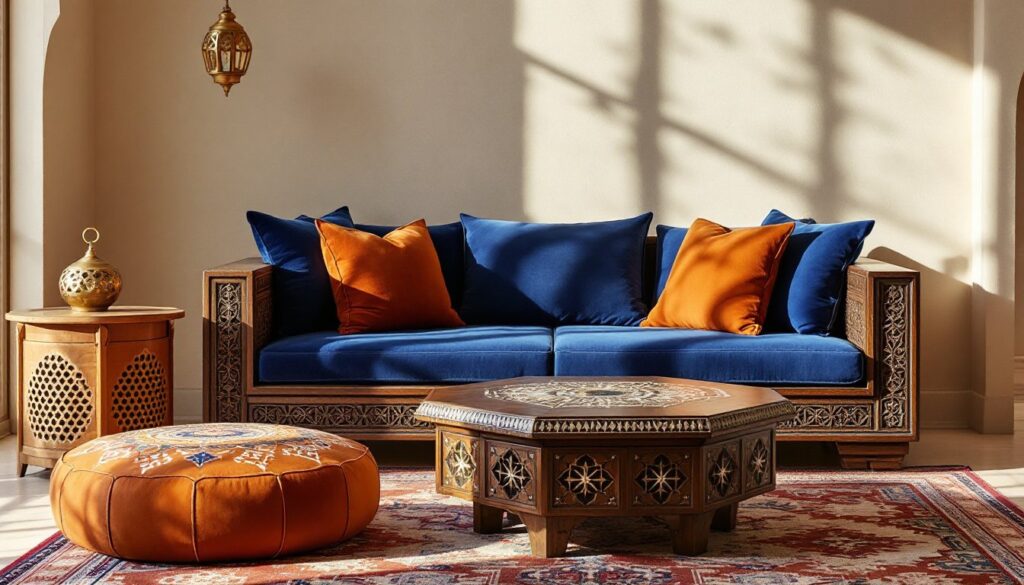
Geometric patterns dominate surfaces, zellige tilework motifs, star polygons, and interlacing designs appear as carved reliefs or bone inlay. Artisans use traditional joinery rather than modern fasteners, with mortise-and-tenon joints reinforced by hand-forged iron brackets. Many pieces incorporate mashrabiya screens (turned wood lattice panels) originally designed for privacy and airflow in hot climates.
The silhouette tends toward low profiles and ground-hugging forms. Seating sits closer to the floor than Western furniture, reflecting the Moroccan tradition of sitting on cushions and rugs during meals and gatherings. Arched doorways, scalloped edges, and ogee curves reference Islamic architecture found in riads and palaces.
Metal embellishment appears frequently, brass tacks, hand-hammered steel studs, or repousse copper panels, adding reflective contrast against dark wood. Color comes from textiles rather than painted finishes: the wood itself stays natural or receives oil-based stains that deepen the grain. This approach emphasizes material authenticity and showcases craftsmanship rather than concealing it under layers of paint.
Essential Moroccan Furniture Pieces for Your Living Room
Low-Slung Seating and Poufs
Floor cushions, banquettes, and leather poufs form the foundation of Moroccan living room seating. Traditional Moroccan salons use built-in bench seating (sedari) lined with cushions, but freestanding low sofas or daybeds adapt better to Western floor plans.
Poufs serve as versatile footstools, side tables, or extra seating. Authentic versions use hand-stitched goat leather or camel hide with contrasting embroidery, filled with recycled textile scraps or shredded foam. Avoid synthetic “Moroccan-style” poufs stuffed with polystyrene beads, they collapse quickly and lack the structural firmness of properly filled leather poufs.
When selecting low seating, measure seat height carefully. Moroccan sofas typically sit 12–16 inches off the floor, compared to standard Western sofas at 17–19 inches. This works well in rooms with low coffee tables but may feel awkward if the homeowner plans to mix in conventional-height side tables. Pair low seating with floor cushions in kilim fabric or brocade to create layered depth without adding bulk.
Intricately Carved Wood Tables
Moroccan coffee tables and side tables showcase woodworking techniques rarely seen in factory furniture. Cedar, thuya wood (a North African conifer), and walnut serve as primary materials, chosen for workability and aromatic properties.
Coffee tables often feature pierced geometric carving around the apron (the vertical band beneath the tabletop), with bone or mother-of-pearl inlay forming star patterns or arabesque scrollwork. Some designs incorporate removable brass tray tops, originally serving trays that rest on folding wooden bases (called tray tables or tea tables). These pieces function well in small spaces since the tray lifts off for storage and the base folds flat.
Side tables range from simple turned-leg designs to elaborate octagonal or hexagonal shapes with mashrabiya panels. The craftsmanship quality varies widely in import pieces. Check joint tightness, inlay adhesion, and finish consistency. Authentic pieces use hide glue and shellac-based finishes: cheaper imports use PVA glue and polyurethane that gives an unnaturally glossy surface.
For structural stability, examine how the legs attach. Traditional Moroccan tables use wedged through-tenons visible on the underside of the tabletop, which allow for wood movement and can be re-tightened over time. Screwed-on legs indicate mass production and won’t hold up under regular use.
How to Style Moroccan Furniture in Modern Spaces
Moroccan furniture works best as accent pieces rather than a room-wide theme. Overloading a space creates visual chaos and undermines the elegance individual pieces offer.
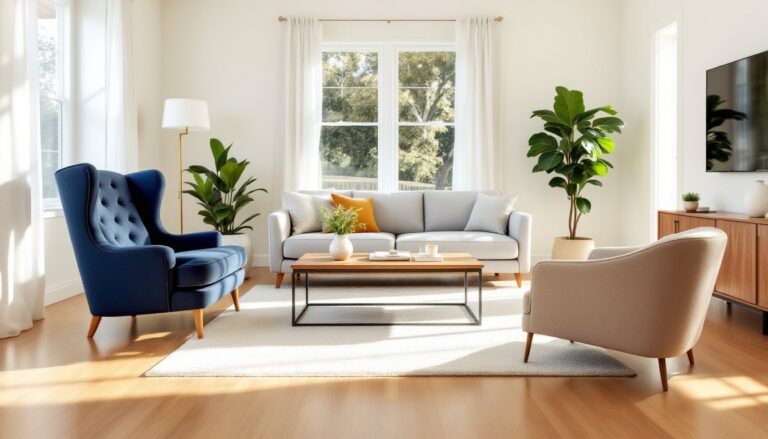
Start with one or two statement items, a carved console table, a pair of poufs, or a single low sofa, then build around them with neutral elements. A Moroccan coffee table paired with a clean-lined sectional in solid upholstery creates balance without competing for attention. The contrast between ornate and minimal actually strengthens both design languages.
Layering remains important. Moroccan interiors traditionally stack textiles, floor rugs, cushion covers, throws, in complementary patterns. In a modern room, limit this to two or three pattern scales: a large geometric area rug, medium-scale embroidered pillows, and small-detail throw blankets. Keep the color families consistent to prevent the layers from fragmenting.
Lighting plays a crucial role. Pierced metal lanterns (often tin or brass with colored glass inserts) cast patterned shadows that emphasize Moroccan furniture’s texture. Hang pendants at varying heights or use floor lanterns beside seating areas. Avoid overhead can lights, they flatten detail and create harsh shadows on carved surfaces.
Mix eras and origins carefully. Moroccan furniture pairs well with mid-century modern pieces (both favor clean lines and natural materials), industrial metal accents, and even Scandinavian minimalism. It clashes with heavy traditional European furniture, overly rustic farmhouse styles, or busy coastal decor. When in doubt, let the Moroccan piece be the room’s most decorative element and keep everything else restrained.
Materials and Craftsmanship in Moroccan Furniture
Understanding material choices helps buyers distinguish between authentic craftsmanship and imported knock-offs that fall apart within months.
Cedar dominates Moroccan woodworking due to its abundance in the Atlas Mountains, natural insect resistance, and pleasant aroma. Artisans leave it unstained or apply oil-based finishes that deepen to amber over time. Thuya wood, harvested from root burls, produces highly figured grain patterns prized for decorative boxes and small tables, expect higher prices and limited availability outside Morocco.
Bone inlay involves cutting camel or cattle bone into thin strips, fitting them into carved recesses in the wood surface, then sanding flush. Cheaper alternatives use resin or plastic “bone,” identifiable by uniform color and lack of natural grain variation. Authentic bone shows subtle striations and slight color differences between pieces.
Leatherwork requires vegetable-tanned goat or camel hide, hand-stitched with waxed thread in contrasting colors. Factory-made poufs use drum-dyed leather (identifiable by color that penetrates fully through the hide) and lock-stitched seams. Neither method is inherently wrong, but vegetable-tanned leather develops a patina and softens with age, while chrome-tanned leather stays stiff.
Metal accents, brass studs, iron corner brackets, hammered trays, should show hand-tool marks rather than machine-pressed uniformity. Run fingers across hammered surfaces: authentic pieces have subtle irregularities in the dimpling pattern. Brass tacks should be solid brass (magnetic tests won’t attract them) rather than brass-plated steel that corrodes and stains wood.
When evaluating carved pieces, check detail crispness. Hand-carving produces slight variations in depth and spacing: CNC machining creates identical repeats. Neither destroys the piece’s functionality, but hand-carved work commands higher prices and holds value better for resale.
Choosing the Right Color Palette for Moroccan Living Rooms
Moroccan interiors traditionally use saturated jewel tones, but modern interpretations work across a wider spectrum depending on the homeowner’s existing palette and natural light conditions.
Deep jewel tones, sapphire blue, emerald green, ruby red, and amethyst purple, appear in textiles, tilework, and painted accent walls. These colors originated from natural dyes and mineral pigments, so they lean slightly muted rather than neon-bright. In North-facing rooms or spaces with limited natural light, jewel tones can feel heavy. Limit them to pillows, throws, and small upholstered pieces rather than large furniture or wall colors.
Warm earth tones offer a more adaptable palette: terracotta, ochre, burnt sienna, and clay rose. These shades complement the natural cedar and walnut tones in Moroccan furniture without competing. They work particularly well in Southwest or Mediterranean regional styles where architectural elements (exposed beams, stucco walls, tile floors) already lean warm.
Metallic accents, brass, copper, hammered silver, and oxidized bronze, serve as neutrals in Moroccan design. They bridge warm and cool tones while adding reflective surfaces that brighten rooms. Use them in light fixtures, tray tables, drawer pulls, and mirror frames.
For a contemporary approach, anchor the room in off-white, greige, or soft gray, then introduce Moroccan furniture as the primary color source. A neutral envelope lets carved wood, embroidered textiles, and metallic details stand out without overwhelming the space. This strategy works well in open-plan homes where the living room flows into kitchens or dining areas that don’t share the Moroccan aesthetic.
Avoid matchy-matchy monochrome. Moroccan design thrives on controlled variety, multiple shades of blue, layered terracottas, mixed metal finishes. The key is keeping the color temperature consistent (all warm or all cool) while varying intensity and value.