Table of Contents
ToggleIndustrial bedroom furniture brings the rugged appeal of warehouses, factories, and urban lofts into residential spaces. This design movement, rooted in repurposed commercial buildings from the late 20th century, celebrates exposed materials, honest construction, and utilitarian forms. Unlike softer design styles that conceal structure, industrial pieces put joinery, metal frameworks, and reclaimed wood front and center. For homeowners seeking a bedroom that balances character with function, without the precious fragility of ornate traditional furniture, industrial pieces deliver durability and visual weight that ages gracefully in modern homes.
Key Takeaways
- Industrial bedroom furniture combines exposed metal frameworks, reclaimed wood, and honest construction to create durable, character-rich pieces that age gracefully without ornate decoration.
- Invest in ball-bearing drawer slides (75-100 lbs rated), welded steel joints, and dovetail drawer construction to ensure quality industrial bedroom furniture withstands daily use for decades.
- When styling an industrial bedroom, pair furniture with complementary elements like matte gray walls, wide-plank wood floors, Edison bulb lighting, and layered natural textiles to prevent the space from feeling sterile.
- Custom fabricators and architectural salvage yards offer authenticity and quality, while specialty online retailers provide better specs and quality control than big-box stores selling budget alternatives.
- Always measure doorways and hallways before purchasing welded industrial bedroom furniture, as pieces that don’t disassemble can create installation problems and unnecessary costs.
What Is Industrial Bedroom Furniture?
Industrial bedroom furniture mimics the materials and construction methods found in early 20th-century factories and commercial spaces. Think steel I-beams, riveted metal panels, reclaimed wood from old barn doors or mill floors, and exposed hardware that’s integral to the structure rather than decorative afterthought.
The style emerged when artists and creatives converted abandoned industrial buildings into living spaces in cities like New York and Chicago during the 1960s and 70s. They worked with what existed: metal shelving, rolling carts, heavy timber workbenches. Commercial furniture manufacturers later adapted these elements for residential use, scaling down dimensions while retaining the aesthetic.
Today’s industrial bedroom furniture typically combines powder-coated steel or wrought iron frames with solid wood surfaces, often reclaimed pine, oak, or fir with visible knots, nail holes, and weathering. Finishes lean toward matte blacks, galvanized metal, and natural wood sealed with clear coat or light stain. The look avoids high gloss, ornate carvings, or anything that hides the materials’ inherent texture.
This isn’t merely a visual choice. Industrial construction methods, welded steel, mortise-and-tenon joinery, bolted connections, produce furniture that handles daily use without wobbling or requiring frequent tightening. A properly built industrial bed frame can support significant weight and last decades, making it practical for homeowners who prioritize longevity over trend cycles.
Key Characteristics That Define the Industrial Aesthetic
Several design elements consistently appear across industrial bedroom furniture, creating a cohesive look even when mixing manufacturers or eras.
Exposed Metal Frameworks: Steel tubing, angle iron, and flat bar stock form visible skeletons. Welds remain visible rather than ground smooth. Black oxide, raw steel with clear coat, or powder-coated finishes in charcoal and graphite dominate. Avoid shiny chrome, it reads more mid-century modern than industrial.
Reclaimed and Distressed Wood: Surfaces show age. Saw marks, nail holes, color variation, and checking (minor splits from drying) add character. Nominal 2x lumber (actual 1.5″ x thickness) often appears in headboards and tabletops. Reclaimed wood comes pre-aged, but new wood can be distressed with chains, wire brushes, and vinegar-steel wool stains to mimic decades of wear.
Minimal Ornamentation: Industrial furniture relies on proportion and material honesty rather than applied decoration. Hardware serves structural purposes, bolts, corner brackets, casters, and pipe fittings integrate into the design rather than hiding behind veneers.
Utilitarian Forms: Pieces echo workshop and warehouse equipment. Bed frames resemble steel workbenches. Nightstands take cues from factory carts. Dressers incorporate locker-style doors or apothecary-style drawer banks with label holders.
Neutral, Earthy Palettes: Grays, blacks, raw wood tones, and aged metals form the foundation. Rust patinas (real or faux) add warmth. Colorful accents come from bedding and décor, not the furniture itself.
These elements work together to create spaces that feel grounded and unpretentious, bedrooms that nod to craft and labor rather than luxury showrooms.
Essential Industrial Bedroom Furniture Pieces
Bed Frames and Headboards
The bed frame anchors an industrial bedroom. Look for designs combining steel tube frames with wood or metal platform supports. Many use 1.5″ to 2″ square steel tubing for corner posts and side rails, powder-coated or left raw with a protective clear finish.
Platform beds eliminate the need for box springs, sitting the mattress on wood slats or a metal grid. Confirm slat spacing stays under 3″ to prevent mattress sagging, 2.75″ is standard for memory foam. Some frames include center support beams (essential for queen and king sizes to prevent bowing under weight).
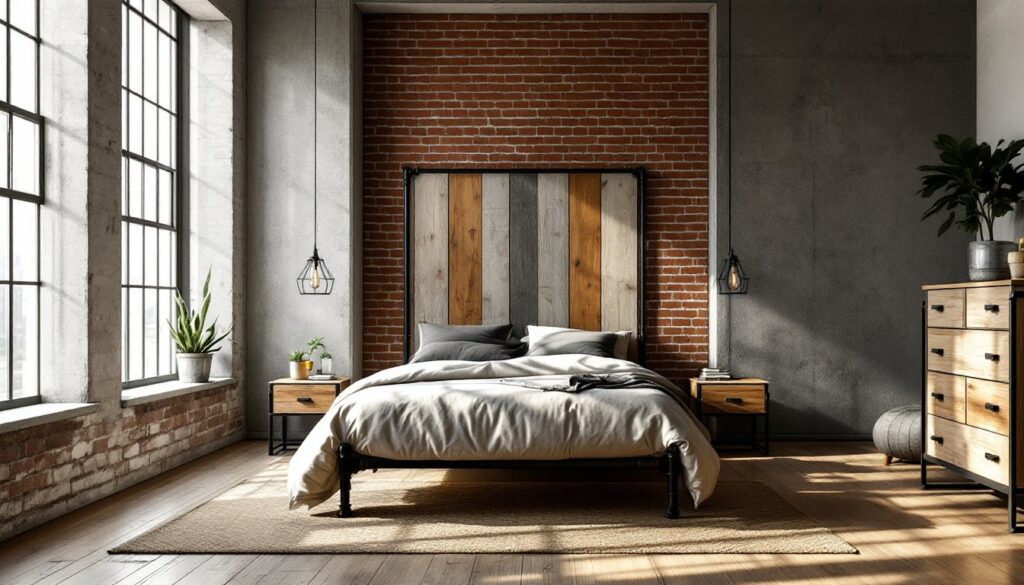
Headboards range from simple steel bars to reclaimed wood planks mounted between metal uprights. Barn wood headboards often use 1×6 or 1×8 boards (actual ¾” x 5.5″ or 7.25″) arranged vertically or horizontally. Check that wood is properly sealed, raw reclaimed wood can harbor splinters and shed debris.
For structural integrity, welded joints outperform bolted assemblies, but bolted frames ship easier and allow disassembly for moves. If buying bolted, ensure corner brackets are steel (not plastic) and connections use lock washers to prevent loosening.
Safety note: Metal frames can scratch floors. Use felt pads or rubber feet, especially on hardwood or tile.
Dressers, Nightstands, and Storage Solutions
Industrial storage pieces blend wood cabinet boxes with metal bases and hardware. Quality construction matters here, drawers see frequent use and cheap slides fail quickly.
Dressers: Look for ball-bearing drawer slides rated for 75-100 lbs, not cheaper roller slides that bind when loaded. Dovetail or rabbet joints on drawer boxes indicate better craftsmanship than stapled particleboard. Many industrial dressers use pipe legs, ¾” to 1″ black iron pipe with floor flanges, which provide a distinct look but require leveling on uneven floors (keep a pipe wrench handy for adjustments).
Drawer fronts often feature steel frames with wood or metal panel inserts. Some incorporate industrial bin pulls, leather tab handles, or recessed cup pulls (easier on knuckles than protruding knobs in tight bedroom layouts).
Nightstands: Compact footprints work best in bedrooms. Common dimensions run 18-24″ wide by 16-20″ deep. Industrial nightstands frequently include open lower shelves (steel mesh or wood slats) for books or baskets, with a single drawer up top.
Rolling carts make flexible nightstands, especially models with locking casters. Caster diameter affects stability, 3″ wheels roll smoothly and lock securely, while 2″ casters can wobble on carpet.
Armoires and wardrobes suit bedrooms lacking closet space. Metal locker-style units resist humidity better than solid wood in damp climates. Ensure hinges are heavy-duty, piano hinges or strap hinges handle door weight without sagging. Doors over 24″ wide benefit from magnetic catches or barrel bolts to prevent swinging open.
Always check actual dimensions before buying. Advertised sizes sometimes include protruding hardware or casters, reducing usable interior space.
How to Style an Industrial Bedroom
Industrial furniture provides a strong visual foundation, but the surrounding space determines whether the room feels cohesive or like a metal shop.
Wall Treatments: Exposed brick, concrete, or reclaimed wood plank walls amplify the aesthetic. For drywall, consider matte gray or charcoal paint, avoid bright whites that create harsh contrast. Limewash or textured plaster adds depth without pattern.
Flooring: Wide-plank wood floors (5″ or wider) in medium to dark stains complement metal furniture. Polished concrete works but feels cold underfoot, add area rugs in natural fibers like jute, wool, or cowhide for warmth. Avoid glossy tiles that clash with matte industrial finishes.
Lighting: Pendant lights with Edison bulbs, metal cage fixtures, or repurposed factory task lights reinforce the theme. Dimmer switches help soften the stark quality of exposed bulbs. Mount industrial pipe sconces flanking the bed instead of traditional table lamps to save nightstand space.
Textiles: Layer textures to prevent the room from feeling sterile. Linen duvet covers, chunky knit throws, and leather accent pillows introduce softness without undermining the industrial vibe. Stick to solid colors or subtle patterns, busy florals fight the minimalist aesthetic.
Accessories: Limit décor to functional items with character. Vintage suitcases for storage, galvanized metal bins, or wire baskets fit better than delicate tchotchkes. Wall-mounted steel shelving displays books or plants without requiring floor space.
Plants: Greenery balances metal and wood. Hardy varieties like snake plants, pothos, or rubber trees tolerate bedroom light levels and add organic contrast.
Avoid Over-Theming: An industrial bedroom shouldn’t feel like a set piece. Mix in a few non-industrial elements, a modern abstract print, a midcentury chair, or ceramic pottery, to keep the space livable rather than museum-like.
Where to Buy Quality Industrial Bedroom Furniture
Industrial furniture quality varies widely. Here’s where to find pieces that last.
Custom Fabricators and Local Welders: For truly unique pieces, commission local metalworkers. They’ll build to exact dimensions and can incorporate salvaged materials. Expect to pay more ($800-$2,000+ for a queen bed frame), but craftsmanship and customization justify the cost. Ask for welded joints and request powder coating for durability.
Specialty Online Retailers: Companies focusing on industrial and rustic furniture offer better quality control than mass-market stores. Look for detailed specs, steel gauge, wood species, finish type, in product descriptions. Customer photos reveal real-world appearance better than staged shots. Check return policies: shipping costs on heavy metal furniture can make returns expensive.
Architectural Salvage Yards: Real industrial pieces, vintage factory carts, metal lockers, workbenches, appear here. They require cleaning and sometimes structural reinforcement, but authenticity is unmatched. Bring a tape measure and inspect welds for cracks or rust-through.
Big-Box Furniture Stores: Budget options exist, but construction shortcuts are common. Particleboard with metal-look vinyl, thin-gauge steel that dents easily, and plastic “wood” panels cheapen the aesthetic. If buying budget pieces, prioritize solid wood over composites and verify drawer slide quality in person.
DIY Builds: Homeowners with welding skills or woodworking experience can fabricate industrial furniture at substantial savings. Steel suppliers sell tubing and flat stock by the foot. Reclaimed wood sources include demolition contractors, Craigslist, and specialty lumber yards. Safety reminder: Welding requires proper ventilation, fire extinguishers, and personal protective equipment including auto-darkening helmets and leather gloves.
Before purchasing, measure bedroom doorways, hallways, and stairwells. Welded steel bed frames don’t disassemble easily, and a king-size headboard that won’t fit through a 32″ door creates costly problems.