Table of Contents
ToggleFree patio furniture is everywhere, if someone knows where to look. From neighborhood curbs to online community boards, homeowners discard perfectly salvageable outdoor pieces every day. Some need minor repairs, others just a good scrub. With a little effort and basic restoration skills, anyone can furnish an entire patio without spending a dime on new retail furniture. This guide covers where to find these hidden gems, how to evaluate their condition, what restoration techniques actually work, and which safety red flags to avoid. The goal isn’t just scoring freebies, it’s building a functional outdoor space that lasts.
Key Takeaways
- Free patio furniture is readily available on Facebook Marketplace, Craigslist, Nextdoor, and Buy Nothing groups, especially during spring cleanup, moving season, and bulk trash weeks—set alerts and act quickly since quality pieces disappear within hours.
- Evaluate free outdoor furniture carefully by checking metal for rust-through, wood for rot and loose joinery, and avoiding plastic resin, moldy cushions, and pieces with structural damage before investing restoration effort.
- Restore free patio furniture finds with basic techniques: deep cleaning with TSP, rust removal for metal pieces, sanding and refinishing for wood, and replacing hardware with exterior-grade fasteners—most projects take a weekend or less.
- Safety comes first with secondhand outdoor furniture; test for lead paint on pre-1978 pieces, load-test all furniture before use, remove mold, check for sharp edges, and wear protective gear like respirators and safety glasses during restoration.
- A piece of free patio furniture is only worth it if honest evaluation and restoration effort won’t exceed a weekend, and if the finished result is safe, functional, and fits your outdoor space.
Where to Find Free Patio Furniture Near You
The best free furniture doesn’t advertise itself with a price tag, it shows up in unexpected places, often when someone’s clearing out a garage or upgrading their deck. Knowing where to look and when to act makes all the difference.
Online Marketplaces and Community Groups
Facebook Marketplace and Craigslist feature dedicated “free” sections where people post items they need gone quickly. Search terms like “patio furniture,” “outdoor chairs,” “deck table,” or “garden bench” multiple times per day, good pieces disappear within hours, sometimes minutes. Set up alerts if the platform allows it.
Nextdoor and neighborhood-specific Facebook groups often have members giving away furniture during spring cleaning or before a move. These hyperlocal platforms mean shorter travel distances and the chance to ask the current owner about the furniture’s history, storage conditions, and any known issues. Freecycle and Buy Nothing groups operate on a gift economy, members post items they’re giving away, and others claim them. No money changes hands, and most groups require pickup within 24–48 hours.
Craigslist’s curb alert section is a goldmine during bulk trash weeks. Many municipalities schedule large-item pickup once or twice a year, and residents pile unwanted furniture on the curb days in advance. Timing matters, check these sections the evening before scheduled pickup.
Always confirm availability before driving across town. A quick message like “Still available? Can pick up today” saves wasted trips.
Curbside Finds and Neighborhood Strategies
Driving through neighborhoods during spring and fall cleanup seasons yields furniture that never makes it online. Subdivision cleanup days, end-of-semester college town purges, and post-holiday decluttering all create temporary furniture bonanzas. Affluent neighborhoods tend to discard higher-quality pieces, while areas near apartment complexes see frequent turnover.
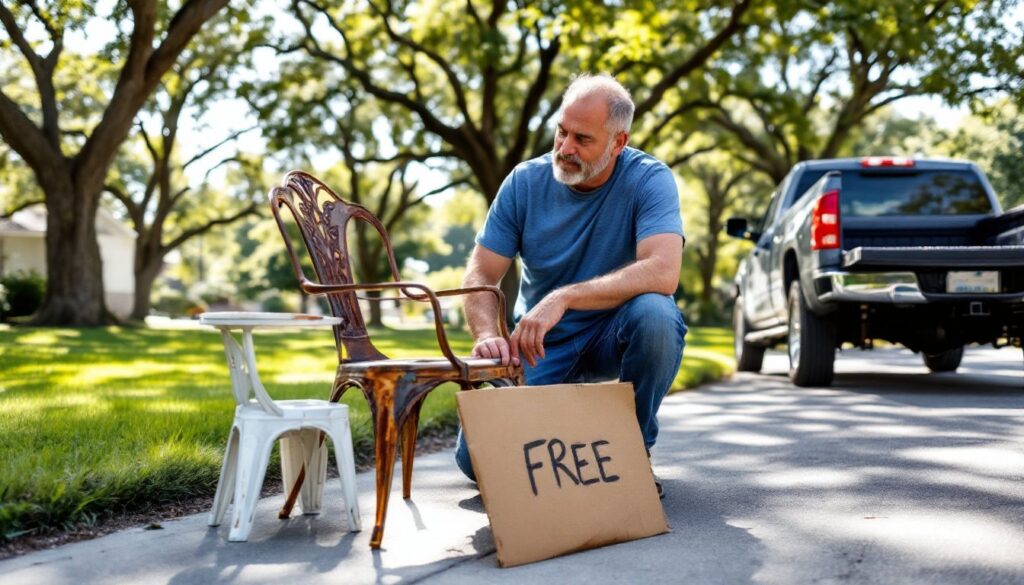
Look for furniture left near the curb with a “free” sign or placed conspicuously away from regular trash bins. If unsure whether something’s intentionally discarded, knock and ask, most homeowners appreciate someone hauling away bulk items they’d otherwise pay to remove.
Estate sales and moving sales sometimes offer free or near-free outdoor furniture at the end of the day. Sale organizers want empty houses, and bulky patio sets are hard to move. Arriving an hour before closing and asking, “What happens to what doesn’t sell?” often results in free hauls.
Property managers overseeing apartment complexes or rental homes occasionally replace tenant-damaged furniture. A polite inquiry, “Do you ever have outdoor furniture you’re getting rid of?”, can land someone on a callback list when items become available.
Keep a truck or trailer accessible during peak seasons. The difference between scoring a full dining set and losing it to the next driver is often 15 minutes and the ability to haul it immediately.
What to Look for When Evaluating Free Outdoor Furniture
Not every free find is worth the effort. Some pieces need an afternoon’s work: others are rotted junk destined for the landfill. Learning to assess structural integrity and restoration potential on-site prevents wasted time and garage clutter.
Metal furniture, wrought iron, aluminum, or steel, tolerates weathering better than most materials. Check for rust-through (holes, not just surface oxidation) on legs, seat pans, and joints. Surface rust is cosmetic and removable with a wire brush and rust converter. Deep pitting or flaking that compromises thickness means the piece won’t hold weight safely. Aluminum patio sets resist rust but dent easily: inspect welds and joints for cracks. Wiggle legs and armrests, any movement at joints indicates failed welds or loose hardware that may not be repairable.
Wood furniture requires closer inspection. Press a flathead screwdriver into joints, underside rails, and any discolored areas. Solid wood resists pressure: rotted wood crumbles or feels spongy. Check end grain at the bottom of legs, moisture wicks up from ground contact, causing rot that spreads upward. Teak, cedar, and redwood handle weather exposure better than pine or pressure-treated lumber. Confirm the wood species if possible, some free “teak” tables are actually stained softwood that won’t hold up.
Look for loose joinery in chairs and benches. Mortise-and-tenon or doweled joints can be re-glued with exterior wood glue (Titebond III or equivalent) and clamped. Butt joints held only by screws often fail repeatedly and aren’t worth the effort unless someone plans to reinforce them with corner braces.
Plastic resin furniture (the molded kind common at big-box stores) doesn’t restore well. UV exposure makes it brittle, if it’s faded to a chalky finish or has any cracks, it’ll shatter under normal use within a season. Pass on it unless it’s nearly new.
Wicker and rattan pieces should have tight, intact weaving. A few broken strands are repairable, but widespread unraveling means the piece is done. Flex the frame gently, synthetic wicker on an aluminum frame lasts longer than natural rattan, which rots when stored wet.
Cushions and fabric are typically not worth salvaging if moldy, torn, or saturated. Mold spores penetrate foam and are nearly impossible to fully remove. Faded or dirty but intact cushions can be recovered, but factor in outdoor fabric cost (Sunbrella or similar runs $20–$40/yard). Often it’s smarter to take the furniture and buy new cushions later.
Bring a tape measure. A beautiful table that doesn’t fit the patio or can’t clear the back door is still junk.
Restoring and Upgrading Your Free Patio Finds
Restoration transforms a curbside discard into something functional and attractive. Most outdoor furniture responds well to cleaning, minor repairs, and a fresh finish, none of which require advanced skills or expensive tools.
Start with a deep clean. Mix hot water with TSP (trisodium phosphate) or a heavy-duty degreaser. Scrub all surfaces with a stiff brush, hitting crevices, joints, and undersides where grime hides. Rinse thoroughly and let dry 24–48 hours in a covered, ventilated area. For metal furniture, follow up with a wire brush or wire wheel on a drill to remove loose rust and flaking paint. Wear safety glasses and a dust mask, rust particles and old paint dust (potentially lead-based if pre-1978) are respiratory hazards.
Metal restoration: After cleaning and rust removal, wipe down with denatured alcohol to remove oils. Apply a rust converter to any remaining oxidation, it chemically transforms rust into a stable, paintable surface. Once dry, prime with a rust-inhibiting metal primer (oil-based products like Rust-Oleum clean metal primer work well). Finish with an exterior enamel in a color of choice. Spray application gives the smoothest finish, but brush-on works fine for textured surfaces. Two thin coats beat one heavy coat, drips and runs look worse than surface rust.
Wood restoration: Sand with 80-grit sandpaper to remove old finish and smooth rough grain, then progress to 120-grit for a clean surface. Remove sanding dust with a tack cloth. For naturally weather-resistant woods like teak or cedar, apply a penetrating oil finish (teak oil, linseed oil) or leave unfinished to grey naturally. For softwoods, apply an exterior wood stain or solid-color deck stain for UV and moisture protection. If joints are loose, disassemble if possible, clean old glue residue, apply exterior wood glue (Titebond III), and clamp for 24 hours. For pieces that can’t be disassembled, drill pocket holes and add screws, or reinforce with corner braces.
Replacing hardware: Rusted or missing bolts, screws, and brackets are common. Bring old hardware to a home center and match thread pitch and diameter. Use stainless steel or coated exterior-grade fasteners, standard zinc-plated screws will rust outdoors in one season.
Re-webbing or re-slinging chairs: Vinyl strap patio chairs are easy to repair. Replacement strapping is available online by the roll. Remove old rivets with a drill, cut new straps to length, and fasten with new rivets or screws and washers. Keep tension even across the seat and back.
Painting resin or plastic furniture rarely works long-term, but if attempting it, clean thoroughly, scuff-sand with 220-grit, and use a plastic-bonding primer (Krylon Fusion or similar). Expect paint to flake within a year.
Restoration should take hours, not days. If a piece requires more than a weekend’s effort, it’s probably not worth the free price tag.
Safety Considerations for Secondhand Outdoor Furniture
Free furniture comes with unknowns, previous use, storage conditions, hidden damage. A few safety checks prevent injuries and health hazards.
Lead paint is a real concern on metal furniture manufactured before 1978. If the piece has multiple layers of old paint or a vintage look, assume it may contain lead. Sanding or grinding releases lead dust, a serious health hazard. Either have the paint tested with a lead test kit (available at hardware stores for under $10) or strip it chemically using a lead-safe paint stripper and dispose of waste according to local hazardous waste guidelines. If lead is confirmed and someone isn’t equipped to handle it safely, leave the piece.
Structural failure is the biggest injury risk. Chairs that collapse, tables that tip, benches that split, all are dangerous. After restoration, load-test every piece before regular use. Sit hard in chairs, lean back, rock side to side. Place weight on tables (a couple of concrete blocks works) and check for wobble or joint movement. If a joint flexes under load, reinforce or discard the piece.
Sharp edges and protruding hardware are common on damaged furniture. File down burrs on metal, sand wood splinters smooth, and ensure no screws or bolts stick out where someone might catch skin or clothing.
Mold and mildew pose respiratory risks, especially for anyone with allergies or asthma. If cushions or wood show visible mold that doesn’t wash off, don’t bring them indoors. Mold spores spread easily. Outdoor restoration spaces are safer, and moldy items that can’t be cleaned should be discarded.
Verify weight capacity for any furniture that will support people. Vintage or homemade pieces may not meet modern load standards. If unsure, limit use to decorative purposes or light loads.
Protective gear matters. Wear safety glasses when grinding, sanding, or drilling. Use nitrile gloves when handling chemicals, strippers, or rust converters. A respirator with organic vapor cartridges (not just a dust mask) is essential when spraying paint or using solvent-based finishes. Hearing protection applies when using power tools for extended periods.
If a piece feels sketchy, wobbly, cracked, or hard to assess, trust that instinct. Free isn’t free if it results in a trip to urgent care.
Conclusion
Free patio furniture is out there, and with the right approach, anyone can build a solid outdoor setup without a retail budget. Success comes down to knowing where to look, evaluating condition honestly, and putting in the restoration work that turns a discard into something functional. Not every find is worth the effort, but the ones that are can deliver years of use. Check the joints, mind the rust, skip the rotted wood, and always load-test before regular use. The patio’s waiting.