Table of Contents
ToggleHomecrest has been manufacturing high-end outdoor furniture in the United States since 1953, building a reputation for durability that outlasts most competitors. Their patio sets aren’t the kind homeowners find at big-box stores during Memorial Day sales, this is commercial-grade equipment designed for hospitality use that’s also available for residential installations. The brand focuses on powder-coated aluminum frames, marine-grade cushions, and modular designs that let buyers configure seating to fit unusual deck layouts or poolside spaces. For DIYers planning a full patio overhaul or contractors specifying furniture for outdoor living projects, understanding what sets Homecrest apart helps justify the premium price tag and long-term investment.
Key Takeaways
- Homecrest patio furniture uses commercial-grade aluminum frames with multi-stage powder coating and marine-grade cushions designed to outlast typical residential furniture by 10+ years.
- The brand offers extensive customization with 30+ frame finishes, 40+ sling fabric options, and modular sectional systems that adapt to any deck layout without visible hardware.
- Homecrest’s 15-year residential warranty on frames and US manufacturing in Minnesota ensure long-term availability of replacement parts and genuine support, unlike imported furniture brands.
- Sling fabrics are rated for 500+ hours of UV exposure and replaceable attachment points allow homeowners to refresh fabric without replacing the entire chair.
- Homecrest patio furniture requires minimal maintenance—just mild soap and water twice per season for frames—and can remain outdoors year-round in temperate climates with protective breathable covers.
- Premium pricing ($3,000–$4,500 for sectionals) reflects commercial-grade durability and personalized design consultations through authorized dealers, making it ideal for 15+ year outdoor living investments.
What Makes Homecrest Patio Furniture Stand Out
Commercial-grade construction differentiates Homecrest from residential-only brands. The company supplies furniture to hotels, resorts, and restaurants, which means their products endure constant use, UV exposure, and weather extremes that would destroy typical backyard furniture within a few seasons.
The frames use extruded aluminum rather than stamped or welded steel. Extrusion creates a single-piece structural member without joints that can corrode or fail. All aluminum gets treated with a multi-stage powder coating process that bonds electrostatically, creating a finish 3–5 times thicker than spray paint. This coating resists chipping, fading, and saltwater corrosion.
Homecrest’s sling fabrics (the mesh material used in many chairs and loungers) are vinyl-coated polyester rated for 500+ hours of UV exposure without significant fading, about double what most residential brands offer. The slings suspend from the frame with replaceable attachment points, so homeowners can refresh the fabric without replacing the entire chair.
Modular sectional systems let users add, remove, or rearrange pieces as needs change. Corner units, armless chairs, and ottomans connect without visible hardware, and most collections offer left- and right-arm configurations to fit L-shaped or U-shaped layouts.
The brand also offers a 15-year residential warranty on frames and a 3-year warranty on fabrics and cushions, significantly longer than the 1–2 year coverage typical of mass-market patio furniture.
Popular Homecrest Patio Furniture Collections
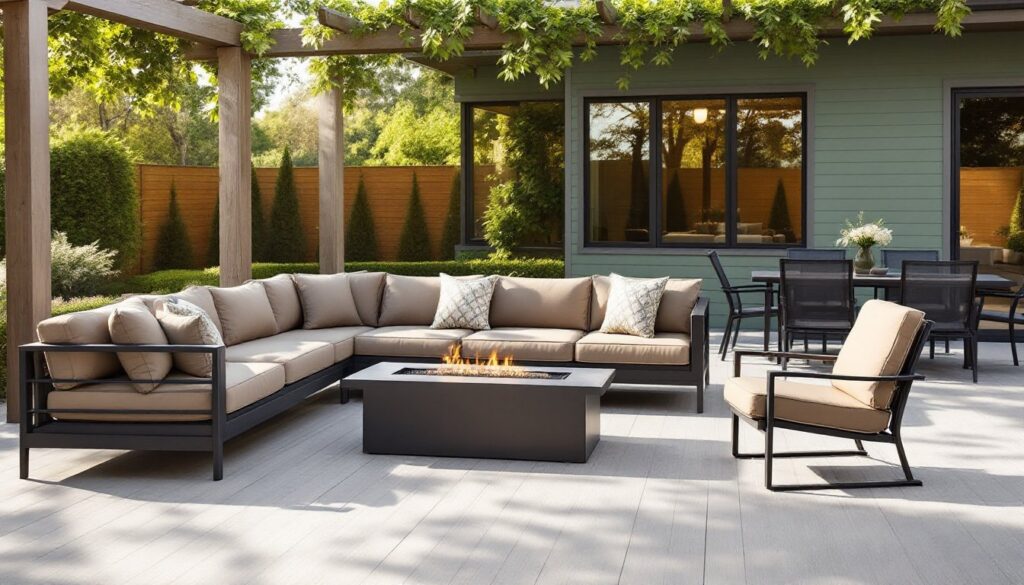
Kashton remains one of Homecrest’s best-selling lines, featuring deep-seating sectionals with track arms and a contemporary silhouette. The collection includes modular pieces that work well on covered patios or screened porches where homeowners want a living-room feel outdoors. Cushions run 5 inches thick with high-density foam cores and water-resistant covers.
Havenhill offers a more traditional aesthetic with sling-back dining chairs and coordinating fire tables. The sling material provides breathability in hot climates, and the chairs stack for off-season storage, an advantage for homeowners without garage space for bulky furniture.
Allure targets buyers looking for sleek, minimalist designs. This collection uses thinner frame profiles and slim sling panels, creating a lighter visual weight that works well in smaller courtyards or balconies. Even though the streamlined look, the frames still meet the same structural standards as bulkier models.
Palisade focuses on swivel rockers and spring-base lounge chairs, popular with homeowners who want motion seating around fire pits or conversation areas. The swivel mechanisms use sealed ball bearings that won’t rust or seize after exposure to rain.
Most collections include coordinating fire tables with burner inserts rated for natural gas or propane. The table frames match the seating, and the tops use tempered glass or porcelain tile over aluminum substrates.
Materials and Craftsmanship Behind Homecrest Furniture
All aluminum framing starts as 6000-series alloy extrusions, the same material used in window frames and architectural applications. This alloy resists corrosion better than steel and won’t rust, even in coastal environments with salt spray. The extrusion process forces heated aluminum through a die, creating consistent wall thickness and internal reinforcement channels.
After fabrication, frames go through a seven-step powder coating process: cleaning, rinsing, phosphate treatment, sealing, drying, electrostatic powder application, and curing at 400°F. This creates a finish that bonds molecularly to the aluminum rather than sitting on the surface like paint.
Sling fabrics use a vinyl-coated polyester weave with a denier rating (thread thickness) of 1000 or higher. Higher denier numbers indicate thicker, more durable fabric. The vinyl coating encapsulates each thread, preventing mildew growth and making the fabric easy to clean with soap and water.
Cushion cores use open-cell polyurethane foam that drains water rather than absorbing it. If cushions get soaked in a rainstorm, the foam sheds moisture within hours instead of staying wet for days. The outer solution-dyed acrylic fabric has pigment bonded into each fiber during manufacturing, so colors won’t fade or wash out over time.
Homecrest manufactures all furniture at their facility in Wadena, Minnesota, maintaining quality control from raw material to finished product. This also means replacement parts remain available for years after purchase, unlike imported furniture where parts supply often dries up after a season or two.
Customization Options for Your Outdoor Space
Homecrest offers over 30 frame finishes, from neutral grays and blacks to bold reds and custom color matches. Buyers can specify RAL or powder coat color codes for projects requiring specific design coordination. Custom finishes typically add 2–3 weeks to lead time but don’t carry upcharges on large orders.
Sling fabrics come in 40+ colors and patterns, including solid colors, two-tone weaves, and textures that mimic linen or canvas. Homeowners can mix frame and fabric colors within the same collection, for example, pairing charcoal frames with tan slings for a neutral palette, or matching cushion fabrics to exterior trim paint.
For cushioned collections, buyers choose from Homecrest’s proprietary fabric line or select Sunbrella fabrics, which add about 15–20% to cushion cost but offer an even wider color range. Solution-dyed acrylics resist fading for 5+ years in full sun, and most patterns coordinate with common deck stain colors and siding tones.
Modular sectionals let homeowners design exact configurations. A typical setup might include a left-arm loveseat, two armless chairs, a right-arm chaise, and a corner table to create an L-shaped sectional that fits a specific deck footprint. Pieces connect with hidden brackets that keep sections aligned without visible hardware.
Some collections offer interchangeable table tops, the same base frame can accept a mesh top for everyday use, a glass top for dining, or a granite top for a higher-end look. This flexibility helps homeowners adapt furniture function as outdoor spaces evolve.
How to Care for and Maintain Your Homecrest Furniture
Aluminum frames require minimal maintenance. Wash with mild dish soap and water twice per season to remove pollen, dirt, and organic debris that can hold moisture against the finish. Avoid abrasive cleaners or steel wool, which can scratch powder coating. A soft-bristle brush works for textured finishes.
If scratches or chips occur, Homecrest sells touch-up paint matched to specific frame colors. Clean the damaged area with rubbing alcohol, apply touch-up paint in thin coats, and let cure for 24 hours. This prevents corrosion from starting at exposed aluminum.
Sling fabrics clean easily with a solution of 1/4 cup mild detergent per gallon of water. Scrub with a soft brush, rinse thoroughly, and let air dry. For stubborn stains, a mix of 1 cup bleach per gallon of water won’t damage the vinyl coating, but always rinse completely after bleach treatment. Never machine-wash slings or use a pressure washer, which can tear the fabric or damage attachment points.
Cushions should be stored indoors or in a ventilated deck box during winter, even though the foam drains water. Repeated freeze-thaw cycles can degrade foam structure over time. Before storing, clean fabric covers with upholstery cleaner and let dry completely to prevent mildew.
During the season, stand cushions on edge after heavy rain to speed drainage. The foam core will shed water within 2–4 hours if stood upright.
Fire table burners need annual inspection. Check gas connections for leaks using soapy water (bubbles indicate escaping gas). Clean burner ports with a small wire brush to remove debris. If the unit runs on propane, verify the regulator and hose meet current safety standards, replace hoses every 5 years or if cracking appears.
Most Homecrest furniture can remain outdoors year-round in temperate climates, but protective covers extend finish life in harsh winter conditions. Use breathable covers rather than plastic tarps, which trap condensation and promote corrosion.
Where to Buy Homecrest Patio Furniture
Homecrest doesn’t sell directly to consumers or through big-box retailers. The brand distributes through authorized specialty dealers, typically independent patio and outdoor living stores. These dealers maintain showroom displays, provide design consultations, and handle ordering, delivery, and warranty service.
Buyers can use the dealer locator on Homecrest’s website to find nearby retailers. Authorized dealers access the full product catalog, including custom finishes and configurations not available through general retailers.
Many dealers offer in-home design services, where a representative visits the project site, takes measurements, and creates CAD layouts showing how modular pieces fit the space. This service often comes free with purchase and helps avoid ordering errors on complex sectional configurations.
Lead times vary by season and customization level. Stock configurations in standard colors typically ship within 2–4 weeks. Custom colors or fabrics can extend lead time to 6–8 weeks, and large commercial orders may require 10–12 weeks. Ordering in late winter or early spring avoids the summer rush when lead times stretch longest.
Some dealers provide white-glove delivery, assembling furniture on-site and removing packaging. This service matters for heavy sectionals or fire tables that require gas line hookup. If buyers opt for self-delivery, most pieces ship fully assembled or require minimal assembly, typically just attaching legs or connecting modular sections.
Pricing runs higher than mass-market brands but reflects commercial-grade construction. A four-piece modular sectional with cushions typically starts around $3,000–$4,500, while dining sets for six run $2,000–$3,500 depending on seating style and table top. Fire tables with burner kits start near $1,800.
Conclusion
Homecrest furniture represents a long-term investment for homeowners serious about outdoor living spaces. The commercial-grade construction, extensive customization, and domestic manufacturing justify the premium over imported alternatives. Buyers get modular flexibility that adapts as needs change, finishes that hold up to UV and weather exposure, and warranty coverage that outlasts most competitors. For a patio project built to last 15+ years rather than 3–5, Homecrest delivers the durability and design options that turn outdoor spaces into year-round extensions of the home.