Table of Contents
ToggleAccent furniture does the heavy lifting when a living room feels functional but flat. Unlike foundational pieces, the sofa, the coffee table, the media console, accent pieces add personality, solve layout problems, and create visual interest without overhauling the entire space. They’re the difference between a room that works and one that feels finished. For homeowners looking to elevate a living room on a reasonable budget, accent furniture offers high impact without the commitment of replacing major seating or storage. Done right, these pieces tie together color schemes, fill awkward corners, and provide flexible function.
Key Takeaways
- Accent furniture for living room transforms a functional space into a finished, personalized room by adding color, texture, and personality without replacing major pieces.
- Strategic accent chairs, side tables, and console tables solve layout challenges while introducing visual interest—choose pieces with contrast rather than exact matches to your existing décor.
- Proper placement, spacing, and material mixing (combining wood, metal, glass, and upholstered fabrics) maximize the impact of accent furniture and prevent a monotonous showroom feel.
- Select durable materials like solid hardwood, powder-coated steel, and performance fabrics with high double-rub counts to ensure your accent pieces withstand daily wear and aging gracefully.
- Accent furniture should echo your design style—whether mid-century modern, traditional, industrial, or coastal—while creating visual dialogue through color saturation and textural contrast with your sofa and primary furniture.
What Is Accent Furniture and Why Does Your Living Room Need It?
Accent furniture refers to smaller, often decorative pieces that complement primary furniture without serving as the room’s backbone. Think accent chairs, side tables, ottomans, consoles, and occasional tables. These aren’t afterthoughts, they’re strategic additions that balance a room’s visual weight and improve usability.
Most living rooms suffer from one of two problems: they’re either too symmetrical and safe, or they lack cohesion. Accent pieces break up monotony in the former and tie together mismatched elements in the latter. A velvet armchair in a jewel tone draws the eye and anchors a reading nook. A narrow console behind the sofa adds surface area without eating floor space. An upholstered ottoman doubles as extra seating during gatherings and a footrest on quiet evenings.
Beyond aesthetics, accent furniture solves practical layout challenges. Open-concept spaces need visual dividers: a console table or pair of chairs can define the living zone without blocking sightlines. Rooms with off-center windows or awkward architectural features benefit from pieces that redirect focus. And in smaller living rooms, multi-functional accent furniture, like nesting tables or storage ottomans, maximizes square footage without clutter.
Must-Have Accent Furniture Pieces for Every Living Room
Accent Chairs That Make a Statement
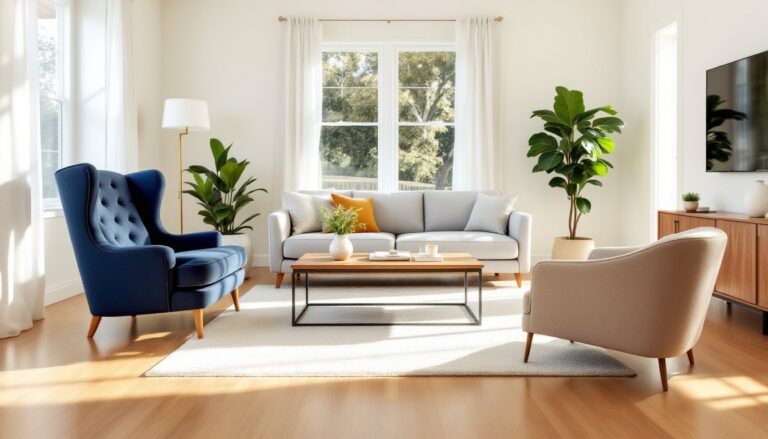
An accent chair is the workhorse of the category. It provides additional seating, yes, but more importantly, it introduces texture, color, or form that the sofa can’t deliver. Look for chairs with a strong silhouette, mid-century modern arms, wingback profiles, or slipper chairs with exposed wood legs.
Scale matters. In a large living room with a sectional, a single oversized accent chair (think club chair or bergère) holds its own. In tighter quarters, a pair of armless slipper chairs flanking a window or fireplace adds symmetry without bulk. Swivel chairs work well in conversation areas: they’re flexible and encourage interaction.
Upholstery drives the visual impact. Leather ages well and suits traditional or industrial styles. Velvet and bouclé add softness and work in transitional or glam interiors. Outdoor-grade performance fabrics make sense for homes with kids or pets, they’re stain-resistant and durable without sacrificing style. Avoid matching the chair fabric to the sofa exactly: contrast in color or pattern is the point.
Side Tables and Console Tables for Function and Style
Side tables (also called end tables or accent tables) are non-negotiable. They hold lamps, remotes, drinks, and books, small footprint, high utility. Aim for a height within two inches of the sofa arm. Round tables soften angular furniture layouts: square or rectangular tables suit tighter spaces and tuck neatly into corners.
Material choice affects durability and maintenance. Solid wood tables, oak, walnut, or maple, handle daily wear. Metal frames with glass or stone tops suit modern aesthetics and are easy to clean. Avoid lightweight particle board or veneer in high-traffic living rooms: they don’t hold up.
Console tables serve a different role. Placed behind a sofa, they add depth and a display surface without requiring floor space in the walkway. Standard console height is 30–36 inches, similar to dining table height. In narrow living rooms, a slim console (12–16 inches deep) along a wall provides a landing spot for keys, mail, or decorative objects without crowding the room. Look for designs with a lower shelf for added storage, baskets or bins keep clutter contained.
How to Choose Accent Furniture That Complements Your Design Style
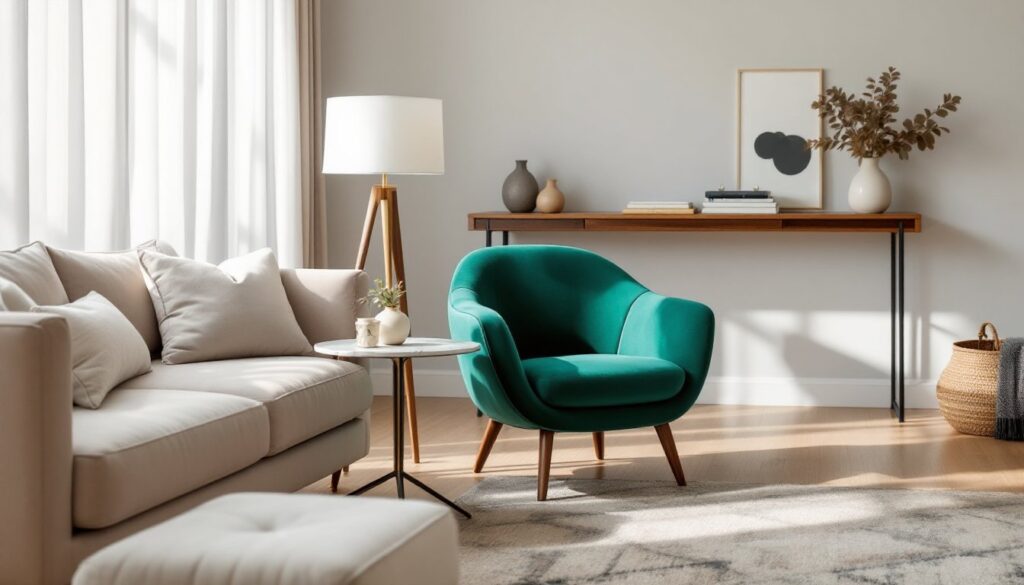
Accent furniture should echo the room’s overall aesthetic while introducing enough contrast to be noticed. In a mid-century modern living room, look for tapered legs, organic curves, and warm wood tones. Pair a teak side table with a molded plastic or upholstered shell chair.
For traditional spaces, opt for turned legs, classic silhouettes, and rich finishes, cherry, mahogany, or painted wood in muted tones. A tufted armchair or carved console fits seamlessly. Transitional styles blend contemporary clean lines with softer details: choose pieces with simple frames but textured upholstery or mixed materials like wood and metal.
Industrial living rooms benefit from raw materials: blackened steel, reclaimed wood, concrete tops. A metal-framed chair with leather cushions or a console with pipe legs and a butcher-block top reinforces the aesthetic. In coastal or farmhouse interiors, whitewashed or weathered finishes, wicker, and linen upholstery maintain the relaxed vibe.
When in doubt, contrast is better than exact matching. If the sofa and coffee table are neutral and modern, introduce an accent chair with a vintage shape or bold pattern. If existing furniture is ornate, balance it with streamlined accent pieces. The goal is dialogue, not duplication.
Strategic Placement Tips to Maximize Impact
Placement determines whether accent furniture enhances flow or creates bottlenecks. Start by identifying dead zones, corners, awkward gaps between windows, or empty walls that disrupt visual balance. A tall plant stand, narrow bookshelf, or armchair with a floor lamp transforms these into purposeful vignettes.
In seating arrangements, maintain 18–24 inches of clearance between furniture for comfortable movement. Accent chairs should face or angle toward the sofa to encourage conversation, not turn their backs to the room. If space allows, create a secondary seating area near a window or fireplace with two chairs and a shared side table.
Console tables behind the sofa should sit 4–6 inches lower than the sofa back and run roughly two-thirds the sofa’s length. Any longer, and the console dominates: any shorter, and it looks disconnected. Use the surface for task lighting, decorative trays, or a table lamp to fill vertical space.
Avoid pushing all furniture against walls. Floating a sofa or creating an anchor point with an accent chair mid-room defines zones in open layouts and makes large spaces feel intentional. In smaller living rooms, angle a chair into a corner rather than lining it up perpendicular: it softens the geometry and frees up a few inches of walkway.
Color, Texture, and Material Considerations
Color strategy depends on the existing palette and the homeowner’s tolerance for bold choices. Neutral-heavy rooms (grays, beiges, whites) benefit from accent furniture in saturated hues, emerald, navy, terracotta, or mustard. A single jewel-tone chair or painted console injects energy without requiring a full repaint.
If the living room already features color, accent furniture can either amplify or balance it. In a room with vibrant wall art or patterned curtains, stick to neutral accent pieces in natural wood, black metal, or linen. In monochromatic spaces, introduce contrast through texture instead, a boucle chair against smooth leather, a rattan side table next to a plush velvet sofa.
Material mixing prevents a showroom feel. Combine at least three materials within the living room: wood, metal, glass, stone, or upholstered fabric. An all-wood furniture set feels one-note: add a metal-legged console or glass-top side table for variety. In contemporary spaces, mixing warm and cool metals, brass with matte black, chrome with aged bronze, adds depth without clashing.
Durability matters more than finish. High-traffic living rooms need materials that withstand daily use. Solid hardwood, powder-coated steel, and tempered glass hold up better than veneers, thin laminates, or soft metals that dent easily. For upholstered accent chairs, check for kiln-dried hardwood frames and double-doweled joints, these indicate quality construction that won’t wobble after a year. Performance fabrics with a high double-rub count (30,000+ for residential use) resist pilling and fading, especially near windows or in homes with pets.