Table of Contents
ToggleDark brown bedroom furniture has anchored sleeping spaces for centuries, and there’s a good reason it hasn’t gone anywhere. It brings warmth, hides wear better than lighter finishes, and pairs with nearly any wall color or textile. Whether someone’s working with solid walnut, stained oak, or cherry veneer, dark brown pieces ground a room without demanding constant redecorating. The challenge isn’t choosing dark brown, it’s styling it so the bedroom feels cozy instead of cave-like. This guide walks through selection, color pairing, styling strategies, and upkeep to help anyone make dark brown furniture work in their space.
Key Takeaways
- Dark brown bedroom furniture brings warmth, durability, and visual weight that anchors a room while hiding scratches and wear better than lighter finishes.
- Pair dark brown furniture with warm whites, soft greens, or light-colored bedding to prevent the space from feeling cave-like and maintain visual balance.
- Layered lighting—including table lamps, floor lamps, and wall sconces—is essential since dark furniture absorbs light and requires warm white bulbs (2700K–3000K) to complement wood tones.
- Match wood species and stain finishes across bedroom furniture pieces, prioritizing solid wood for high-contact items like nightstands and checking for quality joinery like dovetail drawers.
- Dark brown furniture adapts seamlessly to multiple design styles, from traditional and modern to rustic, bohemian, and Scandinavian, making it a flexible long-term investment.
- Maintain dark brown furniture by dusting weekly, using wood-specific cleaners, protecting surfaces with coasters and felt pads, and controlling humidity between 30–50% to prevent warping or damage.
Why Dark Brown Furniture Creates the Perfect Bedroom Retreat
Dark brown wood carries visual weight that lighter finishes can’t match. It anchors a room, making sprawling or high-ceilinged bedrooms feel more intimate. The depth of color, espresso, walnut, mahogany, absorbs light rather than bouncing it around, which naturally quiets a space.
From a durability standpoint, dark finishes hide scuffs, scratches, and dust better than blonde or white furniture. A ding in dark walnut barely registers: the same mark on white lacquer jumps out. For anyone who doesn’t want to refinish a dresser every few years, that’s a practical win.
Dark brown also telegraphs quality. Whether it’s solid hardwood or quality veneer over engineered wood, the finish reads as substantial. It doesn’t look disposable. That permanence matters in a bedroom, where furniture often stays put for a decade or more.
Finally, dark brown is neutral in the truest sense. It works with warm palettes (rust, gold, terracotta), cool tones (navy, sage, charcoal), and everything in between. Someone can repaint walls, swap bedding, or shift decor styles without replacing the furniture.
Choosing the Right Dark Brown Furniture Pieces for Your Bedroom
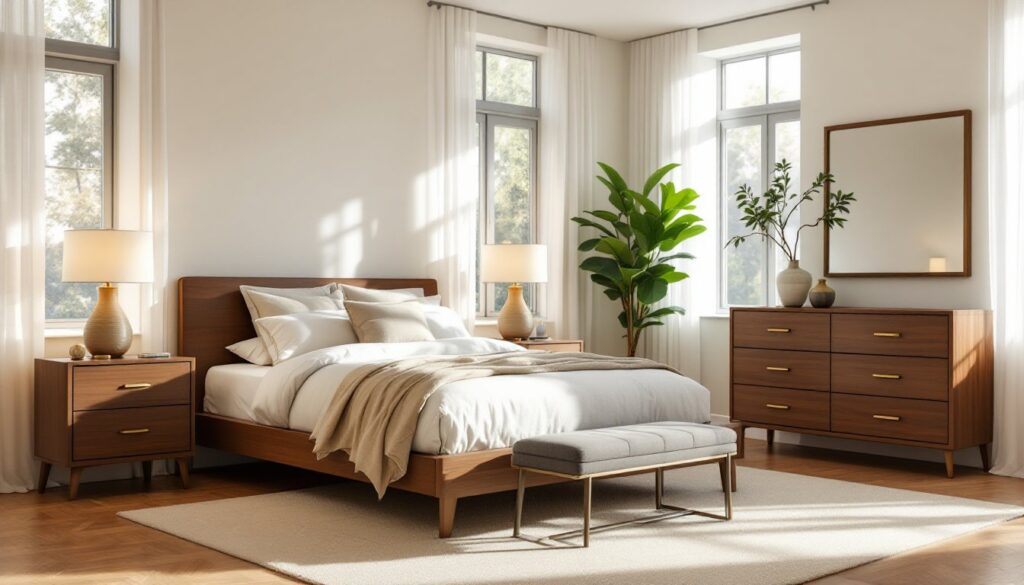
Start with the bed frame. Platform beds in dark brown eliminate the need for a box spring and create clean, horizontal lines. If the ceiling height allows, a four-poster bed in walnut or cherry makes a strong statement without requiring much else in the room.
For case goods, dressers, nightstands, armoires, match the wood species or stain finish across pieces. Mixing espresso-stained pine with natural walnut looks unintentional. If buying a full set isn’t in the budget, prioritize matching the bed and the largest dresser, then fill in nightstands later.
Solid wood versus veneer is a cost and performance trade-off. Solid hardwood (walnut, cherry, oak) resists denting and can be refinished multiple times. Veneer over plywood or MDF costs less, weighs less, and holds up fine with careful handling, but deep scratches expose the core. For high-contact pieces like nightstands, solid wood edges make sense. For a tall armoire that just stands there, quality veneer is a reasonable choice.
Check joinery before buying. Dovetail drawers (interlocking wood joints at corners) handle weight and daily yanking better than stapled or doweled construction. Pull out drawers fully and check that they glide smoothly on ball-bearing slides or solid wood runners, not flimsy plastic tracks.
Scale matters. In a 10’×12′ bedroom, a king bed and two oversized dressers will crowd the space. Measure room dimensions and furniture footprints on paper or painter’s tape on the floor before hauling anything upstairs.
Color Palettes That Complement Dark Brown Bedroom Furniture
Warm whites and creams on walls prevent dark brown furniture from turning a room into a cave. Shades like Benjamin Moore Swiss Coffee or Sherwin-Williams Alabaster reflect light without going stark. Skip pure white (it creates harsh contrast) and avoid beige with pink undertones (it clashes with red-toned woods like cherry or mahogany).
Soft greens and blues cool down dark brown’s inherent warmth. Sage, seafoam, or muted teal on an accent wall pair well with walnut or espresso. For a bolder move, deep navy creates a moody, layered look, but it requires ample lighting and light-colored bedding to keep things from feeling oppressive.
Earth tones, rust, terracotta, ochre, olive, double down on warmth. This palette works especially well in rooms with good natural light. Use these colors in textiles (throws, pillows, rugs) rather than wall-to-wall paint to keep flexibility.
Charcoal and warm grays split the difference between light and dark. They let dark brown furniture stand out without stark contrast, and they hide dirt better than white bedding. Pair gray walls with warm metallics (brass, copper) in lighting fixtures to prevent the space from feeling cold.
Whatever the wall color, add contrast through bedding and rugs. Light-colored linens (white, oatmeal, pale blue) break up the visual mass of a dark bed frame and headboard. A textured rug in a lighter shade defines the floor area and prevents the furniture from blending into dark hardwood or carpet.
Styling Tips to Prevent Your Bedroom from Feeling Too Dark
Lighting is the biggest lever. Dark brown furniture absorbs light, so one overhead fixture won’t cut it. Layer in table lamps on nightstands, a floor lamp in a corner, and consider wall sconces flanking the bed. Aim for warm white bulbs (2700K–3000K) to complement wood tones: cool white makes dark brown look muddy.
Use mirrors strategically. A large mirror opposite a window reflects natural light and visually expands the room. Avoid placing mirrors where they reflect clutter or dark corners, that just doubles the problem.
Textiles add softness and light. Layered bedding in whites, creams, or soft pastels offsets dark wood. A linen duvet or quilted coverlet in a lighter shade breaks up the bed’s visual weight. Curtains in sheer or light fabric (even if layered over blackout shades) allow daylight in during the day.
Vertical and horizontal lines matter. A tall, narrow bookshelf or floor lamp draws the eye up, making ceilings feel higher. Horizontal elements, a low-profile bench at the foot of the bed, a wide dresser, ground the room without adding heaviness if they’re not too bulky.
Declutter ruthlessly. Dark furniture shows dust and stacks of stuff more than light wood. Keep surfaces clean and limit decor to a few meaningful pieces. A single vase or framed photo reads as intentional: six random objects look messy.
Add greenery. Living plants (pothos, snake plant, fiddle-leaf fig) introduce organic shapes and lighter greens that contrast with dark brown. They also soften hard edges and add life to a room that might otherwise feel static.
Mixing Dark Brown Furniture with Different Design Styles
Traditional: Dark brown furniture is a natural fit. Pair carved wood headboards or turned legs with classic textiles, damask, toile, or striped patterns. Add brass hardware and warm-toned rugs (Persian or Oriental styles). Keep walls in warm neutrals and layer in table lamps with fabric shades.
Modern/Contemporary: Strip away ornamentation. Choose clean-lined platform beds and flat-front dressers in dark espresso or ebonized oak. Pair with low-profile lighting, metal accents (matte black or brushed nickel), and minimal decor. Walls can go bold, charcoal, deep blue, or even black in a well-lit room, or stay neutral to let the furniture’s geometry stand out.
Rustic/Farmhouse: Combine dark brown with reclaimed wood, wrought iron, and natural linen. A dark walnut bed pairs well with a weathered wood bench or galvanized metal nightstands. Use shiplap or board-and-batten walls in white or cream to brighten the space. Swap polished finishes for matte or distressed looks.
Scandinavian: This is trickier, Scandi leans light, but doable. Choose simple, functional pieces in dark walnut, then surround them with white walls, light wood flooring, and minimal decor. Add sheepskin throws, woven baskets, and pale textiles. The key is restraint: one or two dark brown pieces max, with everything else airy and bright.
Bohemian: Dark brown anchors eclectic collections. Layer patterned textiles (kilim, ikat, suzani), macramé wall hangings, and colorful throws. Mix in rattan or wicker accents, plants, and global finds. The dark furniture keeps the visual chaos from feeling unmoored.
Maintenance and Care for Dark Brown Wood Furniture
Dust weekly with a microfiber cloth. Dark finishes show dust and fingerprints more than light wood, so regular wiping keeps things sharp. Skip feather dusters, they just redistribute dust.
For deeper cleaning, use a slightly damp cloth (not soaking) with a drop of mild dish soap if needed. Wipe in the direction of the grain, then dry immediately with a clean cloth. Excess water can cloud finishes or seep into joints.
Avoid all-purpose cleaners, especially anything with ammonia or silicone. They can dull finishes or leave streaky buildup over time. If the finish looks hazy, try a dedicated wood cleaner (like Murphy Oil Soap diluted per label instructions).
Polish sparingly, maybe twice a year. Too much polish builds up and attracts dust. Use a paste wax for traditional finishes (shellac, lacquer) or a spray polish for modern polyurethane. Test in an inconspicuous spot first.
Protect surfaces. Use coasters, felt pads under lamps, and trivets under anything hot. Even small scratches stand out on dark finishes. For deeper scratches, a touch-up marker or wax stick in a matching color (walnut, espresso, dark oak) can disguise damage.
Control humidity. Wood expands and contracts with moisture changes. Keep bedroom humidity between 30–50% to prevent warping or cracking. A portable humidifier in winter or a dehumidifier in summer helps, especially in climates with wide seasonal swings.
If the finish wears thin over years, a polyurethane topcoat or furniture oil (tung, linseed) can restore luster. For valuable or antique pieces, consult a furniture refinisher before DIY-ing, wrong products can do permanent damage.
Conclusion
Dark brown bedroom furniture doesn’t trap a homeowner into one look or decade. It’s a long-term investment that adapts as tastes shift, swap paint, bedding, or accessories, and the same walnut dresser fits a new style. The trick is balancing that visual weight with light, texture, and intentional color choices. Done right, dark brown doesn’t darken a room, it defines it.