Table of Contents
ToggleBoho style doesn’t follow a blueprint, it thrives on individuality, layered textures, and a lived-in feel that resists the cookie-cutter showroom aesthetic. Building a boho living room means selecting furniture that balances comfort with character, pulling from global influences, natural materials, and a willingness to break the matching-set rule. Unlike minimalist or modern farmhouse trends, boho embraces visual abundance without tipping into chaos. The key is intentional eclecticism: each piece should feel collected over time, not ordered in a single online cart. This guide walks through the furniture essentials, material choices, and layout strategies that deliver authentic boho style without turning the space into a cluttered Pinterest board.
Key Takeaways
- Boho furniture living room design prioritizes natural materials, handcrafted details, and intentional eclecticism over matching sets, creating a collected-over-time aesthetic without visual chaos.
- Essential boho pieces include low-profile seating (low sofas, floor cushions, poufs), natural wood tables with character, and mixed wood tones that avoid factory-perfect symmetry and high-gloss finishes.
- Layer warm, earthy color palettes—terracotta, mustard, rust, and olive—through textiles and accents rather than furniture, keeping sofas neutral to provide design flexibility.
- Create tactile depth by mixing textures: combine woven materials (rattan, jute, macramé), soft textiles (linen, wool, velvet), rough-hewn wood, and aged metal accents throughout the space.
- Arrange boho furniture by defining conversation-focused zones with rugs and maintaining 18–24 inches of traffic clearance, using vertical space for wall-mounted shelves and hanging plants to prevent clutter.
- Edit your boho living room intentionally as pieces accumulate over time, ensuring each item serves a functional or personality-driven purpose rather than filling space decoratively.
What Defines Boho Furniture Style?
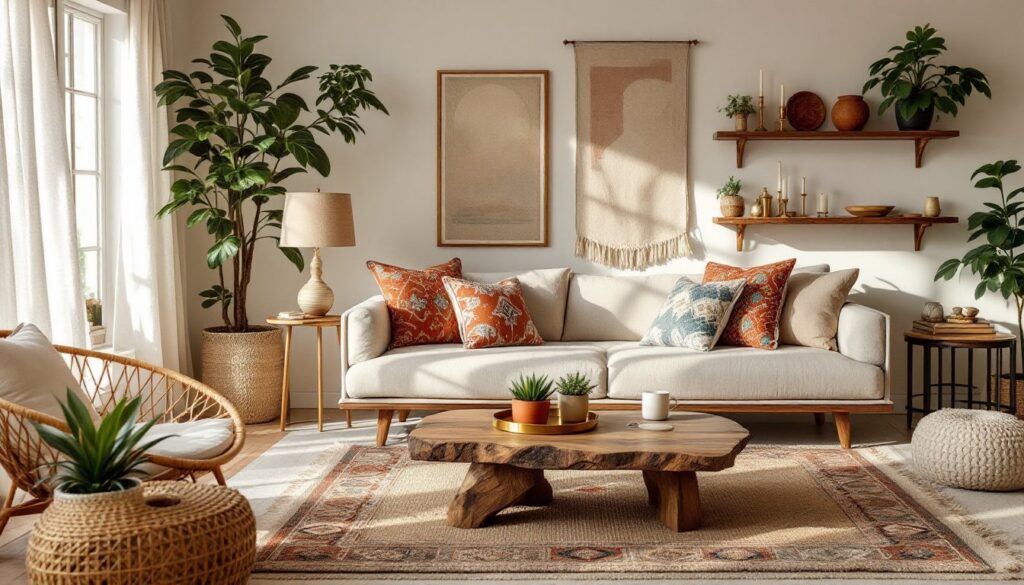
Boho furniture pulls from multiple design traditions, Moroccan floor seating, mid-century rattan chairs, hand-carved Indian wood tables, and macramé-draped loungers all coexist. The unifying thread is natural materials and handcrafted details. Factory-perfect symmetry doesn’t fit here: look for visible grain in wood, hand-woven cane backs, and textile patterns that show slight irregularities.
Key characteristics include:
- Low-profile silhouettes: Floor cushions, low-slung sofas, and poufs create a grounded, casual vibe.
- Mixed wood tones: No need to match oak to oak. Mango wood, teak, reclaimed pine, and bamboo can all share the same room.
- Organic shapes: Rounded edges, curved chair backs, and asymmetrical table legs break up hard angles.
- Vintage and global accents: Moroccan brass trays, Turkish kilim-upholstered benches, or a mid-century cane credenza add lived-in character.
Boho isn’t a single aesthetic, it’s a framework that allows personal travel finds, thrift scores, and handmade pieces to share space. The style resists trends that demand everything match a preset palette or finish.
Essential Boho Furniture Pieces for Your Living Room
Low-Profile Seating and Statement Sofas
Start with seating that invites lounging. A low-backed sofa in linen, cotton canvas, or textured boucle sets the foundation. Avoid stiff, high-armed sectionals, boho seating should feel like you can sink in with a book and stay awhile. Look for sofas with exposed wood legs in walnut or light oak, or rattan frames that reference 1970s design without feeling dated.
Add floor seating to expand capacity without crowding. Oversized floor cushions (26″ × 26″ or larger), Moroccan leather poufs, or a low daybed covered in layered textiles create flexible seating zones. These pieces work especially well in homes where shoes come off at the door, they blur the line between furniture and soft goods.
Consider a papasan or hanging chair if ceiling joists allow. A ceiling-mounted rattan egg chair anchored into a joist with a lag bolt rated for 300+ lbs (confirm joist location with a stud finder) becomes an instant focal point. Always verify load capacity and use appropriate hardware, drywall anchors won’t cut it.
Natural Wood Coffee Tables and Side Tables
Choose coffee tables with character over perfection. A chunky reclaimed wood slab on hairpin legs, a round mango wood drum table, or a low Moroccan-style carved piece brings warmth and texture. Avoid glass-top or high-gloss finishes, they read too contemporary. Look for live-edge details, visible knots, or hand-carved patterns.
Layer in mismatched side tables. A woven rattan plant stand next to a brass-topped accent table, or a tree stump stool beside a vintage bamboo stand, reinforces the collected-over-time aesthetic. Heights can vary, 16″ to 24″ works for most sofa arms, but functionality matters. Each table should hold a drink, lamp, or book without tipping.
Material variety is the goal. One table in light wood, another in darker teak, a third in wicker or metal. This isn’t carelessness, it’s intentional curation. Just ensure each piece feels solid. Wobbly furniture isn’t boho: it’s just bad.
Color Palettes That Complement Boho Furniture
Boho color schemes lean warm and earthy, but they’re not afraid of saturation. Think terracotta, mustard yellow, deep rust, olive green, and burnt sienna, colors pulled from desert landscapes, spice markets, and natural dyes. These hues layer well without competing.
Start with a neutral base. Walls in warm white, cream, or soft beige (think Benjamin Moore’s White Dove or Sherwin-Williams’ Accessible Beige) let furniture and textiles take center stage. Avoid stark white or cool grays, they undercut the warmth boho relies on.
Introduce color through textiles and accents, not furniture. A camel-toned leather sofa or natural linen couch provides flexibility. Then bring in jewel tones like emerald, sapphire, or amethyst through throw pillows, rugs, or wall hangings. The furniture stays grounded: the accessories rotate with the seasons.
Don’t shy from pattern overlap. Boho thrives when a striped kilim rug sits under a sofa piled with ikat, suzani, and block-print pillows. The trick is varying scale, pair large geometric patterns with smaller florals or intricate embroidery. Keep a common color thread (say, rust and cream) running through to unify the mix.
Mixing Textures and Materials for Authentic Boho Vibes
Texture is where boho separates from flat, one-note design. A room with all smooth finishes, painted wood, sleek fabric, polished metal, lacks the tactile depth boho demands. Instead, pile on contrasts.
Combine rough and refined:
- Woven materials: Rattan, jute, cane, seagrass, macramé
- Soft textiles: Linen, cotton, wool, velvet, boucle
- Natural wood: Rough-hewn, live-edge, carved, or distressed finishes
- Metal accents: Aged brass, hammered copper, wrought iron (avoid shiny chrome)
Layer rugs to add depth underfoot. A large jute or sisal rug (8′ × 10′ or 9′ × 12′ depending on room size) grounds the space. Layer a smaller vintage Turkish or Moroccan rug on top, 5′ × 7′ or a runner, to define the seating area. The jute provides neutral texture: the patterned rug brings color and history.
Introduce greenery as a living texture. Potted plants in woven baskets, hanging planters in macramé holders, or a tall fiddle-leaf fig in a terracotta pot add movement and organic irregularity. Plants aren’t décor filler, they’re part of the material palette.
Don’t over-finish everything. A coffee table with a raw wood top, a linen sofa with visible slub, or a wool throw with fringe all signal handmade, imperfect beauty. High-gloss or overly polished pieces disrupt the vibe.
How to Arrange Boho Furniture Without Creating Clutter
Boho’s layered look can tip into chaos if furniture placement lacks logic. Start with a focal point, usually the sofa or a large window, and arrange seating to encourage conversation, not TV-watching in a row.
Create zones, not walls. Use rugs to define areas: seating cluster on one rug, a reading nook with a chair and side table on another. In open-plan spaces, a low bookshelf or a plant stand can suggest separation without blocking sightlines.
Leave breathing room. Boho isn’t minimalist, but furniture still needs 18″ to 24″ of clearance for comfortable traffic flow. A crowded room, no matter how beautiful each piece, feels stressful, not relaxed.
Anchor with larger pieces, fill with small. Position the sofa and primary seating first. Then add poufs, floor cushions, and side tables where they’re useful, not just decorative. Every piece should serve a purpose: a place to sit, set down a drink, or rest your feet.
Edit as you go. Boho collects over time, which means it’s easy to accumulate too much. If a corner feels cramped or a table’s in the way, move it. The goal is lived-in and layered, not packed and precious.
Use vertical space wisely. Wall-mounted shelves, hanging planters, and tapestries draw the eye up and keep floor space open. A macramé wall hanging or a floating shelf with small plants and candles adds visual interest without adding furniture.
Boho living rooms should feel like a well-traveled friend’s home, curated, comfortable, and full of stories. The furniture isn’t showroom-perfect, and that’s the point. Each piece earns its spot through texture, function, or personality, not because it matched a preset plan.