Table of Contents
ToggleMirrored bedroom furniture has surged in popularity as homeowners seek practical ways to brighten small spaces and add a touch of elegance. These reflective pieces do more than just store clothes or hold lamps, they visibly expand a room, bounce light into dim corners, and create an upscale aesthetic without major renovations. From art deco-inspired nightstands to contemporary mirrored dressers, this furniture category fits a surprising range of design styles. Whether someone’s working with a cramped city apartment or simply wants to elevate their master suite, mirrored pieces offer a blend of function and polish that’s hard to beat.
Key Takeaways
- Mirrored bedroom furniture brightens small spaces by reflecting natural and artificial light while creating the illusion of more square footage, making cramped rooms feel larger and more open.
- Popular mirrored bedroom furniture options include dressers, nightstands, wardrobes, vanities, and headboards, each available in multiple finishes like antiqued glass, beveled panels, and smoked or tinted mirrors to suit different design styles.
- Mirrored furniture works across aesthetic ranges—from glamorous Hollywood Regency to modern minimalist to bohemian—when paired thoughtfully with complementary textures, hardware, and wall colors.
- Maintain mirrored pieces with microfiber cloths and ammonia-free glass cleaner, keep them away from humidity and moisture, and lift from the base rather than by panels or drawer fronts to prevent damage and ensure longevity.
- Strategic placement perpendicular to windows and against lighter wall colors amplifies the light-reflecting benefits of mirrored bedroom furniture without creating glare or visual chaos.
What Is Mirrored Bedroom Furniture and Why Is It So Popular?
Mirrored bedroom furniture features glass panels with reflective backing applied to dressers, nightstands, wardrobes, vanities, and bed frames. The mirror surfaces are typically adhered to a wooden or MDF substrate using construction adhesive, then finished with beveled edges or decorative trim. Unlike a wall-mounted mirror, these pieces integrate storage with reflective surfaces, serving dual purposes.
The current wave of popularity stems from three factors: smaller living spaces, the decline of heavy wood furniture trends, and social media’s emphasis on bright, photogenic interiors. Reflective surfaces amplify both natural daylight and overhead lighting, making 10×10 bedrooms feel less cave-like. Also, mirrored finishes pair well with velvet, metallics, and neutral palettes, all dominant in 2026’s interior design trends.
Manufacturers now offer mirrored furniture in multiple styles: antiqued glass with a smoky, aged patina: beveled mirror panels with geometric facets: and smoked or tinted mirror in grey or bronze finishes. This variety allows the look to work beyond the glam aesthetic it’s often associated with. A smoky mirrored dresser, for instance, fits comfortably in industrial or modern farmhouse bedrooms when styled with matte black hardware and reclaimed wood accents.
Benefits of Adding Mirrored Furniture to Your Bedroom
Creates the Illusion of More Space
Reflective surfaces trick the eye by doubling the visual field. When a mirrored dresser sits opposite a window, it effectively creates a second window’s worth of light and景深. This optical effect works especially well in narrow bedrooms or those with only one exterior wall.
For maximum impact, position mirrored pieces perpendicular to windows rather than directly across from them. Placing a mirrored nightstand beside a bed along the same wall as a window catches morning light and reflects it toward the center of the room. Avoid placing mirrors directly opposite the bed if glare or the visual of one’s own reflection at night is distracting, this is personal preference, but worth considering during furniture layout.
The illusion works best in rooms with lighter wall colors. Mirrored furniture against dark charcoal or navy walls creates contrast but doesn’t amplify space as effectively as it does against whites, soft grays, or warm beiges. Paint sheen also matters: eggshell or satin finishes reflect subtly and enhance the mirrored effect, while flat paint absorbs light.
Enhances Natural and Artificial Light
Mirrored surfaces can increase perceived brightness by up to 30% in rooms with limited windows, according to lighting design principles. A mirrored wardrobe or tall armoire reflects ceiling fixtures and table lamps, dispersing light more evenly than a matte wood equivalent.
This benefit extends to energy efficiency. Rooms that feel brighter require less supplemental lighting during daylight hours. For renters or homeowners who can’t add windows or skylights, mirrored furniture offers a non-structural solution.
One caution: avoid overloading a room with reflective surfaces. Pairing mirrored furniture with glossy tile, satin bedding, and metallic light fixtures can create visual chaos and glare. Balance is key. If using a mirrored dresser and nightstands, consider pairing them with a matte upholstered bed frame and linen or cotton bedding to ground the look.
Types of Mirrored Bedroom Furniture to Consider
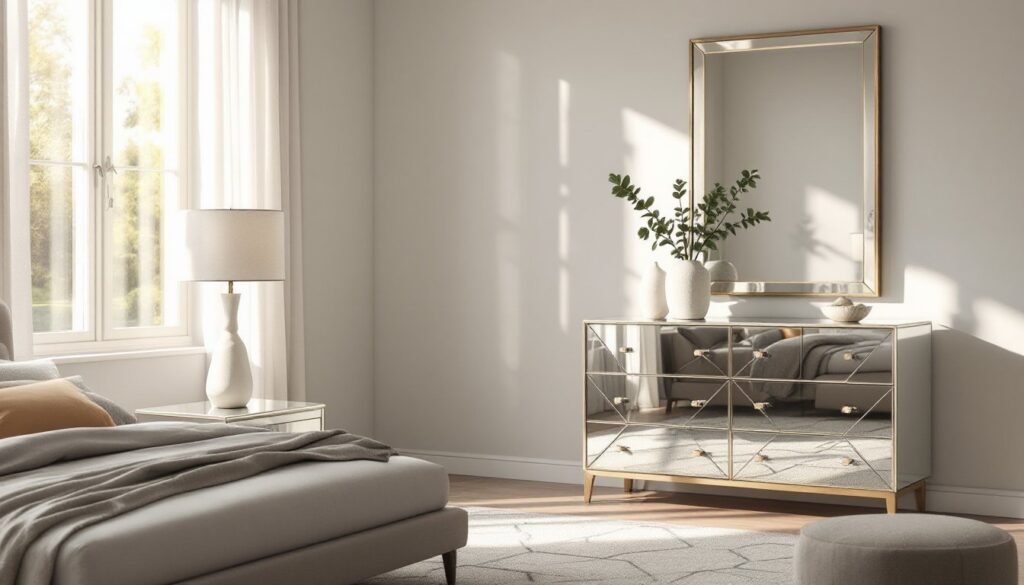
Mirrored dressers are the most popular option, typically offering 6-9 drawers with mirror-paneled fronts and sides. Standard widths range from 48″ to 60″, matching the footprint of traditional wood dressers. Look for units with dovetail drawer construction and soft-close glides, mirrored finishes can’t hide poor joinery the way painted or stained wood can.
Nightstands come in two-drawer or three-drawer configurations. Widths are usually 24″-28″, matching standard bedside table dimensions. Some models feature a single drawer over open shelving, which works well for displaying books or decorative objects. Make sure the nightstand height aligns with the top of the mattress (typically 24″-28″ depending on mattress thickness and bed frame height).
Mirrored wardrobes and armoires offer full-length storage and a large reflective surface that doubles as a dressing mirror. These pieces are substantial, often 72″ tall and 40″-50″ wide, so they’re best suited to bedrooms with at least 120 square feet. Ensure the floor can support the weight: a fully loaded mirrored armoire can exceed 250 pounds.
Vanities combine a mirrored desk or table with a matching stool or bench. Many include built-in lighting around a central mirror panel. These are practical for bedrooms without a dedicated bathroom vanity but require a nearby outlet for styling tools or lighted mirrors.
Mirrored bed frames and headboards are less common but available. These work best as statement pieces in larger master suites. A king-size mirrored headboard can span 80″ or more, so balance it with simpler nightstands and minimal wall decor to avoid visual overload.
How to Style Mirrored Furniture in Different Bedroom Aesthetics
Glam and Hollywood Regency: This is the natural habitat for mirrored furniture. Pair mirrored dressers with tufted velvet headboards, crystal chandeliers, and metallic accents in gold or champagne. Layer textures, faux fur throws, silk pillows, and high-gloss finishes, to lean into the luxe vibe. Keep wall colors neutral (ivory, blush, or soft gray) to let the reflective surfaces shine.
Modern and Minimalist: Choose mirrored pieces with clean lines and minimal ornamentation. A smoked mirror dresser in charcoal or bronze works well here. Pair with matte black metal bed frames, concrete-look nightstands, or live-edge wood accents. Limit decorative objects on mirrored surfaces, one sculptural vase or a single stack of books maintains the streamlined look.
Transitional and Contemporary: Mix mirrored furniture with both traditional and modern elements. A mirrored nightstand can sit alongside a linen upholstered bed and grasscloth wallpaper. Use warm metals (brass, aged gold) in lighting and drawer pulls to bridge the gap between old and new. Area rugs in geometric patterns or muted florals add visual interest without competing with the mirrored surfaces.
Eclectic and Boho: Mirrored furniture can work here if balanced with organic textures. Pair a beveled mirrored dresser with macramé wall hangings, rattan baskets, and houseplants. The key is contrast, let the mirrored piece be the refined anchor in a room full of natural, handmade elements. Avoid mirrored furniture with ornate carvings or excessive bling: simpler frames blend better with boho’s relaxed aesthetic.
Caring for and Maintaining Your Mirrored Bedroom Pieces
Mirrored furniture shows fingerprints, dust, and smudges more readily than wood or painted finishes. Daily maintenance involves a microfiber cloth and glass cleaner without ammonia, ammonia can degrade the reflective backing over time. For stubborn spots, a 50/50 mix of white vinegar and water works without streaking.
Avoid abrasive cleaners, melamine sponges, or rough paper towels, which can scratch the mirror surface. Even small scratches catch light and become highly visible. If a scratch occurs, mirror repair pens (available at hardware stores) can minimize the appearance on minor surface damage, but deep scratches usually require professional resilvering or panel replacement.
Prevent moisture damage by keeping mirrored furniture away from humidifiers, open windows during rain, or bathrooms with poor ventilation. The adhesive bond between mirror and substrate can fail if exposed to prolonged humidity, causing the reflective backing to bubble or peel. In coastal or high-humidity climates, run a dehumidifier in the bedroom to keep relative humidity below 55%.
When moving mirrored furniture, lift from the base structure, never by the mirrored panels or drawer fronts. The mirror is adhered to the substrate but isn’t load-bearing. Pulling a drawer by its mirrored front can shear the glass from the drawer box. Use furniture sliders or a dolly for heavy pieces, dragging can crack mirror panels at stress points.
Check drawer glides and hinges annually. Mirrored panels add weight, and over time, standard glides can sag or bind. Upgrading to heavy-duty ball-bearing drawer slides rated for 100+ pounds can extend the furniture’s lifespan and prevent drawers from jamming or tilting.
Finally, inspect the mirror edges and trim quarterly for signs of delamination or chipping. Beveled edges are particularly vulnerable to impact damage. If trim pieces loosen, reattach them promptly with clear construction adhesive rated for glass to prevent further separation. Small issues caught early prevent larger repairs down the line.