Table of Contents
ToggleA bedroom should be more than a place to sleep, it’s a retreat, a private space that reflects personal taste while delivering comfort and function. The furniture inside it does most of that heavy lifting. Choosing stylish bedroom furniture isn’t about chasing trends for their own sake: it’s about selecting pieces that work well, look good, and hold up over time. In 2026, the best bedroom furniture balances clean lines, durable construction, and adaptable design. Whether someone is furnishing a new space from scratch or upgrading a single piece, understanding what makes furniture both functional and attractive helps avoid buyer’s remorse and creates a room worth spending time in.
Key Takeaways
- Stylish bedroom furniture should balance clean lines, durable construction, and adaptable design rather than chase temporary trends.
- Investing in quality materials like solid wood and dovetail joinery ensures bedroom furniture lasts decades and holds resale value better than cheap alternatives.
- Popular styles in 2026—including mid-century modern, Scandinavian minimalism, and Japandi—prioritize functionality and visual simplicity to create restful spaces.
- Properly sized nightstands (within 2–4 inches of mattress height) and well-constructed dressers with metal drawer glides enhance both comfort and everyday usability.
- Measure your space carefully and test furniture in person whenever possible to avoid costly mistakes and ensure pieces fit your room’s proportions and architecture.
- Quality stylish bedroom furniture reflects personal taste while delivering long-term durability, comfort, and a cohesive bedroom design that promotes better rest.
Why Investing in Stylish Bedroom Furniture Matters
Bedroom furniture takes more abuse than most people realize. Drawers slide open and shut daily, bed frames support hundreds of pounds night after night, and nightstands hold lamps, books, phones, and the occasional glass of water. Cheap particleboard furniture sags, wobbles, and falls apart within a few years, leaving someone shopping all over again, often spending more in the long run.
Quality materials like solid wood, plywood cores, and dovetail joinery aren’t just aesthetic choices. They’re structural. A solid hardwood dresser with dovetail drawer joints will outlast a veneer-wrapped MDF unit by decades. Weight is often a good indicator: heavier furniture typically uses denser, more durable materials.
Style matters because bedrooms aren’t hidden spaces. They’re where people start and end their day. A cohesive, well-designed bedroom promotes better rest and reduces visual clutter. Mid-century modern, Scandinavian minimalism, and contemporary platform beds remain popular in 2026 because they emphasize clean lines and functional design without excess ornamentation.
From a practical standpoint, stylish furniture also holds resale value better. Someone moving or redecorating can often recoup a significant portion of their investment if they’ve chosen timeless designs made from real materials. Trendy fast furniture, on the other hand, depreciates immediately and ends up in a landfill.
Essential Pieces for a Stylish Bedroom
Statement Beds That Anchor Your Design
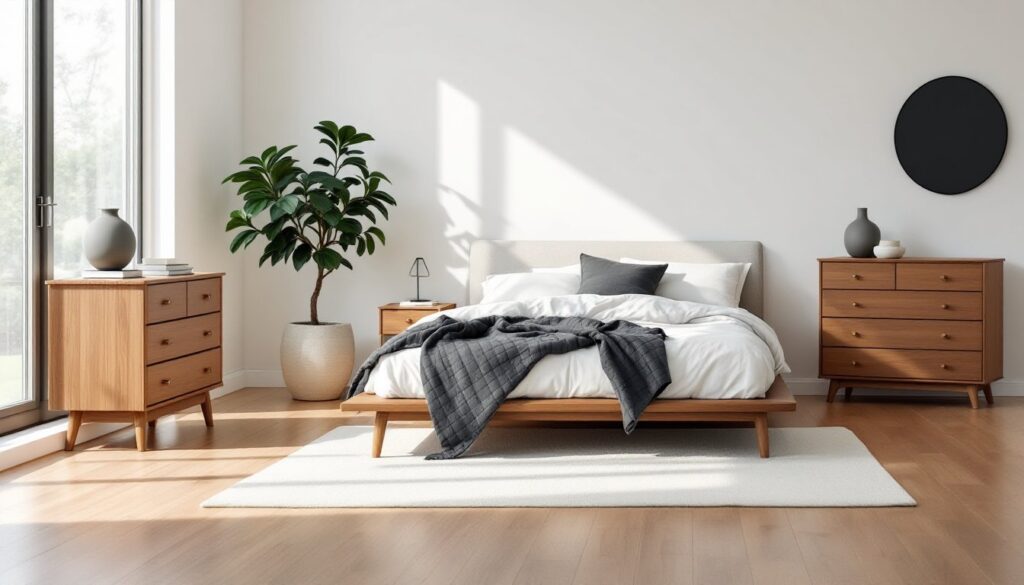
The bed is the largest piece of furniture in the room and sets the visual tone for everything else. Platform beds remain a go-to choice in 2026 thanks to their low profile and built-in support, no box spring needed. They work especially well in rooms with lower ceilings or modern aesthetics.
Upholstered headboards in linen, velvet, or leather add warmth and texture. Padded headboards also provide a comfortable backrest for reading or watching TV. Look for frames with solid wood slats spaced no more than 3 inches apart for proper mattress support and airflow. Metal slats work too but should be reinforced with a center beam for queen- and king-size frames.
Canopy beds and four-poster designs have made a comeback, but in streamlined forms, thinner posts, matte black or natural wood finishes, and minimal drapery. These work best in rooms with ceiling heights of 9 feet or more: anything lower and they can make a space feel cramped.
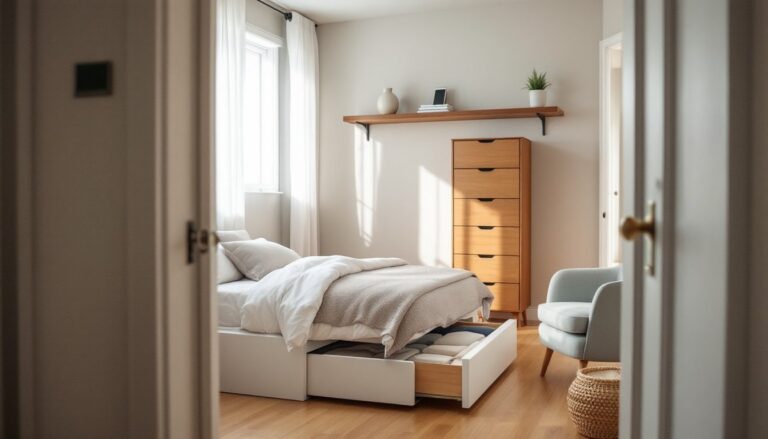
For tight spaces, storage beds with built-in drawers or hydraulic lift mechanisms provide hidden storage without requiring additional furniture. Make sure drawer glides are metal ball-bearing types, not plastic runners that jam or break under load.
Nightstands and Dressers That Blend Function with Aesthetics
Nightstands should sit within 2–4 inches of mattress height for easy reach. Two-drawer models offer the best balance of storage and footprint. Open-shelf designs work well in minimalist spaces but collect dust quickly, something to consider for anyone with allergies.
Materials matter here too. Solid wood tops resist water rings better than veneer, especially if finished with polyurethane or lacquer. Metal and glass nightstands suit industrial or contemporary styles but show fingerprints and scratches more readily.
Dressers need to be scaled to the room. A standard six-drawer dresser runs about 60 inches wide by 30–36 inches tall. Taller chest-of-drawers (often called highboys) use vertical space efficiently in narrower rooms. Check that drawers have dovetail joinery at the corners and solid wood or plywood bottoms, anything thinner will sag under the weight of clothes.
Drawer depth is often overlooked. Shallow drawers (4–6 inches) work for socks and accessories: deeper ones (8–12 inches) handle bulkier items like sweaters. A mix of both is ideal.
Mounting a dresser or chest to the wall with L-brackets and lag bolts into studs prevents tip-over accidents, especially in homes with children or pets. It’s a simple safety measure that takes ten minutes and can prevent serious injury.
Top Furniture Styles and Trends for Modern Bedrooms
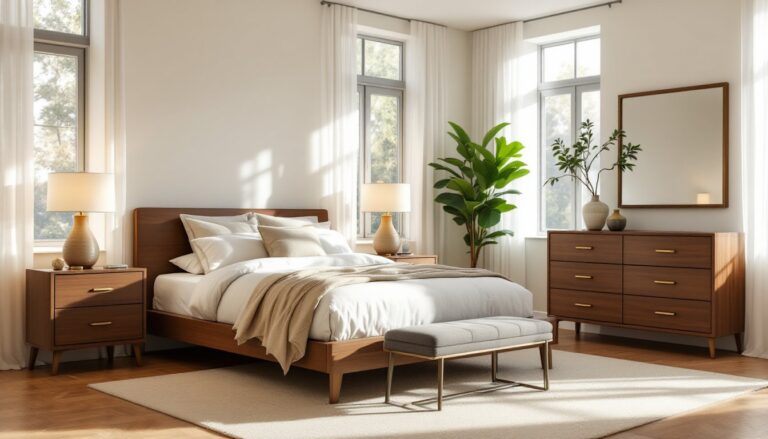
Mid-century modern continues to dominate in 2026, characterized by tapered legs, walnut or teak finishes, and minimal hardware. The style pairs well with neutral walls and pops of color in textiles. It’s versatile enough to work in both urban apartments and suburban homes.
Scandinavian (or Nordic) design emphasizes light woods like ash, birch, or oak, paired with white or soft gray tones. Furniture is functional, with clean lines and no unnecessary embellishment. This style suits smaller bedrooms because it avoids visual clutter and reflects natural light.
Industrial style uses raw materials, metal frames, reclaimed wood, exposed hardware, and matte black finishes. It works best in loft-style spaces with exposed brick or concrete but can feel cold in traditional homes without careful layering of textiles.
Japandi, a blend of Japanese and Scandinavian aesthetics, has gained traction. It combines the warmth of natural wood with the simplicity of minimalist design. Low platform beds, shoji-style screens, and neutral palettes define the look. Furniture pieces tend to have rounded edges and organic shapes.
Maximalist and eclectic styles are also making a statement, especially among younger homeowners. Bold colors, mixed materials, and vintage finds create personalized spaces. The key is cohesion, repeating colors, textures, or shapes across pieces prevents the room from feeling chaotic.
Sustainable and reclaimed wood furniture is no longer niche. Many manufacturers now offer FSC-certified hardwoods and low-VOC finishes. Reclaimed pieces add character and history, though they often require more maintenance and may have slight imperfections.
How to Choose Bedroom Furniture That Matches Your Personal Style
Start with the room’s architecture. Crown molding, wainscoting, or original hardwood floors suggest traditional or transitional furniture, while open floor plans and large windows suit modern or minimalist styles. Fighting the room’s bones usually results in a disjointed look.
Measure everything before buying. A common mistake is choosing a bed or dresser that fits through the door but overwhelms the room. Sketch a floor plan or use painter’s tape to mark furniture footprints on the floor. Leave at least 24–36 inches of clearance around the bed for comfortable movement.
Consider the room’s primary function. If it’s purely for sleep, a bed and nightstands may suffice. If it doubles as a home office or reading nook, plan for a desk, chair, or accent seating. Multi-functional furniture, like a bench with hidden storage, adds flexibility without crowding.
Color and finish should complement existing elements. Dark woods like walnut or espresso make a room feel cozier but can shrink a small space. Light woods and painted finishes (white, gray, or soft pastels) open things up. Mixing finishes is fine, but stick to two or three max to avoid a chaotic look.
Test furniture in person when possible. Sit on the bed, open drawers, and check joinery. Online reviews help, but there’s no substitute for feeling the weight of a drawer or the sturdiness of a headboard. If buying online, confirm the return policy and whether assembly is required, some “easy assembly” furniture still takes two people and a few hours.
Don’t ignore scale and proportion. A king-size bed in a 10×10 room leaves no space for anything else. A tiny nightstand next to a California king looks out of place. Balance the size of each piece relative to the room and to each other.
Conclusion
Choosing stylish bedroom furniture comes down to balancing aesthetics, durability, and function. Quality materials, proper proportions, and thoughtful design create a space that works well and looks better over time. Whether someone leans toward mid-century modern, Scandinavian simplicity, or bold eclecticism, the best furniture reflects personal taste without sacrificing practicality. Measure carefully, invest in solid construction, and don’t rush the process, good furniture is a long-term decision.