Table of Contents
ToggleStandard patio furniture isn’t built for everyone. A chair rated for 250 pounds might hold up structurally, but it won’t deliver comfort if the seat’s too narrow or the armrests pinch. For larger individuals, outdoor furniture needs more than just extra weight capacity, it requires wider seats, deeper cushions, reinforced frames, and thoughtful proportions. The good news? Manufacturers are finally catching up, and 2026 offers more options than ever. This guide walks through what to look for, which materials hold up best, and how to match furniture to both body dimensions and outdoor space.
Key Takeaways
- Big and tall patio furniture requires at least 350–400-pound weight capacity, seat widths of 24–30 inches, and 20–24 inches of seat depth to provide genuine comfort and safety for larger users.
- Look for solid steel or aluminum frames with 11-gauge or thicker wall thickness, reinforced cross-bracing, and welded joints rather than bolted connections to ensure long-term durability under heavier use.
- Adirondack chairs, deep-seating lounge sets, and benches are among the best styles for bigger frames, while egg chairs, stacking resin chairs, and thin folding chairs should be avoided.
- Choose weather-resistant materials like stainless steel, anodized aluminum, poly lumber, or high-quality hardwoods with proper UV protection to extend the lifespan of your outdoor furniture.
- Armrests should be 22–24 inches apart (inside dimension) and positioned 7–9 inches above the seat for safe support and comfortable hip clearance.
- Plan your patio layout carefully by measuring usable space, maintaining 36 inches of clearance behind recliners, and using furniture pads to distribute weight and protect deck surfaces.
Why Standard Patio Furniture Falls Short for Larger Individuals
Most off-the-shelf patio furniture is designed around average dimensions, seats around 18–20 inches wide, weight limits of 250–300 pounds, and shallow cushion depth. Those specs work fine for smaller frames but create real problems for taller or heavier users.
Narrow seats force poor posture. When armrests dig into hips or thighs, users can’t relax. Shallow seat depth (16–18 inches) doesn’t support longer legs, leaving thighs unsupported and forcing awkward sitting positions. Low weight ratings might not fail catastrophically, but they flex, creak, and wear out faster under consistent load.
Then there’s the frame itself. Budget patio chairs often use thin-wall aluminum tubing or hollow resin, fine under light use, but prone to stress fractures when pushed past their design limits. Welds crack, joints loosen, and what should last five seasons barely makes it through two.
Standard furniture also skimps on armrest height and spacing. Arms set too close together create a squeeze point. Arms too low offer no support when standing up, which becomes a safety issue on uneven decking or gravel patios.
Bottom line: if someone’s weight, height, or build falls outside the narrow design window, standard furniture won’t just be uncomfortable, it’ll be a liability.
Key Features to Look for in Big and Tall Outdoor Furniture
Shopping for big and tall patio furniture means checking specs that most product pages bury in footnotes. Here’s what matters.
Weight Capacity and Frame Durability
Look for weight ratings of at least 350–400 pounds as a baseline: premium models go up to 500–600 pounds. But don’t stop at the number, check how it’s tested. Static load (sitting still) is one thing: dynamic load (shifting weight, standing, sitting) is another.
Frame construction separates the good from the junk. Solid steel or aluminum with 11-gauge or thicker wall thickness holds up better than thin tubing. Welded joints beat bolted ones for long-term rigidity, though bolted frames are easier to repair or replace parts on. Cast aluminum frames offer excellent strength-to-weight ratios and resist rust in coastal climates.
For wood furniture, look for kiln-dried hardwoods like teak, eucalyptus, or acacia with mortise-and-tenon joinery. Avoid pine or cedar unless it’s clearly marked as structural grade, both are prone to splitting under sustained weight.
Reinforced cross-bracing under the seat is a must. It distributes weight across the frame instead of concentrating stress at bolt points. If the product page doesn’t show underside photos, that’s a red flag.
Seat Width, Depth, and Armrest Design
Seat width should start at 24 inches minimum: 26–30 inches is ideal for most larger users. Measure between the insides of the armrests if they’re fixed, not the overall frame width.
Seat depth (front edge to backrest) should hit 20–24 inches. Too shallow and thighs hang off the edge: too deep and shorter users can’t sit back comfortably. Some chairs offer adjustable backs or slide-forward cushions to dial this in.
Armrest spacing (inside dimension) needs to be at least 22–24 inches for hip clearance. Arms should sit 7–9 inches above the seat, high enough to help leverage when standing but not so high they force shoulders up.
Armrests themselves should be flat and wide, at least 2.5–3 inches across. Thin tubular arms dig into forearms. If possible, test weight on the armrest: it should feel rock-solid, not flexy.
Best Types of Big and Tall Patio Furniture for Every Space
Not all patio furniture styles work well at larger dimensions. Here’s what does.
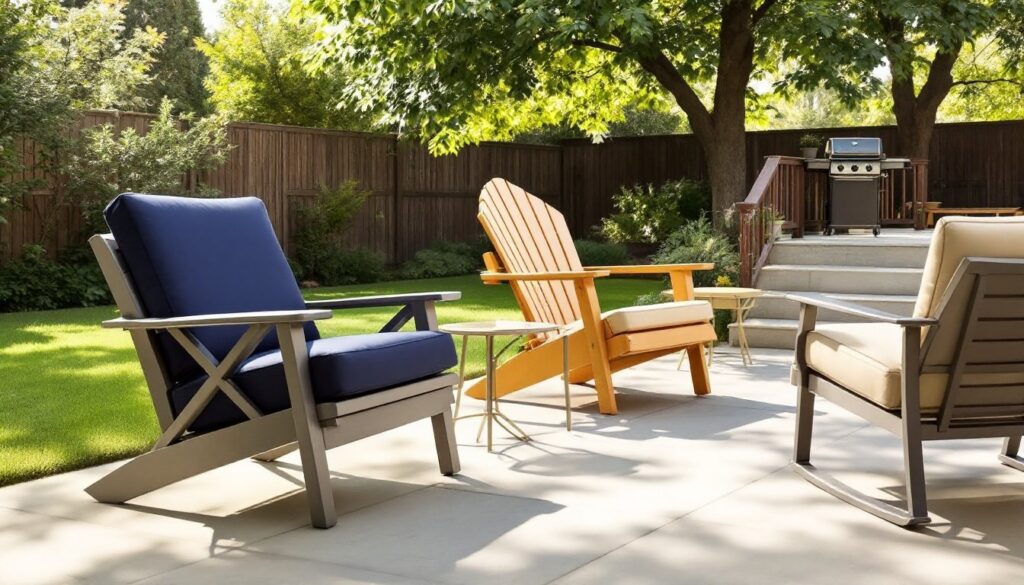
Adirondack chairs are a natural fit, wide seats, deep recline, and broad armrests. Look for models made from poly lumber (recycled HDPE plastic) or marine-grade wood with stainless hardware. Standard Adirondacks run around 33 inches wide: oversized versions hit 38–40 inches.
Deep-seating lounge sets with thick cushions (5–7 inches) offer excellent comfort. Aluminum or steel frames with powder-coated finishes hold up outdoors. Modular sectionals let users customize layout, but check that individual modules lock together, wobbly connections are a problem under heavier use.
Gliders and rockers work if the base is reinforced. Traditional porch gliders often max out around 300 pounds: heavy-duty versions use ball-bearing suspension systems rated to 500+ pounds. Avoid cheap spring-based gliders, they sag fast.
Benches are underrated. A 6-foot bench rated for 800+ pounds can seat two or three comfortably and eliminates the armrest-width problem entirely. Steel park-style benches or timber-frame designs are both solid picks.
Zero-gravity recliners designed for camping or poolside use sometimes hit 400–500-pound ratings, but check the locking mechanism. Cheaper models fail at the hinge after a season. Look for dual-lock systems or reinforced pivot points.
Skip: Hanging egg chairs (weight limits rarely exceed 300 pounds and mounting hardware is sketchy), stacking resin chairs (too narrow and not built for sustained load), and director’s-style folding chairs (fabric stretches and frames rack under weight).
Materials That Matter: Choosing Weather-Resistant Options
Outdoor furniture takes a beating. UV, rain, freeze-thaw cycles, and humidity all degrade materials. For big and tall furniture, where structural integrity is critical, material choice isn’t cosmetic.
Steel offers the best strength-per-dollar but rusts unless it’s hot-dip galvanized or powder-coated. Powder coating chips over time: touch up scratches immediately or corrosion creeps under the finish. Stainless steel (304 or 316 grade) costs more but laughs at salt air and sprinkler spray.
Aluminum won’t rust and weighs less than steel, making furniture easier to move. Extruded aluminum (not cast) with welded joints is the sweet spot for durability. Anodized or powder-coated finishes add UV and scratch resistance. Cast aluminum is heavier and more ornate but can be brittle in extreme cold.
Poly lumber (HDPE) is recycled plastic lumber, dense, heavy, and nearly indestructible. It won’t rot, splinter, or need refinishing. Fasteners are stainless steel, and UV inhibitors are mixed throughout, not just surface-applied. It’s pricier upfront but outlasts wood by decades.
Teak is the gold standard for wood. High oil content resists water, insects, and rot. It weathers to silver-gray unless oiled annually. Eucalyptus is a budget alternative, similar density, less expensive, but needs more maintenance. Avoid pressure-treated pine for seating: it’s fine for structural framing (decks, pergolas) but splinters and warps.
Wicker/rattan is mostly decorative unless it’s all-weather resin wicker over a powder-coated aluminum frame. Natural wicker disintegrates outdoors. Even synthetic versions need UV-resistant resin and thick weave, thin strands snap under stress.
Cushions should use solution-dyed acrylic fabric (Sunbrella is the benchmark) with high-density foam cores (at least 2.5 lb/ft³ density) or polyester fiberfill wrapped around foam. Quick-dry foam has open-cell structure to shed water. Cheap polyurethane foam absorbs moisture, grows mold, and crumbles within a year.
Measuring Your Space and Planning for Comfort
Big and tall furniture eats up square footage fast. Before buying, measure the patio or deck, not just overall dimensions, but usable space accounting for door swings, grill clearance, and walkways.
Clearance rules: Leave at least 36 inches behind chairs that recline or rock. Allow 24–30 inches of walkway around conversation groups. If the space is tight, benches or loveseats use space more efficiently than individual chairs.
Test before committing. If possible, visit a showroom or big-box store and actually sit in comparable models. Check seat height (16–18 inches is standard: lower makes standing harder), armrest clearance, and whether feet rest flat when sitting back. Bring a tape measure and note dimensions of anything comfortable.
Load rating vs. real-world use: Furniture rated for 400 pounds won’t feel the same at 200 as it does at 380. Build in a 100-pound safety margin above actual user weight. Frames last longer, cushions compress less, and there’s headroom for guests.
Surface matters. Furniture with wide footprints or narrow legs can sink into grass, gravel, or deck gaps. Use furniture pads, pavers, or a outdoor rug to distribute weight on softer surfaces. On composite or wood decking, check joist spacing, heavy furniture placed between joists can cause deck boards to sag or crack over time.
Finally, consider storage or covers. Even weather-resistant furniture lasts longer when covered or stored during off-season. Oversized covers (clearly marked with dimensions) are essential, standard covers won’t fit. If storage isn’t an option, furniture that can stay outside year-round (poly lumber, stainless, or powder-coated aluminum) is worth the premium.
Comfort outdoors shouldn’t be a compromise. With the right specs, materials, and planning, big and tall patio furniture delivers years of solid use, and actually fits.