Table of Contents
ToggleLiving near the ocean offers endless perks, salty breezes, sunset views, and the sound of waves. But it also throws a curveball at outdoor furniture. Salt spray, high humidity, and relentless UV exposure can turn standard patio sets into corroded, faded eyesores in a single season. Coastal patio furniture isn’t just about looks: it’s engineered to withstand what the sea dishes out. Choosing the right materials, finishes, and maintenance routines can mean the difference between furniture that lasts a decade and pieces that need replacing every few years.
Key Takeaways
- Coastal patio furniture uses corrosion-resistant materials, UV-stabilized fabrics, and marine-grade finishes to withstand salt spray, humidity, and wind that standard outdoor furniture cannot handle.
- Aluminum, stainless steel, synthetic wicker, teak, and poly lumber are the best materials for coastal durability, while natural wicker, cast iron, and untreated steel will deteriorate quickly in salt-heavy environments.
- Monthly fresh water rinsing, quarterly soap washing, and semi-annual hardware inspections are essential maintenance routines that prevent salt buildup and extend the life of coastal patio furniture by years.
- Coastal patio furniture design should feature simple joinery, smooth surfaces, and low ornamentation to resist salt accumulation in crevices and reduce maintenance demands.
- Anchoring lightweight pieces and storing cushions during storms protects investments and prevents damage from coastal winds, while immediately addressing small chips or cracks stops corrosion from spreading.
What Makes Coastal Patio Furniture Different?
Standard outdoor furniture is built for sun and rain. Coastal furniture faces a tougher opponent: salt air. Salt accelerates corrosion on metal hardware, degrades finishes, and even breaks down certain plastics and fabrics faster than inland conditions.
Coastal-rated pieces use corrosion-resistant fasteners (stainless steel or coated hardware), UV-stabilized fabrics, and materials that won’t pit or rust when exposed to salt spray. Frames are often sealed or powder-coated with marine-grade finishes. Cushion covers typically feature solution-dyed acrylic fabrics like Sunbrella, which resist fading and mildew better than standard outdoor textiles.
Another factor: wind. Oceanfront properties see stronger, more consistent gusts. Lighter furniture can blow around or tip, so many coastal designs are heavier or include anchor points. If a set feels flimsy in the showroom, it won’t hold up on a windy deck.
Best Materials for Seaside Durability
Not all materials age gracefully by the water. Here’s what performs best in salt-heavy, humid environments.
Rust-Resistant Metals and Aluminum
Aluminum tops the list for coastal metal furniture. It doesn’t rust, resists corrosion naturally, and weighs less than steel, making it easier to move off the deck before a storm. Look for powder-coated frames for added UV and scratch resistance. Welded joints hold up better than bolted ones in high-humidity zones.
Stainless steel (marine-grade 316 stainless) works well but costs more. It’s heavier and more durable than aluminum, with a sleek, modern look. Avoid regular steel or wrought iron unless it’s hot-dip galvanized and sealed: even then, expect ongoing maintenance to prevent rust bloom.
Coated steel can work if the finish is intact, but any chip or scratch exposes bare metal to salt air. Touch up dings immediately with a rust-inhibiting primer and matching topcoat, or corrosion spreads fast.
Skip cast iron and untreated mild steel. They’ll rust through within a season or two near the coast.
Weather-Resistant Wicker and Synthetic Rattan
Natural wicker is beautiful but a poor choice for coastal patios. It absorbs moisture, promotes mold, and deteriorates quickly in humid, salty air.
Synthetic wicker or resin rattan solves that problem. High-density polyethylene (HDPE) wicker resists moisture, UV rays, and salt without cracking or fading. It’s woven over an aluminum or powder-coated steel frame for strength. Check that the frame is rust-resistant, cheaper sets use plain steel, which defeats the purpose.
Quality synthetic wicker has a tight, consistent weave with no loose ends. Cheaper versions unravel or flatten under UV exposure. Brands often UV-stabilize the resin during manufacturing: if the product description doesn’t mention UV resistance, assume it’s not there.
Other solid options include teak (naturally oily, resists rot, weathers to silver-gray), eucalyptus (similar to teak but less expensive), and recycled poly lumber (made from HDPE plastics, won’t splinter, rot, or need sealing). Poly lumber mimics wood grain and comes in various colors. It’s heavier than wood, which helps in wind, and requires near-zero maintenance.
Design Styles That Capture Coastal Charm
Coastal aesthetics range from classic New England nautical to breezy California casual. The unifying thread: relaxed, open designs that complement, not compete with, the view.
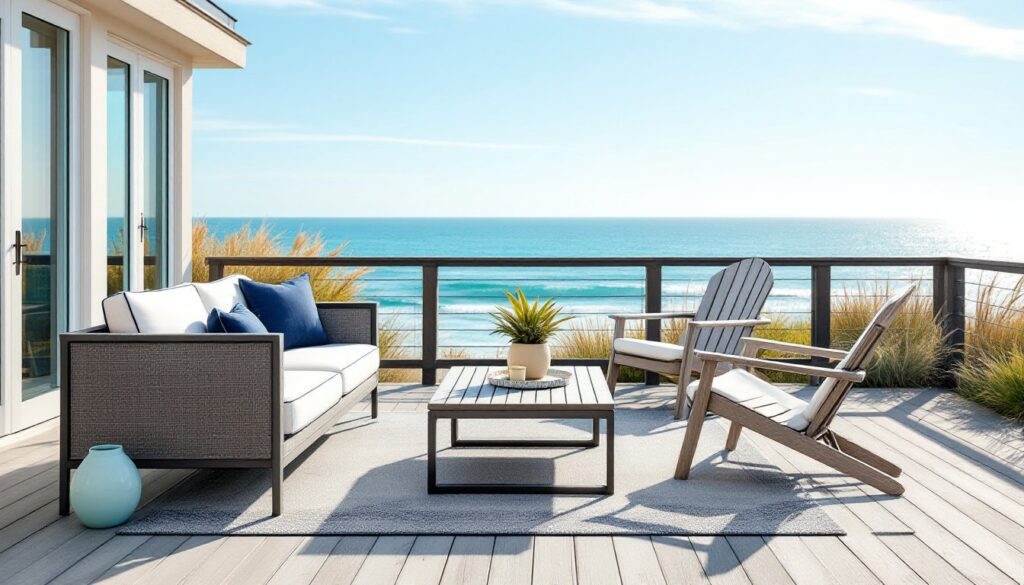
Classic coastal leans on whites, navy, and weathered wood tones. Adirondack chairs, slatted benches, and teak tables fit here. Cushions in striped or solid marine blues add a traditional touch without feeling stuffy.
Modern coastal uses clean lines, low-profile seating, and neutral palettes, grays, taupes, sandy beiges. Aluminum frames with slim profiles and minimalist wicker sectionals work well. This style pairs with concrete, stone, or composite decking.
Tropical coastal brings in color: coral, turquoise, seafoam green. Curved lines, deep seating, and oversized cushions create a resort vibe. Synthetic rattan in espresso or driftwood tones balances the brighter fabrics.
Whatever the style, avoid heavy ornamentation or intricate metalwork. Salt and humidity get into crevices, making cleaning and maintenance harder. Simple joinery and smooth surfaces age better and look sharper longer.
Essential Maintenance Tips for Coastal Climates
Even the toughest materials need regular care by the sea. Neglect accelerates wear, and small problems become expensive replacements.
Rinse furniture monthly with fresh water from a hose. Salt residue builds up invisibly and eats through finishes. A quick rinse, especially after storms or high winds, prevents long-term damage. Use a soft brush on wicker weaves and frame joints where salt hides.
Wash with mild soap quarterly. Mix a few drops of dish soap in a bucket of warm water. Wipe down frames, wicker, and cushion covers (if removable and machine-washable, follow care labels). Avoid harsh chemicals or pressure washers on wicker: high pressure can fray synthetic fibers.
Inspect hardware and joints twice a year. Tighten loose bolts, check for rust spots, and replace corroded fasteners with stainless steel versions. A small tube of marine-grade anti-seize lubricant (available at hardware stores) on threaded fasteners prevents them from locking up.
Store or cover cushions when not in use. Even solution-dyed fabrics last longer out of the weather. If storage isn’t an option, invest in ventilated cushion covers that allow airflow and prevent mildew. Solid tarps trap moisture and do more harm than good.
Apply protective treatments as needed. Teak and eucalyptus can be oiled annually to maintain color, or left to weather naturally. Poly lumber and synthetic wicker need nothing beyond cleaning. Powder-coated aluminum benefits from a coat of car wax once a year to protect the finish and make cleaning easier.
Anchor or store lightweight pieces during storms. Aluminum chairs and small side tables become projectiles in high winds. Use tie-downs, stack them in a shed, or flip them upside down and secure with bungee cords to deck railings.
Don’t ignore small frame damage. A chip in powder coating or a crack in resin wicker exposes the material underneath to salt and moisture. Touch up paint chips with a rust-inhibiting primer and matching spray paint. Replace damaged wicker strands if possible, or the whole piece if the frame is compromised.
Conclusion
Coastal living demands furniture that can take a beating and still look good. Aluminum, synthetic wicker, teak, and poly lumber lead the pack for durability. Pair them with regular rinsing, seasonal inspections, and smart storage habits, and a quality coastal patio set can deliver a decade or more of reliable service. Invest in materials built for the environment, not just the aesthetic, and the deck stays as inviting as the view.