Table of Contents
ToggleCreating a coastal bedroom doesn’t require oceanfront property, just the right furniture choices. Beach-inspired bedroom furniture brings the calm of the shore indoors through weathered textures, light finishes, and relaxed silhouettes. Unlike themed décor that can feel forced, true coastal furniture works with natural materials and practical design that suits year-round living. This guide covers the essential pieces, materials, finishes, and styling strategies that define authentic coastal bedroom furniture, helping DIYers make informed choices whether they’re furnishing a beach house or bringing coastal calm to a landlocked space.
Key Takeaways
- Authentic coastal beach bedroom furniture prioritizes natural materials, light finishes, and minimal ornamentation rather than literal nautical themes like anchors and ship wheels.
- Platform beds with low footboards, whitewashed wood dressers, and woven rattan or seagrass textures form the foundation of genuine coastal bedroom design.
- Quality wood species such as teak, reclaimed pine, and acacia with weathered or cerused finishes create an organic, collected-over-time aesthetic that works year-round.
- A restrained color palette of whites, soft grays, warm taupes, and muted blues—drawn from sand, sea, and sky—prevents coastal bedroom furniture from feeling cluttered or overwrought.
- Avoid overloading spaces with beachy accessories; instead, layer textures and scale furniture appropriately so the room feels serene and airy rather than cramped.
What Defines Coastal Beach Bedroom Furniture?
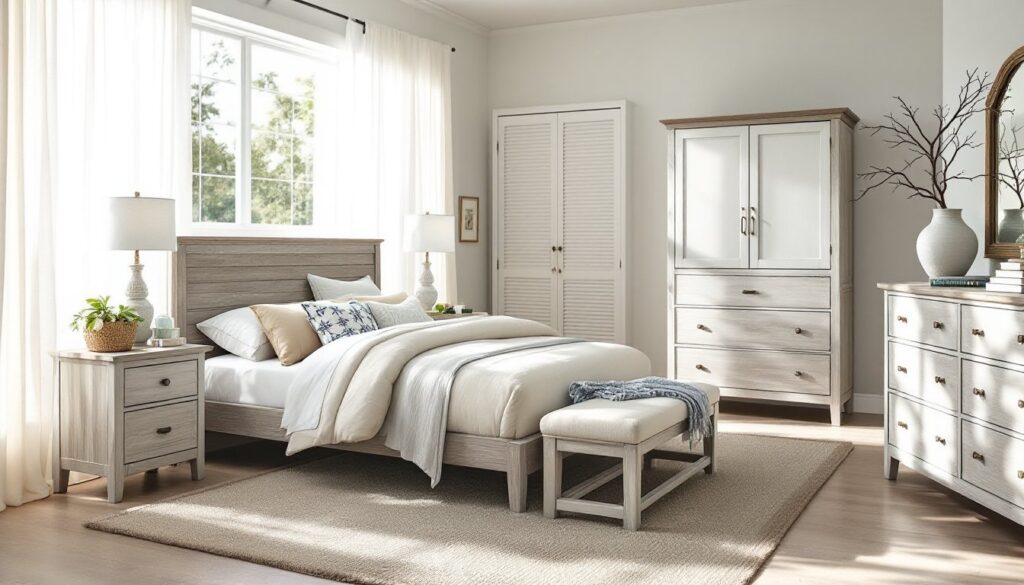
Coastal beach bedroom furniture is characterized by light, airy aesthetics that mimic the natural environment of shoreline living. Unlike nautical themes with anchors and ship wheels, coastal style draws from organic textures, weathered finishes, and the color palette of sand, sea, and sky.
Key characteristics include:
- Low-profile silhouettes that don’t interrupt sightlines or make rooms feel crowded
- Natural or whitewashed wood finishes that suggest driftwood and sun-bleached timber
- Woven textures like rattan, wicker, seagrass, and jute
- Minimal ornamentation, clean lines with subtle detail rather than heavy carving
- Breathable materials such as linen upholstery and open-weave cane
The style borrows from both casual cottage design and modern minimalism, avoiding the clutter of traditional beachy décor. Furniture should feel collected over time, not mass-produced from a single catalog. Quality pieces in coastal bedrooms tend to have visible grain, natural imperfections, and finishes that improve with age, think reclaimed pine platform beds or cerused oak dressers. This approach works in humid climates because many materials (teak, rattan, marine-grade hardware) were developed for outdoor or marine use and handle moisture without warping.
Essential Furniture Pieces for a Coastal Beach Bedroom
Beds and Headboards That Capture the Ocean Vibe
Platform beds with low footboards create an open, uncluttered feeling. Look for solid wood frames in light oak, ash, or painted finishes, actual dimensions for a queen are typically 60″ × 80″ sleeping surface, but frame dimensions vary, so measure doorways before ordering. Many coastal beds skip box springs entirely, using slat supports spaced no more than 3 inches apart to prevent mattress sagging.
Upholstered headboards in natural linen or cotton bring softness without visual weight. Avoid tufting and go for simple panels or horizontal channeling. For a casual look, slipcovered headboards can be removed and laundered, practical in sandy or humid environments.
Rattan and wicker beds offer strong coastal character. Check construction quality: hand-woven rattan wraps around a hardwood or metal frame and should have no loose ends or unfinished edges. Synthetics (resin wicker) won’t fade or mildew but lack the texture of natural materials.
Canopy beds work in coastal settings when frames are simple, four slim posts in weathered teak or painted wood, often left bare or draped with sheer linen. Skip ornate Victorian styles.
Dressers, Nightstands, and Storage Solutions
Case goods (dressers, chests, nightstands) in coastal bedrooms typically feature recessed panel doors, shaker-style drawer fronts, or louvered details that reference shutters and ventilation.
For nightstands, look for pieces with open shelving or woven basket drawers. Typical nightstand height is 24″–28″, roughly level with mattress top for bedside lamp access. Materials like seagrass wrapped around drawer fronts or cane webbing inset into door panels add texture without fussiness.
Dressers should be proportional to the room. A standard six-drawer dresser is about 60″ wide × 18″ deep × 32″ tall, measure wall space and allow 3–6 inches of clearance on each side for a balanced look. Coastal styles often use mixed materials: a painted base with natural wood top, or wood frames with woven rattan drawer fronts.
Storage benches at the foot of the bed double as seating and hidden storage for linens or off-season clothing. Choose lift-top styles with soft-close hinges to prevent slamming.
Armoires and wardrobes make sense in older homes lacking closet space. Coastal versions often have mirrored interiors, adjustable shelving, and ventilation (louvered doors or mesh-backed panels). Solid wood armoires are heavy, expect to need a second person and a furniture dolly for placement.
Materials and Finishes That Bring the Beach Indoors
Wood species and finishes are the foundation of coastal furniture:
- Reclaimed pine and driftwood-finish oak provide weathered character. These aren’t distressed by hand-sanding: manufacturers use wire brushing, cerusing (lime-washing the grain), or reactive stains that interact with wood tannins.
- Whitewashed or pickled finishes let wood grain show through a translucent layer of diluted paint or stain. DIYers can achieve this by mixing 1 part white latex paint to 3 parts water, applying with a rag, and wiping excess.
- Teak is naturally water-resistant due to high oil content and works well in humid climates. It weathers to gray if left untreated: maintain golden color with annual teak oil application.
- Acacia is a sustainable hardwood alternative with visible grain and warm tones. It’s durable but less moisture-resistant than teak, use coasters and avoid direct spills.
Woven materials add organic texture:
- Rattan (solid core) vs. wicker (woven technique, not a material). Natural rattan should be kept indoors: it cracks in freezing temps and fades in direct sun.
- Seagrass and abaca are tightly woven fibers used for drawer panels, headboards, or baskets. Both are durable but can’t be cleaned with water, vacuum with a brush attachment.
- Cane webbing is traditional rattan peel woven into sheets. Pre-woven cane comes in standard sizes (fine, medium, coarse weave) and can be retrofit into routed panel grooves using spline cord.
Metal accents ground lighter materials. Look for antique brass, oil-rubbed bronze, or matte black hardware. Coastal furniture sometimes incorporates rope detailing (wrapped drawer pulls, bed post accents) or nautical-grade stainless steel for drawer slides in high-humidity areas.
Avoid glossy lacquers, dark espresso stains, or heavily distressed chalk-paint finishes, these read more farmhouse than coastal.
Color Palettes and Styling Tips for Coastal Bedroom Furniture
Base palette centers on neutrals found in nature:
- Whites and creams: linen white, sailcloth, sand dollar
- Soft grays: driftwood, weathered shingle, fog
- Warm taupes and beiges: natural jute, sun-bleached wood
Accent colors reference water and sky without going full nautical:
- Muted blues: slate blue, dusty aqua, seafoam, not bright turquoise or navy
- Seafoam greens and sage: celadon, lichen, pale seaglass
- Warm coral or terracotta: use sparingly in textiles or artwork
Furniture finishes should stick to the lighter end of the spectrum. Painted pieces work best in soft white, dove gray, or pale blue-gray. If mixing wood tones, keep contrast subtle, pairing weathered oak with natural linen is easier than mixing dark walnut with whitewashed pine.
Styling tips:
- Layer textures instead of adding color. Combine smooth painted wood, nubby linen, woven baskets, and raw wood in similar tones.
- Mix modern and vintage. A clean-lined platform bed balances a weathered wooden dresser found at salvage.
- Keep hardware consistent across the room, all brass, all matte black, or all natural wood pulls.
- Use organic shapes. Round mirrors, curved bentwood chairs, and oval trays soften boxy furniture.
- Bring in natural elements that aren’t literal shells or anchors: driftwood branches, potted palms, linen throws, jute rugs.
Common mistakes to avoid:
- Overloading with “beachy” accessories (starfish pillows, rope frames). Let furniture do the work.
- Mixing too many wood finishes. Stick to two: one dominant, one accent.
- Choosing furniture that’s too small. Coastal style is airy, not cramped, properly scaled pieces prevent the room from feeling sparse.
Conclusion
Coastal beach bedroom furniture relies on natural materials, light finishes, and clean lines rather than thematic décor. Investing in quality wood pieces with weathered or whitewashed finishes, incorporating woven textures, and keeping a restrained color palette creates a space that feels serene year-round. Choose furniture scaled to the room, prioritize durability in humid climates, and let organic materials deliver coastal character without the clutter.