Table of Contents
ToggleDark wood bedroom furniture brings depth, warmth, and sophistication to any sleeping space. Unlike trendy finishes that come and go, dark wood pieces anchor a room with natural beauty that lasts decades. Whether someone’s working with walnut, mahogany, or cherry, these rich tones create a foundation that works across design styles, from traditional to modern. The key is understanding wood types, choosing the right pieces, and balancing darker furniture with complementary colors and decor. This guide walks through everything needed to make dark bedroom furniture work in any space.
Key Takeaways
- Dark wood bedroom furniture provides timeless style and durability because it’s rooted in natural materials that develop character over time, unlike manufactured trends that fade quickly.
- Walnut, mahogany, and cherry are the best types of dark wood for bedroom furniture, with walnut being the premium choice due to its natural chocolate-brown color and superior hardness on the Janka scale.
- Start with a high-quality bed frame featuring mortise-and-tenon joinery, then add complementary pieces like dressers and nightstands that match the wood species and finish for a cohesive look.
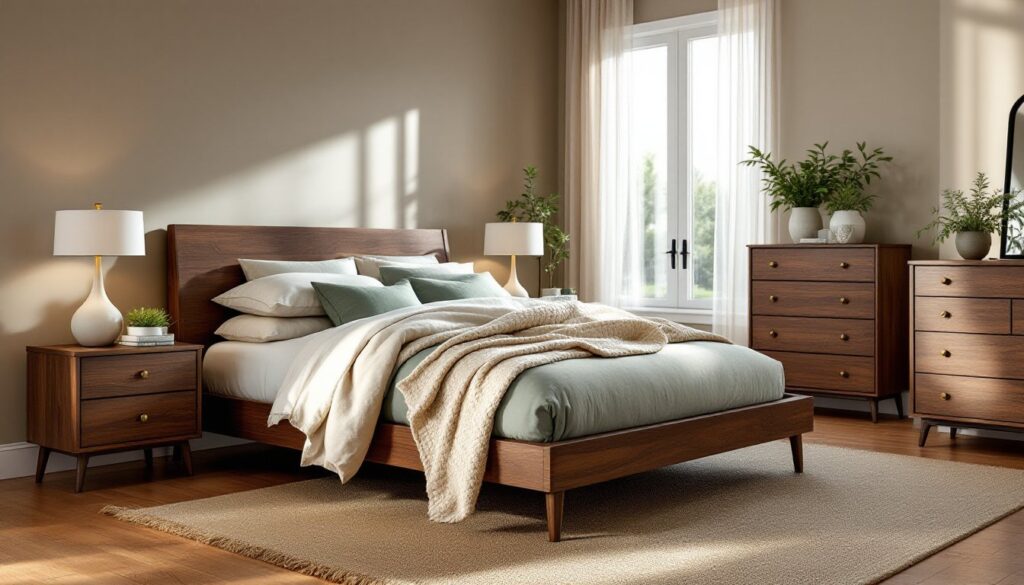
- Light walls, carefully chosen bedding, and strategic lighting are essential to prevent dark wood bedroom furniture from making a space feel cave-like and to highlight the wood’s natural grain.
- Dark wood furniture adapts to multiple design styles—from mid-century modern and traditional to industrial and Scandinavian—making it a versatile investment that works as tastes and spaces evolve.
Why Dark Wood Bedroom Furniture Never Goes Out of Style
Dark wood furniture has staying power because it’s rooted in natural material, not manufactured trends. Species like walnut and mahogany develop character over time, the grain deepens, minor scratches blend into the patina, and the piece actually improves with age. That’s a sharp contrast to particleboard veneers or painted MDF that chip and fade.
From a design standpoint, dark wood acts as a visual anchor. It grounds lighter walls, textiles, and flooring without overwhelming the space. This balance makes rooms feel intentional rather than haphazard. Contractors and interior designers consistently return to dark wood for client bedrooms because it reads as quality, buyers recognize solid wood construction and rich finishes as markers of durability.
Dark bedroom furniture also offers flexibility. A walnut bed frame works equally well in a minimalist loft with concrete floors or a craftsman-style home with wainscoting. The same dresser that fits a mid-century modern setup can transition into an industrial space with different hardware and bedding. This adaptability means homeowners won’t need to replace furniture when tastes shift.
Another practical advantage: dark wood furniture hides minor wear better than lighter finishes. Surface scratches, water rings, and dust are less visible on espresso-stained oak than on whitewashed pine. For busy households or rental properties, that translates to lower maintenance and longer usable life between refinishing projects.
Best Types of Dark Wood for Bedroom Furniture
Not all dark wood is created equal. Species vary in hardness, grain pattern, cost, and how they respond to staining and finishing. Here’s what to look for when evaluating dark wood furniture bedroom pieces.
Walnut: The Premium Choice
American black walnut is the gold standard for dark wood furniture. Its natural chocolate-brown color requires minimal staining, most builders and furniture makers apply only a clear finish to let the grain shine. Walnut ranks around 1,010 on the Janka hardness scale, making it durable enough for daily use but workable for joinery and detail work.
The grain is straight to slightly wavy, with occasional swirls and burls that add visual interest. Unlike some hardwoods, walnut doesn’t yellow or darken dramatically over time: it maintains a consistent tone for decades. Expect to pay a premium, walnut costs roughly $8–$12 per board foot at retail, and finished furniture reflects that. A solid walnut queen bed frame typically starts around $1,200–$2,500 depending on design complexity.
For DIYers building custom pieces, walnut machines cleanly and takes joinery well. Pre-drill for screws to avoid splitting, and use a sharp blade on table saws to minimize tearout. Finish with Danish oil or a matte polyurethane to preserve the natural color without adding sheen that looks artificial.
Mahogany and Cherry: Rich Traditional Appeal
Genuine mahogany (Swietenia macrophylla) delivers a reddish-brown hue that deepens with age and UV exposure. It’s softer than walnut (around 800–900 Janka) but still plenty durable for bedroom furniture. Mahogany stains beautifully and accepts hand-rubbed finishes for a traditional look. It’s become less common due to sustainability concerns and export restrictions, so verify sourcing if environmental impact matters. Alternatives like sapele or African mahogany offer similar color and workability at lower cost.
Cherry starts as a lighter tan-pink and darkens to a deep reddish-brown over several years. This color evolution is part of its appeal, a cherry dresser will look noticeably richer after five years in a sunny room. The Janka rating sits around 950, close to mahogany. Cherry’s fine, straight grain works well for traditional or Shaker-style furniture. It can show blotchiness when stained, so many woodworkers prefer natural oil finishes or light gel stains that don’t penetrate unevenly.
Both species work well for dark bedroom furniture in formal or transitional settings. They pair naturally with brass hardware, leather accents, and classic textiles.
How to Choose the Right Dark Wood Furniture Pieces
Start with the bed frame, it’s the largest piece and sets the tone for everything else. A platform bed in dark walnut or mahogany minimizes visual bulk while providing solid support without a box spring. Look for frames built with mortise-and-tenon joinery or heavy-duty corner brackets, not just screws into end grain. Check that slats are spaced no more than 3 inches apart to support most mattresses without sagging.
For storage, a dresser offers more versatility than a chest of drawers in tight spaces. Choose one with dovetail drawer construction, front and back corners should show interlocking fingers of wood, not staples or glue. Drawer glides matter: full-extension ball-bearing slides hold up better than cheap side-mount rollers and let users access the entire drawer. Test them in the store: they should glide smoothly without wobbling.
Nightstands should match the bed’s height within a few inches, the top of the nightstand should align with or sit slightly below the mattress surface for easy reach. Dark wood nightstands with two drawers or a drawer plus shelf provide storage without taking up floor space. Avoid overly ornate pieces in small rooms: clean lines work better visually.
When mixing pieces, keep the wood species and finish consistent or deliberately contrasting. A walnut bed with walnut nightstands reads as cohesive. A walnut bed with a mahogany dresser can work if the stain tones are intentionally different, but similar shades that don’t quite match look accidental. If buying used or vintage dark bedroom furniture, bring a sample or photo to compare finishes in natural light.
Always measure doorways, stairs, and hallways before purchasing large furniture. A king-size bed frame that won’t clear a 30-inch bedroom door becomes an expensive problem.
Design Styles That Complement Dark Wood Bedroom Furniture
Dark wood bedroom furniture adapts to multiple design languages depending on the furniture’s lines, hardware, and surrounding decor.
Mid-century modern pairs beautifully with walnut or teak pieces. Look for tapered legs, clean horizontal lines, and minimal ornamentation. Swap out bulky traditional hardware for brushed brass or matte black pulls. Pair with low-profile platform beds and dressers that emphasize the wood grain rather than decorative details.
Traditional and transitional styles lean into mahogany and cherry with more substantial profiles, turned legs, and carved accents. These work well in homes with crown molding, wainscoting, or other architectural details. Upholstered headboards in linen or velvet soften the formality while keeping the classic feel.
Industrial design uses dark wood as a warm counterpoint to metal and concrete. A reclaimed oak bed frame stained dark espresso pairs with steel pipe nightstands and Edison bulb fixtures. The contrast between rough-textured wood and smooth metal creates visual interest without clutter.
Scandinavian and minimalist spaces benefit from dark wood used sparingly, a single walnut bed frame against white walls and light wood flooring, for example. The restraint lets the furniture’s craftsmanship take center stage. Avoid overloading the room: one or two dark pieces provide enough contrast.
Whatever the style, keep hardware consistent. Mixing brushed nickel, oil-rubbed bronze, and brass on different furniture pieces in the same room looks unfinished. Choose one metal finish and apply it to drawer pulls, bed frame accents, and light fixtures.
Color Schemes and Decor Tips for Dark Wood Bedrooms
Dark wood furniture bedroom setups require deliberate color choices to avoid a cave-like feel. Light walls provide contrast and keep the space from closing in. Soft whites, warm grays, or pale greiges work well, they reflect natural light while letting the wood stand out. Avoid stark white, which can create too much contrast and make the furniture look heavy.
Bedding is an opportunity to add color and texture without commitment. Linen, cotton, or velvet in cream, sage green, dusty blue, or blush pink softens dark wood’s masculine edge. Layer textures, a chunky knit throw over a linen duvet adds depth. Avoid overly busy patterns: solid colors or subtle stripes keep the focus on the furniture.
Flooring matters. Light or medium-toned hardwood, engineered wood, or luxury vinyl plank creates contrast and opens up the space. If the room has dark flooring, use a large area rug in a lighter neutral to break up the darkness. A jute or wool rug in ivory or light gray anchors the bed and adds warmth underfoot.
Lighting is critical. Dark wood absorbs light, so layer multiple sources. Install a dimmer on overhead fixtures for adjustable ambient light. Add bedside lamps with warm-toned bulbs (2700K–3000K) to create pools of light that highlight the wood’s grain. Consider picture lights or wall sconces to wash light across the furniture and reduce shadows.
Window treatments should maximize natural light. Sheer linen curtains or cellular shades filter light without blocking it. If privacy or blackout capability is needed, install Roman shades or roller blinds in light colors and keep them raised during the day.
Finally, limit decorative accessories. Dark wood furniture makes a strong statement, overloading surfaces with knick-knacks dilutes the impact. A single table lamp, a small plant, and maybe a framed photo per nightstand is plenty. Let the wood breathe.