Table of Contents
ToggleMesh patio furniture is built for comfort and airflow, but those woven fibers trap dirt, pollen, and grime like nobody’s business. Left unchecked, the mesh starts looking dingy, feels rough to the touch, and can develop mildew in humid climates. The good news? Cleaning mesh isn’t complicated, and it doesn’t require specialty products or expensive equipment. With basic cleaning supplies and a little elbow grease, anyone can restore mesh seating to near-new condition. This guide walks through the entire process, from gathering materials to tackling stubborn stains and preventing future buildup.
Key Takeaways
- Learn how to clean patio furniture mesh using basic supplies like dish soap, a soft-bristle brush, and a garden hose—no power washer or expensive equipment needed.
- Avoid high-pressure water and harsh cleaners that can crack or peel the vinyl coating; use light to moderate scrubbing pressure and test solutions on inconspicuous areas first.
- For mildew and stubborn stains, use white vinegar (1:3 ratio with water), oxygen bleach, or baking soda paste rather than chlorine bleach, which can degrade the mesh.
- Air-dry your mesh patio furniture in full sun whenever possible to speed evaporation and kill bacteria, while ensuring air circulates on both sides.
- Prevent future dirt buildup with monthly rinses during heavy-use seasons, furniture covers, regular spill cleanup, and trimmed overhanging branches to reduce debris.
Why Mesh Patio Furniture Requires Special Cleaning Care
Mesh patio furniture, typically made from vinyl-coated polyester or PVC-coated fiberglass, handles weather better than many other outdoor fabrics, but its construction presents unique cleaning challenges. The woven design creates hundreds of tiny pockets where dirt, pollen, tree sap, and dead insects settle in and stick.
Unlike solid surfaces that can be wiped down in seconds, mesh requires scrubbing that gets into the weave without damaging the coating. Use too much force or the wrong cleaner, and the vinyl coating can crack or peel, exposing the core fibers to UV damage and moisture. Once that protective layer is compromised, the mesh deteriorates fast.
Mildew is another common issue. Mesh dries faster than cushioned fabric, but in shaded or humid areas, moisture lingers in the weave long enough for mold spores to take hold. Regular cleaning prevents organic buildup that feeds mildew and keeps the material breathable and flexible.
What You’ll Need to Clean Mesh Patio Furniture
Gather these supplies before starting. Most homeowners already have everything on hand.
Cleaning supplies:
- Mild dish soap (Dawn, Palmolive, or similar degreasing formula)
- Warm water (a 5-gallon bucket works well)
- Soft-bristle brush (a nylon utility brush or old toothbrush for tight spots)
- Garden hose with spray nozzle
- Microfiber cloths or sponges
- White vinegar (for mildew treatment)
- Baking soda (optional, for paste on tough stains)
- Oxygen bleach powder (like OxiClean, if dealing with heavy mildew, avoid chlorine bleach, which can degrade vinyl)
Safety gear:
- Rubber gloves (especially when using vinegar or oxygen bleach)
- Safety glasses (if scrubbing overhead or using a spray nozzle at pressure)
No power washer is needed. High-pressure water can force dirt deeper into the weave or damage the vinyl coating. Stick with a standard garden hose.
Step-by-Step Guide to Cleaning Mesh Patio Furniture
This process works for most mesh furniture in decent condition. Adjust as needed for heavily soiled pieces.
1. Remove loose debris
Brush off leaves, dirt, and cobwebs with a dry soft-bristle brush or a handheld vacuum with a brush attachment. Pay attention to the frame joints and underside of the seat where debris collects.
2. Rinse the mesh
Use a garden hose to wet down the entire mesh surface. This loosens surface grime and prepares the material for scrubbing. A moderate spray is fine, no need for high pressure.
3. Mix the cleaning solution
Fill a bucket with warm water and add about 2 tablespoons of dish soap per gallon of water. Dish soap cuts through oils, pollen residue, and general grime without harsh chemicals.
4. Scrub the mesh
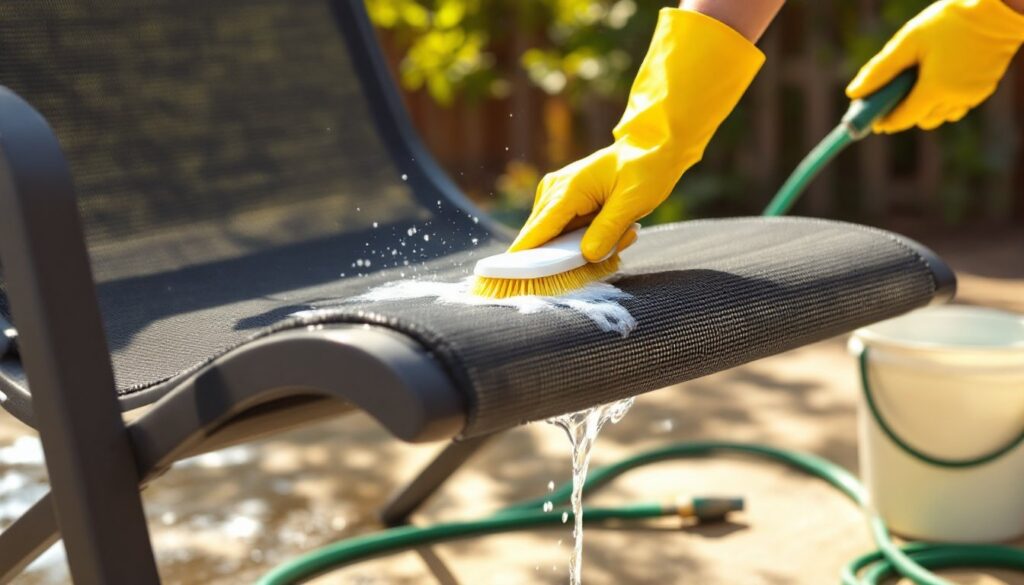
Dip the soft-bristle brush into the soapy water and scrub the mesh in small sections, working in circular motions. Apply light to moderate pressure, enough to work soap into the weave, but not so much that the bristles bend or catch on the material. Work from top to bottom so dirty runoff doesn’t re-soil cleaned areas.
For tight corners or seams where the mesh attaches to the frame, use an old toothbrush. These spots trap the most grime and are easy to miss.
5. Rinse thoroughly
Spray off all soap residue with the garden hose. Leftover soap attracts dirt and can leave a sticky film. Rinse until the water runs clear and no suds remain.
6. Inspect and repeat if needed
Check the mesh while it’s still wet. If dirt or discoloration remains, repeat the scrubbing and rinsing process on problem areas.
Removing Stubborn Stains and Mildew from Mesh
Sometimes soap and water aren’t enough. Here’s how to handle the tough stuff.
For mildew and mold:
Mix a solution of 1 part white vinegar to 3 parts water in a spray bottle. Spray the affected areas and let it sit for 10–15 minutes. Vinegar’s acidity kills mold spores without damaging vinyl coatings. Scrub with a soft brush, then rinse thoroughly.
If mildew is widespread or deeply set, use oxygen bleach instead. Dissolve the powder per package instructions (usually 1–2 scoops per gallon of warm water). Apply with a sponge or brush, let it work for 15–20 minutes, then scrub and rinse. Oxygen bleach is color-safe and won’t weaken the mesh like chlorine bleach can.
For grease, sap, or mystery stains:
Make a paste with baking soda and a few drops of water. Apply it directly to the stain, let it sit for 5–10 minutes, then scrub gently with a brush or cloth. Baking soda is mildly abrasive and works well on sticky residues without scratching the vinyl.
For bird droppings or organic matter:
Scrape off the bulk carefully with a plastic scraper or old credit card, then treat the area with soapy water or vinegar solution. Avoid metal scrapers, which can gouge the coating.
Safety note: Always test any cleaning solution on a small, inconspicuous area first, especially if the mesh is older or an unusual color. Some dyes or coatings can react unpredictably.
Drying and Protecting Your Mesh Furniture After Cleaning
Proper drying prevents new mildew from forming and extends the life of the mesh.
Air-dry in full sun when possible. Sunlight speeds evaporation and has natural antibacterial properties. Position the furniture so air circulates on both sides of the mesh. If the furniture is modular or the mesh panels are removable, prop them upright or at an angle to drain water faster.
Wipe down the frame. While the mesh dries, clean the metal or resin frame with a damp cloth and a bit of soapy water. Aluminum frames can develop oxidation (white powder): a paste of baking soda and water removes it. Steel frames may need a rust check, if you spot rust, sand it lightly and apply a rust-inhibiting spray paint.
Don’t use heat guns or direct high heat to speed drying. Excessive heat can warp vinyl or weaken adhesive bonds where the mesh attaches to the frame.
Optional: Apply a UV protectant. Some outdoor fabric protectants (like 303 Aerospace Protectant) are safe for vinyl mesh and provide a layer of UV and moisture resistance. Spray or wipe on a thin, even coat after the mesh is completely dry. This step isn’t essential, but it can help in harsh sun or coastal environments where salt spray accelerates wear.
How to Prevent Future Dirt Buildup on Mesh Patio Furniture
A little maintenance goes a long way in keeping mesh furniture clean between deep cleans.
Rinse monthly during heavy-use seasons. A quick hose-down removes pollen, dust, and surface grime before it gets embedded. This takes five minutes and cuts down on scrubbing later.
Use furniture covers when not in use. Breathable, waterproof covers keep dirt, bird droppings, and tree sap off the mesh. Make sure covers are vented to prevent moisture buildup underneath, which can lead to mildew.
Store furniture indoors or under a roof in winter. If that’s not an option, at least elevate pieces off the ground using furniture risers or blocks. Ground contact traps moisture and accelerates frame corrosion and mesh degradation.
Trim back overhanging branches. Sap, leaves, and debris from trees are the leading cause of stained, sticky mesh. A little landscape maintenance saves cleaning time.
Clean spills immediately. Drinks, sunscreen, and food leave residues that attract dirt and can stain if left to bake in the sun. A quick wipe with a damp cloth prevents most problems.
Check drainage. If furniture sits on a patio or deck, make sure water doesn’t pool around the legs. Standing water promotes rust, mildew, and algae growth on both the mesh and frame.
Conclusion
Cleaning mesh patio furniture doesn’t require special tools or expensive products, just dish soap, a soft brush, and a garden hose handle most jobs. Regular rinsing and prompt stain treatment keep the mesh looking fresh and extend its service life. With proper care, quality mesh furniture can provide comfortable outdoor seating for years without sagging, tearing, or losing its color.