Table of Contents
ToggleThere’s something undeniably satisfying about vintage metal patio furniture. It’s built heavier, curves more gracefully, and carries the kind of character modern resin chairs can’t touch. Whether it’s a wrought iron bistro set from the 1940s or a powder-coated aluminum spring rocker from the ’60s, these pieces weren’t meant to be disposable. They’ve weathered decades, and with a little know-how, they’ll weather decades more. For DIYers and vintage lovers alike, hunting down and restoring old metal outdoor furniture blends the best of salvage work, surface prep, and backyard pride.
Key Takeaways
- Vintage metal patio furniture outlasts modern alternatives because it’s built from durable materials like wrought iron, cast aluminum, and heavy-gauge steel with welded or riveted joints that withstand decades of outdoor use.
- Authentic vintage metal patio furniture is identifiable by its weight (25+ pounds for wrought iron), hand-forged scrollwork, maker’s marks from brands like Salterini or Woodard, and multiple paint layers accumulated over time.
- Restoring vintage metal furniture involves six key steps: damage assessment, paint and finish removal, rust treatment, priming with rust-inhibiting coats, exterior-grade painting, and protective sealing for long-term outdoor durability.
- Popular vintage styles include wrought iron classics from the 1930s–1960s and retro aluminum sets from the 1950s–1960s, each requiring different restoration approaches—chemical stripping or media blasting for iron, and light sanding or re-powder coating for aluminum.
- Finding vintage metal patio furniture is achievable through estate sales, online auctions (like EstateSales.net), antique malls, curbside finds, and online communities dedicated to vintage furniture, where deals and restoration advice are readily available.
- Vintage metal patio furniture offers sustainability benefits by extending the lifespan of existing pieces rather than purchasing new outdoor furniture, reducing manufacturing waste and landfill impact.
Why Vintage Metal Patio Furniture Never Goes Out of Style
Vintage metal patio furniture endures because it was engineered to last. Unlike many contemporary outdoor sets made from injection-molded plastic or thin-gauge steel, mid-century and earlier pieces were fabricated from wrought iron, cast aluminum, or heavy-gauge tubular steel. These materials don’t flex, crack, or fade under UV exposure the way modern synthetics do.
The construction methods matter, too. Welded joints, riveted seams, and hand-formed scrollwork were standard practice. Chairs often weigh 20–30 pounds each, solid enough to handle wind gusts without tipping, and sturdy enough that a professional welding repair can bring a cracked joint back to full strength.
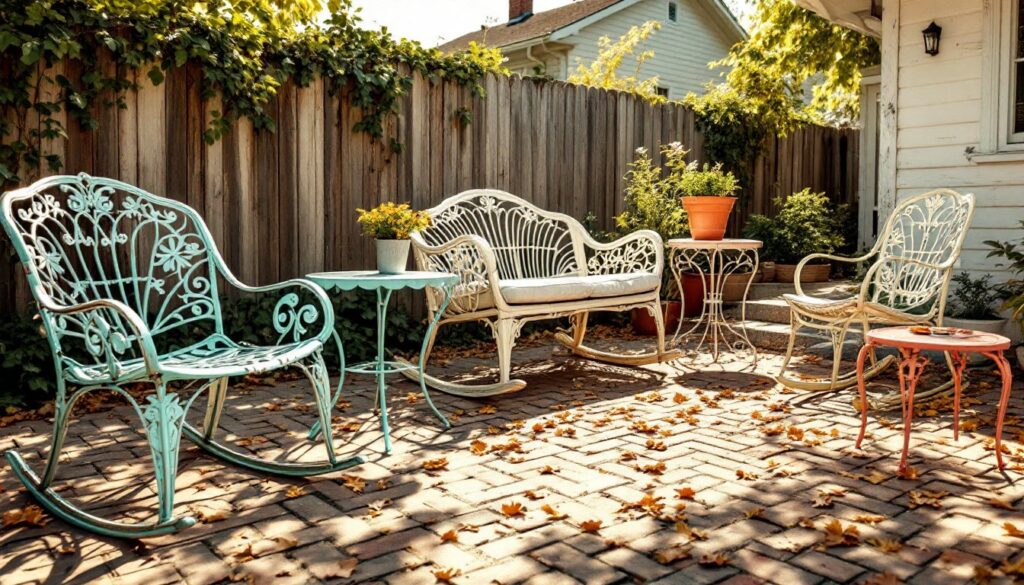
Aesthetically, vintage metal furniture fits a range of styles. A ornate wrought iron loveseat suits a cottage garden. A streamlined aluminum clam shell chair works in mid-century modern settings. The patina, whether original paint or surface rust, adds texture and history that new powder coating can’t replicate. Collectors and designers prize these qualities, which keeps demand steady and resale values relatively high.
Finally, there’s sustainability. Reusing a 60-year-old metal glider keeps it out of a landfill and reduces the demand for new manufacturing. For DIYers committed to reducing waste, restoring vintage pieces is as green as outdoor furniture gets.
Popular Types of Vintage Metal Patio Furniture
Not all vintage metal furniture is created equal. The material and era dictate both the look and the restoration challenges.
Wrought Iron Classics
Wrought iron dominated American patios from the 1930s through the 1960s. It’s hand-forged or machine-formed iron with very low carbon content, making it malleable enough to shape into scrolls, leaves, and lattice patterns. Common pieces include bistro sets, gliders, settees, and plant stands.
Wrought iron is extremely durable but prone to rust when the finish fails. Authentic vintage pieces often feature multiple layers of oil-based enamel paint. Over time, moisture seeps through chips and cracks, causing oxidation beneath the surface. Full restoration typically requires chemical stripping or media blasting, rust conversion or removal, and repainting with a rust-inhibiting primer followed by enamel or modern epoxy topcoats.
Weight is a giveaway: genuine wrought iron pieces are heavy. A single chair can weigh 25–35 pounds. If a “wrought iron” piece feels light, it’s likely mild steel tubing or cast aluminum marketed under the wrong name.
Retro Aluminum Sets
By the 1950s and ’60s, manufacturers pivoted to cast and extruded aluminum. Lighter, rust-proof, and easier to mass-produce, aluminum furniture came in playful forms: clamshell chairs, tulip-shaped side tables, and motel-style spring rockers with vinyl strapping.
Aluminum doesn’t rust, but it does oxidize, forming a chalky white or gray layer. Original finishes were often anodized or powder-coated in cheerful pastels, turquoise, coral, mint green. These coatings can fade, flake, or pit, especially in coastal or high-UV environments.
Restoration is generally easier than wrought iron. Surface cleaning with a mild alkaline cleaner removes oxidation. If the original finish is too far gone, aluminum can be stripped, lightly sanded, and re-powder coated or spray-painted with etching primer and enamel. Vinyl or fabric strapping may need replacement, modern reproduction strapping is widely available in period-correct colors.
How to Identify Authentic Vintage Metal Pieces
Spotting the real deal takes a bit of detective work. Start with weight and construction. Authentic wrought iron and heavy-gauge steel feel substantial. Lift a chair, if it’s genuinely vintage wrought iron, expect 25+ pounds. Aluminum is lighter but still solid: flimsy tubing suggests a modern import.
Examine joinery and welds. Hand-formed scrollwork, visible forge marks, and riveted connections point to pre-1970s manufacture. Modern replicas often use thinner metal, MIG welds with minimal cleanup, and stamped (not forged) decorative elements.
Check for maker’s marks or labels. Brands like Salterini, Woodard, Tropitone, and Meadowcraft stamped or embossed their names on frames, often under the seat or on a leg. A manufacturer’s mark significantly boosts collectibility and value.
Look at paint layers. Vintage pieces accumulate multiple coats over decades. Scraping a small, hidden area may reveal several colors beneath the top layer, a good sign of age. Original finishes were typically oil-based enamels: modern powder coating didn’t become common until the 1980s.
Finally, assess wear patterns. Authentic vintage furniture shows honest use: worn paint on armrests, slight rust bloom at joints, aged patina on bare metal. Artificially distressed reproductions often look too uniform or have rust applied as a finish rather than developing naturally from the inside out.
Restoring and Maintaining Your Vintage Metal Patio Furniture
Restoring vintage metal furniture is a rewarding weekend project, but it requires proper prep and the right materials. Skipping steps leads to paint failure within a season.
Safety first: Wear nitrile gloves, safety goggles, and a respirator with organic vapor cartridges when stripping paint or working with rust converters. Work outdoors or in a well-ventilated garage.
Step 1: Assess the damage. Decide whether to preserve patina or strip to bare metal. Light surface rust and intact original paint may only need cleaning and a protective topcoat. Severe rust, flaking paint, or structural damage calls for a full strip and repaint.
Step 2: Remove old finishes. For wrought iron, chemical strippers (citrus-based or methylene chloride formulas) work but are labor-intensive. Media blasting, using sand, walnut shells, or soda, is faster and reaches into crevices, but requires access to a blaster or a professional service. Aluminum can often be stripped with aircraft-grade paint remover or simply sanded if the coating is thin.
Step 3: Treat rust. Wire-brush loose rust, then apply a rust converter (phosphoric acid-based products like Rust-Oleum Rust Reformer) to turn remaining oxidation into a stable, paintable surface. Alternatively, remove all rust with a grinder, sandpaper, or naval jelly, then clean with denatured alcohol.
Step 4: Prime. Use a rust-inhibiting metal primer. For wrought iron, oil-based or epoxy primers offer the best adhesion and moisture resistance. Aluminum requires an etching primer or self-etching spray primer to ensure topcoat adhesion. Apply two thin coats: let each dry fully per the manufacturer’s instructions.
Step 5: Paint. Choose an exterior-grade enamel or epoxy paint. Spray application (HVLP gun or aerosol cans) yields the smoothest finish, especially on ornate pieces. Brush or roller works for simpler forms but may leave texture. Apply 2–3 thin coats, sanding lightly (320-grit) between coats for maximum smoothness.
Step 6: Seal and protect. Once the paint cures (typically 48–72 hours), apply a clear UV-resistant topcoat if desired, especially in harsh climates. For pieces kept outdoors year-round, bring them under cover or tarp them during winter to extend the finish life.
Ongoing maintenance: Wipe down furniture monthly with mild soap and water. Touch up chips immediately with matching paint to prevent rust from spreading. Re-coat high-wear areas (armrests, seat edges) every few years as needed.
Where to Find Vintage Metal Patio Furniture in 2026
The hunt for vintage metal patio furniture is half the fun. Start local: estate sales and garage sales in older neighborhoods often yield forgotten gliders and bistro sets at rock-bottom prices. Arrive early, serious pickers move fast.
Auctions, both in-person and online, are goldmines. Regional auction houses sometimes lot outdoor furniture together, lowering per-piece costs. Online platforms like EstateSales.net list upcoming sales by ZIP code and often include photos.
Antique malls and architectural salvage yards curate inventory, so prices run higher, but the selection is vetted. Salvage yards in older industrial cities (think Rust Belt metros) sometimes have commercial-grade metal furniture originally used in parks or hotels.
Online marketplaces, Facebook Marketplace, Craigslist, and OfferUp, turn over inventory daily. Search terms like “wrought iron patio,” “vintage glider,” and “metal lawn chairs” yield results. Message sellers quickly and be ready to haul same-day: good pieces don’t last.
Specialty dealers and sites like 1stDibs, Chairish, and Ruby Lane offer authenticated, high-end vintage pieces. Prices reflect the curation, but shipping is often available, and return policies provide peace of mind.
Don’t overlook curbside finds and municipal bulk pickup days. One person’s trash is another’s restoration project. Keep a tape measure, work gloves, and tie-down straps in the truck, you never know when you’ll spot a Salterini settee waiting for the scrap hauler.
Finally, join online communities and forums dedicated to vintage furniture. Members often sell or trade pieces, share leads on local sources, and offer restoration advice. The collective knowledge can shave hours off a project and point you toward the best deals in your region.