Table of Contents
ToggleMartha Stewart’s outdoor furniture lines were once staples at major retailers, known for combining elegant design with functional durability. But those shopping for replacement pieces or trying to complete a set today face a frustrating reality: most collections have been discontinued. Whether someone owns a beloved wicker dining set that needs new cushions or spotted a vintage wrought-iron piece at an estate sale, tracking down discontinued Martha Stewart patio furniture requires strategy. This guide walks through where to find these pieces, how to authenticate them, source replacement parts, and keep them in service for years to come.
Key Takeaways
- Most discontinued Martha Stewart patio furniture can be found through local classifieds, estate sales, and eBay, where specific collection names like Charlottetown and Lake Adela yield the best results for patient shoppers.
- Authentic Martha Stewart outdoor furniture features metal tags with model numbers, continuous resin wicker weaving, powder-coated steel frames with welded (not bolted) joints, and solution-dyed acrylic cushions in distinctive colorways.
- Custom cushion replacements and frame restoration services can extend the life of discontinued pieces indefinitely, with solution-dyed acrylic (Sunbrella-grade) cushions costing $40-120 depending on size and quality.
- The discontinuation of Martha Stewart patio furniture resulted from retail partnership shifts (particularly Home Depot’s transition to Hampton Bay in 2014-2015) and the brand’s focus on more profitable product categories with lower overhead.
- Preventive maintenance—including monthly frame wiping, twice-yearly paste wax application, indoor cushion storage, and seasonal bolt-tightening—is essential for preserving discontinued collections that cannot be easily replaced.
Understanding the Martha Stewart Outdoor Furniture Legacy
Martha Stewart’s outdoor furniture collections launched in the early 2000s through exclusive partnerships with major retailers, primarily The Home Depot and later Kmart. The lines featured several distinct material categories: resin wicker, wrought iron, cast aluminum, and wood (primarily eucalyptus and acacia).
The Martha Stewart Living brand outdoor collections included popular series like Charlottetown (wicker with deep seating), Lake Adela (wrought iron with decorative scrollwork), and various bistro sets designed for smaller patios. These weren’t contractor-grade commercial pieces, but they occupied a middle tier between big-box basics and high-end patio specialists, solid construction at accessible price points.
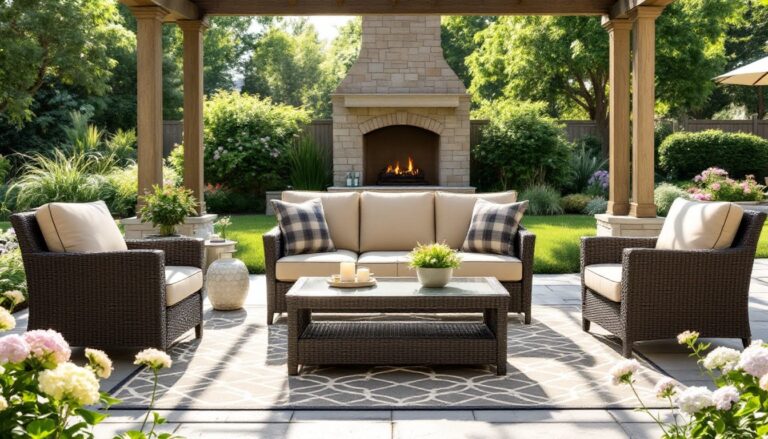
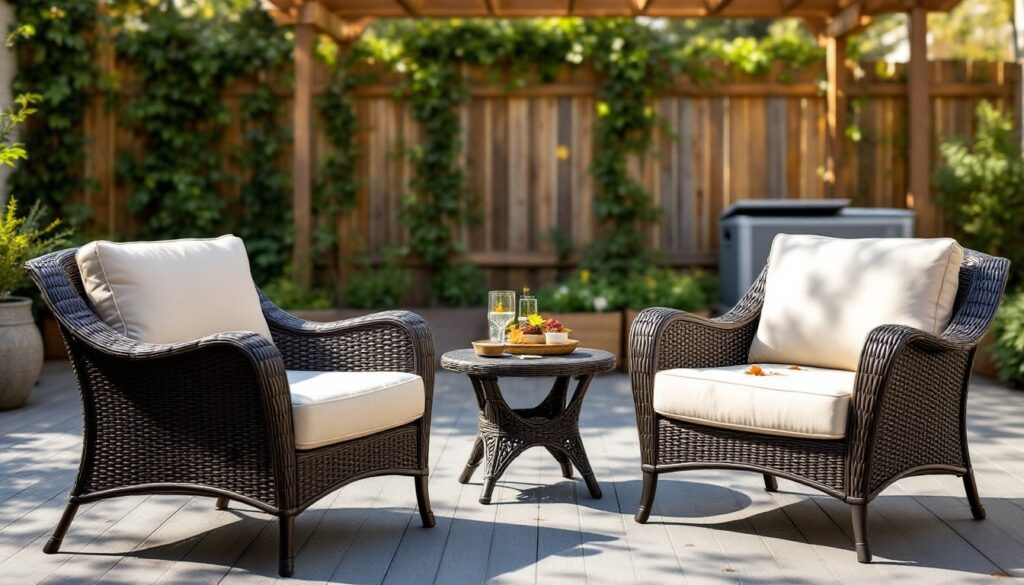
Most collections shared common design elements: neutral color palettes (espresso brown, weathered gray, cream), classic proportions that aged well visually, and modular configurations that allowed homeowners to build custom seating arrangements. The martha stewart wicker patio furniture lines particularly stood out for their all-weather resin weave over powder-coated steel frames, designed to handle UV exposure and moisture without the maintenance demands of natural materials.
Many pieces from 2008-2014 remain in service today, testament to decent build quality when properly maintained. Frames typically used 14-16 gauge steel tubing for seating pieces, with rust-resistant powder coating. Cushions featured solution-dyed acrylic fabric (similar to Sunbrella) with polyester fill, rated for outdoor use but requiring storage during harsh winters in northern climates.
Why Martha Stewart Patio Furniture Was Discontinued
The discontinuation wasn’t a single event but a gradual phase-out tied to retail partnerships and brand strategy shifts. When Martha Stewart Living Omnimedia restructured its licensing agreements in the mid-2010s, outdoor furniture lines were among the casualties.
The Home Depot relationship, which carried the bulk of the martha living patio furniture inventory, ended around 2014-2015 as the retailer shifted toward its proprietary Hampton Bay brand for outdoor furniture. This consolidation gave Home Depot better margin control and eliminated royalty payments to external brands.
Market factors played a role too. The outdoor furniture category became increasingly price-competitive, with direct-import brands undercutting traditional retail pricing. Maintaining mid-tier positioning became difficult when consumers could buy similar-looking resin wicker sets at significantly lower prices, even if construction quality differed.
Also, Martha Stewart’s brand focus pivoted more heavily toward kitchenware, bedding, and other categories where licensing arrangements proved more profitable. Outdoor furniture requires significant warehousing, seasonal inventory management, and after-sale support for warranty claims and replacement parts, overhead that leaner product categories avoid.
By 2016, most collections had been fully discontinued, with remaining inventory sold through clearance channels. No new Martha Stewart-branded outdoor furniture has been manufactured since, though occasional rumors of revivals surface when the brand explores new retail partnerships.
Where to Find Discontinued Martha Stewart Patio Furniture
Tracking down discontinued pieces requires patience and multiple search channels. These items surface sporadically rather than being continuously available.
Local classifieds and community sales often yield the best finds. Estate sales in particular can uncover complete sets in good condition, since outdoor furniture from this era was often purchased by homeowners who took care of their belongings. Check Facebook Marketplace, Craigslist, and Nextdoor weekly using specific collection names (Charlottetown, Lake Adela) plus to general “Martha Stewart patio” searches.
Habitat for Humanity ReStores and similar donation-based retailers occasionally receive outdoor furniture donations. Call ahead to ask if they have Martha Stewart pieces rather than making blind trips, inventory turns over quickly.
For those willing to arrange shipping, geographic flexibility helps. A set that’s common in one region might be rare in another based on original retail distribution patterns. Don’t limit searches to local-only listings.
Online Marketplaces and Resale Platforms
eBay remains the most reliable online source for discontinued Martha Stewart outdoor furniture. Sellers list everything from complete dining sets to individual replacement chairs. Use saved searches with email alerts for specific collection names, and check the “sold listings” filter to gauge realistic pricing.
Chairish and 1stDibs occasionally carry higher-end pieces, particularly wrought-iron collections, though expect premium pricing on these curated platforms. They’re better for finding statement pieces than everyday seating.
OfferUp and Mercari have grown as resale platforms and sometimes surface patio furniture, though listings tend to be more local and casual than eBay.
Facebook Marketplace deserves special mention for its reverse-search capability, post a “wanted” listing in local buy/sell groups describing the specific collection. Owners considering a sale often respond to these requests rather than listing publicly.
When buying used outdoor furniture online, request photos of frame welds, joint connections, and any rust spots before committing. Resin wicker can hide frame deterioration underneath, so ask sellers to gently flex armrests and check for movement that indicates loosening.
Identifying Authentic Martha Stewart Outdoor Furniture
Verifying authenticity matters when buying used pieces, both to ensure quality and to confirm compatibility with existing sets.
Most Martha Stewart outdoor furniture carried metal tags or labels affixed to frames. Look for a small metal plate riveted or screwed to the underside of seats or table frames, typically stamped with “Martha Stewart Living” and a model number. These tags often include manufacturing date codes and material specifications.
Wicker collections usually have labels on the underside of seat cushions or woven into the furniture’s underside, though these fabric/plastic tags deteriorate faster than metal ones. If the tag is missing, construction details provide clues: authentic pieces use continuous resin wicker weaving without visible glue joints, and frames underneath should show powder-coated steel with welded (not bolted) joints at stress points.
Wrought-iron pieces feature distinctive scrollwork patterns and finials that differ between collections. The Lake Adela line, for example, used specific leaf-and-scroll motifs on chair backs that knock-offs rarely replicate exactly. Compare photos from old retail listings or user reviews online.
Cushion fabric can help verify age and authenticity. Original cushions used solution-dyed acrylic in specific colorways, Spectrum Cilantro, Sky, and Indigo were common in the Charlottetown collection. Generic replacement cushions won’t match these exact patterns.
Frame dimensions matter for matching pieces. Measure seat height (typically 17-18 inches), armrest height, and overall width. Martha Stewart collections maintained consistent measurements within each line, so a chair that’s off by more than half an inch likely isn’t from the same production run or may be a different brand entirely.
Replacement Parts and Cushions for Discontinued Collections
Finding exact replacement parts presents the biggest challenge with discontinued furniture. Official parts inventory dried up years ago, but workarounds exist.
Cushions are the most commonly needed replacements. Since original cushions used standard dimensions, custom cushion services can recreate them. Measure existing cushions carefully: length, width, and thickness, plus note whether they’re box-edge (with gusset sides) or knife-edge (sewn flat). Cushion specialists like Cushion Source or local upholstery shops can fabricate replacements using outdoor-grade fabric and foam.
For fabric selection, solution-dyed acrylic (Sunbrella is the most recognized brand) provides the best UV and moisture resistance. Expect to pay $40-80 per seat cushion and $60-120 for back cushions, depending on size and fabric grade. Provide old cushions as templates if possible.
Hardware kits (screws, bolts, glides) can often be sourced from home centers if you bring the original piece for matching. Stainless steel hardware resists corrosion better than the zinc-plated fasteners originally used. Take photos of assembly points before disassembling anything.
For more specialized parts like resin wicker sections or decorative cast elements, creative solutions work better than hunting for exact matches. Small damaged wicker areas can be repaired using marine-grade adhesive and color-matched flat resin reed available from basketry supply companies. It won’t be invisible but can extend furniture life.
Some Home Depot stores still have old inventory databases, call customer service with your model number. Occasionally warehouse stock surfaces, though this becomes less likely each year.
Third-party cushion retailers like PatioLiving and Wayfair sell “universal fit” cushions in standard sizes. While not branded as Martha Stewart replacements, their dimensions align with common sizes from those collections. Bring measurements rather than relying on product descriptions.
Restoring and Maintaining Your Martha Stewart Patio Set
Proper restoration can add years to discontinued furniture that can’t easily be replaced.
Frame restoration starts with assessment. Surface rust on steel frames can be arrested, but structural rust-through at welds requires professional repair or retirement. For surface oxidation, remove loose rust with a wire brush or 80-grit sandpaper, treat with rust converter (like Rust-Oleum Rust Reformer), then apply metal primer and rust-inhibiting spray paint in a matching color. Work in light coats to avoid runs.
Wear safety glasses and a dust mask when sanding metal, rust particles and old paint dust shouldn’t be inhaled. Work outdoors or in a well-ventilated space.
For resin wicker, deep cleaning makes a surprising difference. Mix warm water with oxygen bleach (not chlorine bleach, which degrades plastic) and scrub with a soft brush. Rinse thoroughly and let dry completely. UV damage that’s faded wicker color can be refreshed with vinyl/plastic spray paint formulated for outdoor plastics, clean the surface with denatured alcohol first for proper adhesion.
Preventive maintenance matters most for extending life. During the active season, wipe down frames monthly to prevent dirt buildup that traps moisture against metal. Apply automotive paste wax to painted metal surfaces twice per season, this protective layer sheds water and reduces oxidation.
Store cushions indoors or in waterproof deck boxes when not in use. Even “outdoor” fabric benefits from being out of constant UV exposure. If storage isn’t possible, invest in furniture covers rated for your climate, cheaper vinyl covers trap condensation, while breathable polyester versions allow moisture escape while blocking UV.
Winter storage in cold climates significantly extends furniture life. If indoor storage isn’t available, elevate furniture on blocks to prevent ground contact, cover with breathable tarps, and ensure water can’t pool on horizontal surfaces.
Tighten all bolts and screws at the start of each season. Frame joints loosen with temperature cycling and use. A socket set and adjustable wrench handle most fastener types found on these collections.
For wood components (if your collection included teak or eucalyptus accents), apply teak oil or outdoor wood sealer annually to prevent checking and splitting. Sand lightly with 120-grit sandpaper before reapplying finish to ensure penetration.