Table of Contents
ToggleMost homeowners spend 3–5 hours daily in their living rooms, yet many ignore how furniture impacts their spine, joints, and circulation. Poor seating choices lead to chronic back pain, neck strain, and fatigue, problems that worsen over years of use. Ergonomic living room furniture isn’t just about comfort: it’s about protecting long-term health while creating a space people actually want to use. Unlike office ergonomics, which focus on desk work, living room ergonomics must balance relaxation, conversation, TV viewing, and reading across different body positions. The right furniture supports natural posture, reduces pressure points, and adapts to how families really live. This guide breaks down what makes furniture truly ergonomic and how to build a living room that works as hard as it looks good.
Key Takeaways
- Ergonomic living room furniture supports your spine’s natural curves and prevents chronic back pain, neck strain, and long-term health issues that develop from prolonged poor posture.
- Properly sized sofas should have 18–22 inch seat depth, 17–19 inch height, and armrests aligned with bent elbows to fit your body rather than forcing you to adapt to the furniture.
- High-density foam (1.8–2.5 lbs/ft³) and hardwood frames significantly extend furniture lifespan, making quality ergonomic pieces cost-effective investments over 10–15 years of use.
- Strategic room arrangement—with TV viewing distance set at screen diagonal × 1.5, conversation seating 6–8 feet apart, and proper lighting—amplifies the health benefits of ergonomic furniture.
- Test furniture for at least 10 minutes in multiple positions before purchasing, and measure each regular user’s dimensions to ensure the ergonomic living room setup actually supports their specific body needs.
Why Ergonomic Furniture Matters in Your Living Room
The human spine has three natural curves: cervical (neck), thoracic (mid-back), and lumbar (lower back). Furniture that doesn’t support these curves forces muscles to compensate, leading to strain and discomfort. Standard living room furniture often prioritizes style over function, with seat depths too deep for shorter users, backs too upright for relaxation, or cushions that collapse within months.
Prolonged poor posture causes more than temporary aches. It contributes to herniated discs, sciatica, reduced lung capacity, and even digestive issues. For anyone working from home part-time or dealing with existing back problems, the living room becomes a health liability instead of a recovery zone.
Ergonomic furniture addresses these issues through deliberate design: lumbar support that maintains the lower back’s inward curve, seat height and depth that keep feet flat and thighs parallel to the floor, and armrests positioned to relax shoulders without hunching. Materials matter too, high-density foam (1.8–2.5 lbs/ft³) holds shape and support far longer than budget polyfoam.
Beyond physical health, proper ergonomics improves quality of life. People sit longer without fidgeting, read without neck pain, and wake from naps without stiffness. For families with elderly members or anyone recovering from injury, ergonomic furniture isn’t optional, it’s essential infrastructure.
Essential Ergonomic Furniture Pieces for Every Living Room
Ergonomic Sofas and Sectionals
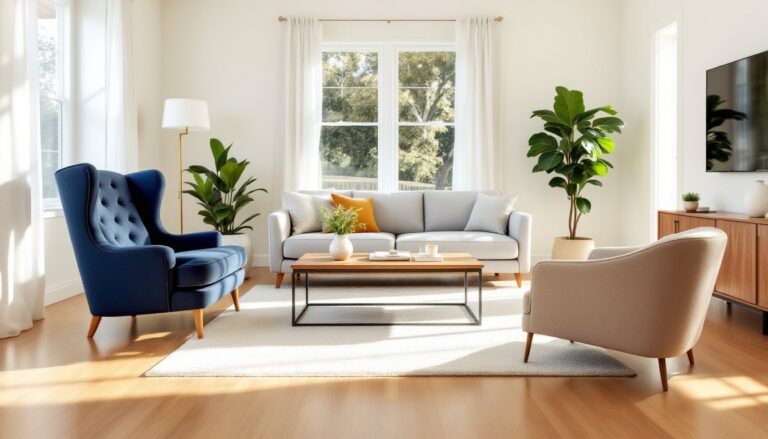
A sofa becomes ergonomic when it fits the users, not the other way around. Look for adjustable lumbar support, either built-in pillows or inserts that can be repositioned. Seat depth should measure 18–22 inches for most adults: deeper seats force shorter people to choose between back support or dangling feet.
Seat height matters just as much. Standard sofas sit 17–19 inches off the floor, which works for average-height users but strains knees for taller or shorter individuals. Adjustable-height legs (available on some modular sectionals) solve this problem without custom orders.
Cushion firmness requires a Goldilocks approach. Too soft, and the body sinks into poor alignment: too firm, and pressure points develop. Medium-firm cushions with high-density foam cores wrapped in softer comfort layers provide the best balance. Down-blend toppers add luxury without sacrificing support.
For sectionals, corner seats often lack back support. Choose models with corner wedges that include backrests or add bolster pillows. Chaise extensions should support the full leg length without cutting into the back of the knee, measure from hip to heel and add 2–3 inches.
Armrest height should align with the user’s bent elbow when seated, typically 8–10 inches above the seat cushion. Armrests that are too high cause shoulder tension: too low, and they’re useless. Wide, padded armrests double as laptop surfaces or drink rests, adding function.
Supportive Recliners and Lounge Chairs
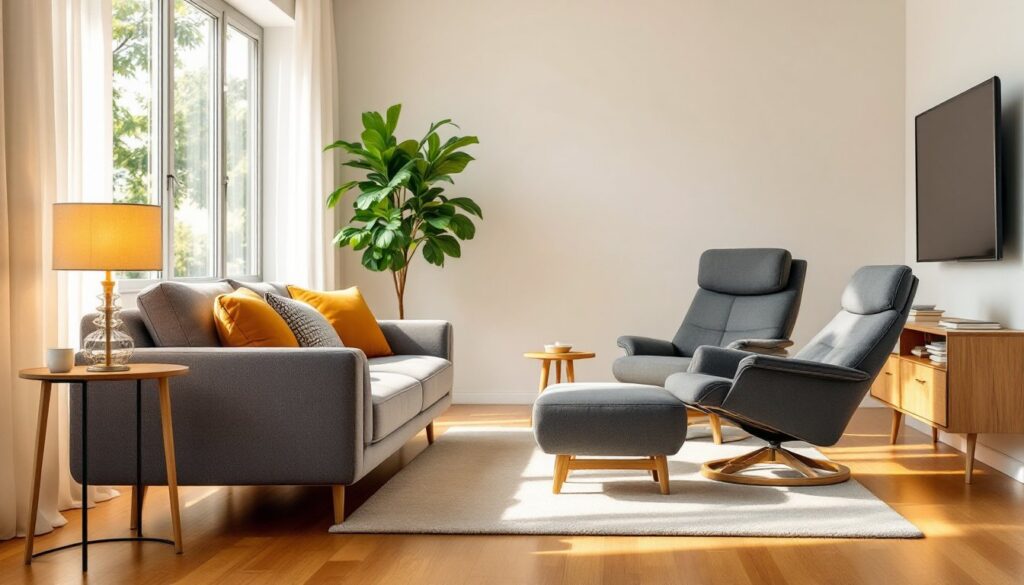
Recliners earn their place in ergonomic living rooms when they support multiple positions properly. Three-position recliners (upright, TV, and full recline) offer more versatility than simple two-position models. The transition between positions should feel smooth, without gaps in lumbar support.
Power recliners with independent back and footrest controls allow users to find their exact comfort zone. Many now include USB charging ports and lumbar heat, helpful for muscle relaxation but not a substitute for proper support structure.
For anyone over 60 or with mobility issues, lift chairs (recliners that tilt forward to assist standing) prevent strain on knees and hips. These require a nearby electrical outlet and typically cost $500–$1,500 depending on features and upholstery.
Lounge chairs work best when they cradle the body without restricting movement. The Eames lounge chair remains popular for good reason, its curved plywood shell and angled back support natural spine alignment. Look for chairs with contoured seats that distribute weight across the thighs and buttocks, not just the tailbone.
Rockers and gliders help some users relax, but the base mechanism must be stable and smooth. Cheap rockers with jerky motion or narrow bases create tipping hazards. Test the full range of motion before buying, if it feels unstable in the showroom, it’ll feel worse at home.
Ottomans and footstools complete the ergonomic seating setup. Elevating feet 6–8 inches improves circulation and reduces lower back pressure. Adjustable-height ottomans (via screw-in legs or pneumatic lifts) accommodate multiple users and activities.
How to Choose the Right Ergonomic Furniture for Your Needs
Start with an honest assessment of how the living room gets used. Families with young kids need durable, washable fabrics and furniture that handles active use. Empty nesters might prioritize reading comfort and conversation seating. Remote workers need pieces that support laptop use without turning the living room into an office clone.
Measure users, not just the room. Have each regular user sit and measure:
- Floor to back of knee (determines seat height)
- Hip to back of knee (determines seat depth)
- Lower back curve position (determines lumbar support placement)
Bring these measurements when shopping. Most salespeople don’t think to ask, but these numbers determine whether a beautiful sofa becomes a daily annoyance.
Test furniture for at least 10 minutes in the store or showroom. Sit in multiple positions, upright, reclined, and sideways. If the store rushes this process, shop elsewhere. Initial comfort means nothing if support fails after 20 minutes.
For online purchases, verify the return policy covers opened furniture. Some retailers charge 15–25% restocking fees, which makes trying a $2,000 sofa expensive. Look for brands offering in-home trials (30–90 days) with free return shipping.
Material and construction determine longevity. Hardwood frames (oak, maple, or eucalyptus) outlast softwood or particleboard by decades. Eight-way hand-tied springs provide superior support compared to sinuous (S-shaped) springs, though they add $200–$500 to the price. For most households, sinuous springs offer sufficient support if the furniture uses enough of them (spaced 4–6 inches apart).
Fabric choice affects both comfort and maintenance. Performance fabrics (solution-dyed polyester or acrylic) resist stains and wear better than natural fibers but can feel less breathable. Leather ages well and wipes clean but requires conditioning every 6–12 months in dry climates.
Budget realistically. Quality ergonomic furniture costs more upfront but lasts 10–15 years with proper care. A $1,200 sofa that maintains support for a decade costs less per year than a $400 model that sags within three years.
Arranging Your Living Room for Maximum Ergonomic Benefit
Furniture placement impacts ergonomics as much as the furniture itself. The primary seating area should orient toward the room’s main focus (TV, fireplace, or conversation zone) without requiring neck rotation beyond 30 degrees.
TV viewing distance follows a simple formula: screen diagonal × 1.5 for HD, or × 1.0 for 4K. A 55-inch TV needs 6.9 feet minimum viewing distance (55 × 1.5 ÷ 12). Position the screen so the center sits at seated eye level, typically 40–42 inches from the floor. Wall mounts with tilt adjustment compensate for non-ideal heights.
Conversation seating works best when chairs sit 6–8 feet apart. Closer feels invasive: farther requires raised voices. Arrange seating in a U-shape or L-shape rather than a straight line to encourage natural interaction without constant head-turning.
Lighting prevents eye strain and supports good posture. Overhead lighting should provide general illumination (100–200 lumens per square foot), while task lighting (floor lamps, table lamps) adds focused light for reading or handwork. Position lamps to avoid glare on screens, typically to the side and slightly behind seating.
End tables should sit level with or slightly below armrest height (within 2 inches) so users don’t strain reaching for drinks or remotes. Coffee tables work best at 16–18 inches high, tall enough to reach without deep bending but low enough not to block legroom.
Leave adequate walkways (minimum 30 inches, preferably 36) to prevent furniture from becoming obstacles. Tight spaces force awkward movements that strain backs and increase trip hazards.
For rooms with multiple uses, modular furniture on glides or casters allows quick rearrangement. Some ottomans include hidden storage, reducing clutter that forces poor posture while searching for lost items.
Conclusion
Ergonomic living room furniture transforms daily life by supporting the body instead of fighting it. The investment pays dividends in reduced pain, better sleep, and spaces people actually use. Start with one key piece, usually the primary sofa or favorite chair, and build from there. Measure carefully, test thoroughly, and prioritize function alongside aesthetics. A living room that looks great but hurts to use isn’t worth the compromise.