Table of Contents
ToggleLuxury bedroom furniture isn’t just about spending more, it’s about investing in pieces built to last, designed with intention, and crafted from materials that age gracefully. The difference between a standard bedroom and a true retreat often comes down to construction quality, material choice, and thoughtful design. Homeowners looking to elevate their space should understand what separates genuine luxury from marketing hype. This guide breaks down the essentials: what defines luxury furniture, which pieces deliver the most impact, and how to choose items that justify their price tag over decades of use.
Key Takeaways
- True luxury bedroom furniture is defined by superior construction—dovetail joints, mortise-and-tenon framing, and solid hardwood ¾” minimum thickness—not price alone.
- Quality materials like walnut, oak, and high-quality veneers paired with hand-applied finishes such as conversion varnish or Danish oil ensure bedroom luxury furniture ages gracefully over decades.
- Essential luxury pieces like upholstered headboards with high-density foam, soft-close drawer glides, and properly proportioned nightstands (aligned within 2″ of mattress height) maximize both function and visual impact.
- Current 2026 design trends emphasize modern minimalism, organic modernism with natural textures, and transitional styles that blend traditional craftsmanship with contemporary simplicity.
- Investing in luxury bedroom furniture pays off through proper selection of kiln-dried wood, professional assembly, and consistent maintenance including weekly dusting and annual finishing applications.
- Hardware quality—full-extension glides rated 100+ pounds, European-style or brass hinges, and soft-close mechanisms—instantly reveals the difference between genuine luxury and marketing hype.
What Defines Luxury Bedroom Furniture
True luxury furniture is distinguished by joinery methods, not just aesthetics. Look for dovetail joints in drawers, interlocking wooden fingers that hold without glue or fasteners. Mortise-and-tenon construction in bed frames and case goods indicates structural integrity that particle board and dowel joints can’t match.
Material thickness matters. Solid hardwood (walnut, oak, maple) should be ¾” minimum for case tops and sides. Veneers aren’t automatically inferior, high-quality book-matched veneers on plywood cores resist warping better than solid wood in wide panels, but they should be at least 1/16″ thick, not paper-thin.
Hardware reveals quality instantly. Luxury pieces use full-extension drawer glides rated for 100+ pounds, often with soft-close mechanisms. Hinges should be concealed European-style or solid brass, not stamped steel. Drawer interiors get finished, sanded, sealed, sometimes felt-lined.
Finish work separates premium from budget. Hand-rubbed oils, catalyzed conversion varnish, or traditional lacquer applied in multiple coats provide depth and durability. Spray-on polyurethane doesn’t compare. Run a hand along unexposed surfaces: luxury manufacturers finish all sides to prevent moisture absorption and warping.
Essential Luxury Furniture Pieces for Your Bedroom
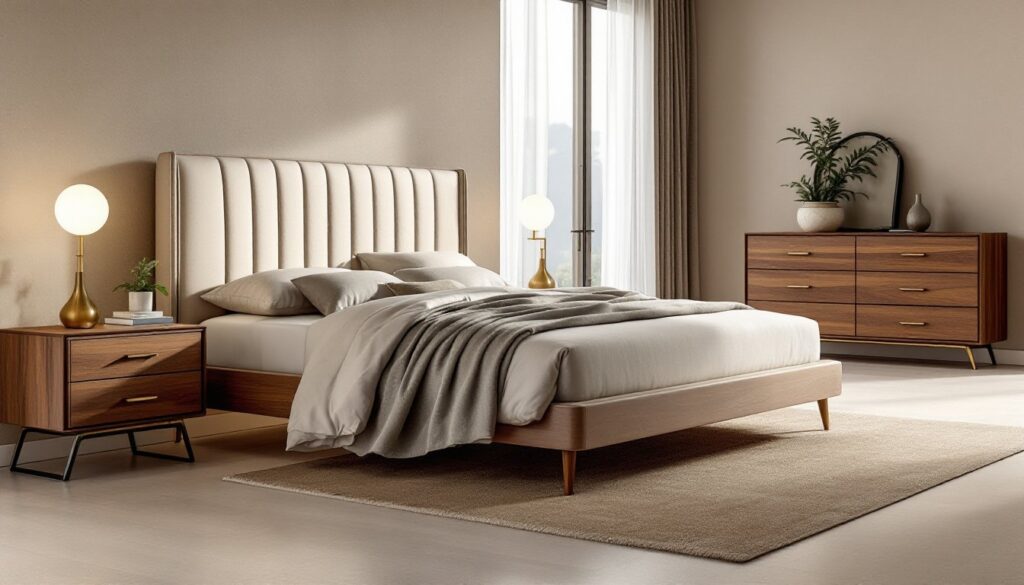
Statement Beds and Upholstered Headboards
The bed frame sets the room’s tone. Platform beds with integrated slat systems (typically 2½” to 3½” spacing) eliminate box springs and provide clean lines. Four-poster and canopy frames require ceiling heights of 9 feet minimum to avoid a cramped feel.
Upholstered headboards demand specific construction. Quality versions use kiln-dried hardwood frames, high-density foam (1.8 lb/ft³ or higher), and performance fabrics rated for 50,000+ double rubs (Wyzenbeek test). Linen and velvet are common, but durability varies, treated fabrics resist staining without sacrificing texture.
Channel-tufted and wingback styles add architectural interest but collect dust. Plan for professional cleaning every 18–24 months, or choose tight upholstery for lower maintenance. Headboard width should exceed mattress width by 4 to 6 inches per side for visual balance with a king or queen.
High-End Nightstands and Dressers
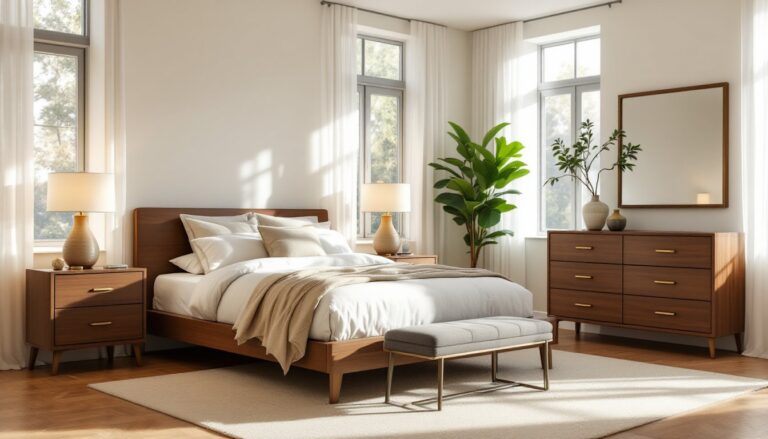
Nightstands in luxury spaces prioritize function and proportion. Height should align within 2 inches of mattress top for easy reach. Depth of 18″ to 22″ accommodates lamps, charging stations, and bedside essentials without overhang.
Case goods (dressers, chests, armoires) showcase craftsmanship. Look for drawer boxes assembled with English dovetails, visible on all four corners when the drawer’s removed. Drawer bottoms should be ¼” plywood captured in grooves, not stapled.
Soft-close undermount glides keep hardware hidden and drawers tracking smoothly under 75+ pounds. Top drawers lined with anti-tarnish felt protect jewelry and small items. Dressers over 60″ wide need center supports or middle glides to prevent sagging.
Finish matching across a bedroom suite requires controlled production. Mixing wood species works if stains complement, walnut with white oak, for instance, but grain patterns and color shift over time. Plan for seasonal wood movement: quality furniture allows for expansion gaps.
Materials and Craftsmanship That Elevate Quality
Solid hardwoods remain the gold standard, but species selection affects longevity. Walnut and cherry develop rich patinas but dent easier than oak or maple. Quartersawn oak shows distinctive ray fleck and resists cupping. Avoid furniture marketed as “wood” without species disclosure, it’s often rubberwood or mixed hardwoods.
Veneers over engineered cores suit large surfaces like dresser tops. Multi-ply construction (7–9 layers) provides stability. Book-matched or slip-matched veneers create symmetrical grain patterns impossible with solid boards. Edge banding should be solid wood, at least ⅛” thick, not PVC tape.
Metal and upholstered leather accents elevate case goods. Full-grain leather (top layer intact) develops character: corrected-grain leather (sanded and embossed) resists wear but ages less gracefully. Hardware in brushed brass, oil-rubbed bronze, or unlacquered brass (which patinas naturally) beats chrome or nickel in luxury contexts.
Hand-applied finishes take time but reward longevity. Danish oil soaks into wood, highlighting grain: it requires reapplication every few years. Conversion varnish cures chemically and resists water, alcohol, and heat better than lacquer. French polish, built up with shellac and oil, offers unmatched depth but demands skill and patience.
Inspect joinery under drawers and behind cases. Corner blocks glued and screwed into bed frames and cabinet corners prevent racking. Dust panels between drawers keep contents clean and add rigidity. Back panels should be ¼” plywood set in grooves, not cardboard stapled on.
Design Styles for Luxury Bedrooms in 2026
Modern minimalism dominates current luxury trends, emphasizing clean lines, integrated storage, and mixed materials. Beds with floating nightstands (wall-mounted or cantilevered from the frame) create visual lightness. Handleless cabinetry with push-to-open mechanisms maintains sleek facades.
Organic modernism blends mid-century forms with natural textures, live-edge wood, bouclé upholstery, stone accents. Expect rounded corners, curved headboards, and cane or rattan insets in case goods. This style pairs walnut or oak with matte black or brass hardware.
Transitional styles bridge traditional craftsmanship and contemporary simplicity. Shaker-inspired case goods with inset doors and simple pulls, upholstered beds with nailhead trim, and dressers with subtle crown molding appeal to buyers wanting warmth without ornament.
Art Deco revival brings bold geometry, lacquered finishes, and metallic accents. Expect waterfall edges, sunburst veneers, and jewel-toned upholstery. High-gloss finishes (piano black, deep emerald) require meticulous surface prep and multiple sanding stages between coats.
Color trends lean toward warm neutrals, greige, taupe, camel, in upholstery and finishes. Dark-stained woods (espresso, charcoal) gave way to lighter walnuts and natural oak. Painted furniture in off-whites and soft grays suits coastal or Scandinavian-influenced spaces but demands quality primer and topcoat to prevent chipping.
How to Choose Luxury Bedroom Furniture That Lasts
Start with room measurements and clearances. Allow 30″ minimum on each side of the bed for movement, more if space permits. Dressers need 36″ in front for drawer operation. Measure door widths and stairwell turns before ordering, luxury case goods often arrive assembled.
Test construction before buying. Lift a chair or small table: solid hardwood weighs considerably more than particle board. Open drawers fully and check for smooth operation. Look inside, dovetails, finish quality, and drawer-bottom attachment tell the story.
Ask about wood sourcing and finishing processes. Kiln-dried lumber (6–8% moisture content) prevents seasonal cracking. Multi-step finishes (stain, sealer, topcoat, hand-rubbing) indicate care. Inquire about VOC levels if air quality matters, water-based finishes emit fewer fumes but may raise wood grain.
Warranty terms reflect manufacturer confidence. Expect lifetime coverage on frames and joinery, 3–5 years on hardware and finishes. Upholstery warranties typically cover frame and springs longer than fabric.
Consider professional assembly for complex pieces. Platform beds with integrated lighting or storage, and wall-mounted headboards, benefit from experienced installation. Some luxury brands include white-glove delivery, unpacking, assembly, and debris removal.
Plan for maintenance. Dust weekly with microfiber cloths: use furniture-specific cleaners monthly. Wax or oil finishes annually. Keep furniture away from direct sunlight and heat vents to prevent fading and drying. Well-maintained luxury pieces appreciate in value and function for decades, justifying the upfront investment.